There are two ways of writing about heat treatments and the heart. The first: "saunas are good for your heart" — short and untrue. The second: a list of what has actually been measured and what is still only assumed. The second takes longer, but it lets you draw your own conclusions.
What has been measured reliably
Heart rate. It rises considerably in a sauna. Physiology reviews describe this response as equivalent to moderate physical exercise — roughly the level of a brisk walk.
Blood pressure. It doesn't behave the way many people expect: as you heat up, systolic pressure rises while diastolic pressure falls. In a study with three cycles of "heat, then cold water", heart rate and diastolic pressure stayed stable from one cycle to the next — in other words, the strain of alternating heat and cold did not build up.
Body temperature. Core temperature rises moderately: typically by a few tenths of a degree, more noticeably in intense conditions. This warming is the main physiological substance of the whole procedure.
All of the above are short-term responses to a single session. They have been measured with instruments and are not in doubt.
Where there is data but no proven cause
From here on we're in a different category. Large Finnish population studies have shown that regular sauna use is associated with lower rates of cardiovascular events and mortality. A review in Mayo Clinic Proceedings (2018) brought this data together.
The word "associated" carries all the weight here. These are observational data: researchers didn't prescribe saunas to anyone, they looked at people who already went. Those who use a steam room four to seven times a week differ from those who never go in more ways than the sauna — in their habits, how active they are, their income and their health at the outset.
The review's authors list the proposed mechanisms: better dilation of blood vessels, reduced arterial stiffness, effects on the autonomic nervous system, changes in the lipid profile and lower blood pressure. In the paper these are presented as hypotheses, not established facts.
So the correct statement sounds dull, and it is the only honest one: the short-term responses have been measured; the long-term effects are still being researched. The claim that a particular type of sauna strengthens the heart has nowhere near the evidence needed to promise it.
What this means in practice
There is one genuinely useful takeaway from the comparison "sauna ≈ moderate exercise": treat the steam room as exertion, not as rest. Everything else follows from that.
So don't wear yourself out beforehand, don't force yourself to stay in, and drink afterwards. And separately: if moderate exercise is something you'd need to check with a doctor, then so is the sauna. This applies to any heart or circulation problems, unstable blood pressure, pregnancy and recovery from a cardiac event.
One technical guideline that actually helps
Sauna culture has an empirical "rule of 200": the temperature in degrees Fahrenheit plus the humidity percentage should add up to roughly two hundred. The cooler the air, the more steam is acceptable, and vice versa.
Its value lies not in precision but in the idea behind it: temperature and humidity together make up a single measure of load, so looking at degrees alone is pointless. A classic Finnish sauna is kept at 80–100 °C with humidity of around 10–20 %; a ladle of water shifts both numbers at once.
The typical routine described in the literature is 5–20 minutes inside and a 10–30-minute break outside the steam room. It isn't a prescription — just the way most people do it.
In short
A sauna is a pleasant experience with measurable short-term effects and unproven long-term promises. That's quite enough reason to go for the enjoyment of it, and not enough to treat it as medicine.
It's worth searching by type of access: accommodation with a sauna in Lviv and in the Lviv region — the latter more often has private saunas, where you set the length of your rounds yourself.
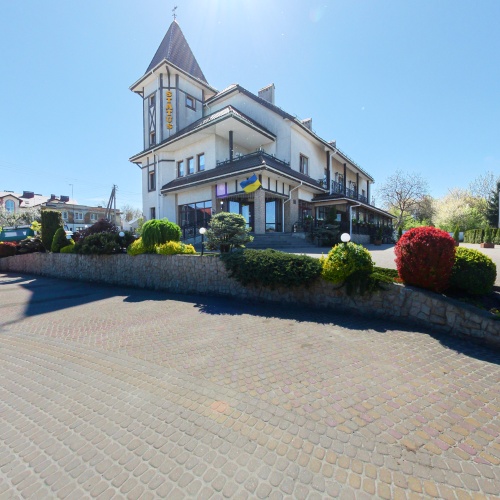
Places like this include Sobieski Hotel & Restaurant in Zhovkva, Hotel Status and Hotel & SPA Pysanka.
And one last thought that makes everything simpler. When a procedure comes with the promise of a specific health benefit, it acquires a goal — and with a goal comes the urge to "do it properly": stay in longer, add more steam, push through one more round. That's how a pleasant evening turns into an exhausting one. If nobody promises anything, there's just one criterion left — whether it felt good. And that turns out to be the most accurate one.