You cook the same dish: the same cut of meat, the same spices, the same recipe from the same source. At a restaurant it has a richer, more complex flavour. At home it's good — but somehow not quite the same. It isn't about talent or a secret ingredient. It mostly comes down to three things, and two of them are simply out of reach in a home kitchen.
Why restaurant kitchens get better results with high heat
The brown crust on meat, bread, onions or coffee comes from the Maillard reaction: amino acids react with sugars to form hundreds of new aroma compounds. The key factor is temperature — the reaction needs more than 140 °C.
Water, however, boils at 100 °C. As long as there is free moisture on the surface of the food, the surface can't get any hotter than that. That's why boiled meat never browns, and why meat is seared before braising rather than after.
A study illustrates just how much difference this makes. Steaks seared at 250 °C and then finished in an oven about 70 °C cooler received significantly higher sensory scores for flavour and roasted aroma — even though searing didn't make them any juicier. The gain was in aroma, not moisture.
A commercial range can sustain that kind of heat; a home stove usually can't. Professional cooks also pat the food dry and never crowd the pan: once the temperature drops, the food starts releasing steam, and instead of searing it ends up stewing. That's the most common reason a steak cooked at home turns out grey.
How umami compounds amplify flavour
The second factor is the fifth taste. Umami comes from glutamate, an amino acid abundant in ripened, fermented and slow-cooked foods: aged Parmigiano, tomatoes, dried mushrooms, soy sauce, miso, anchovies and cured ham.
What matters even more is that umami works in synergy. Glutamate provides the base, but inosinate (found in meat, fish and especially dried bonito) and guanylate (dried mushrooms, shiitake) amplify it: together they create a taste far more intense than any of them on their own. That's why a dashi made with kombu and bonito tastes fuller than either ingredient alone, and why a tomato sauce with anchovies and parmesan is a different thing from a plain tomato sauce.
Restaurant kitchens use this systematically — slow-simmered stocks, demi-glace, sun-dried tomatoes, aged cheeses in sauces. It's just as possible at home; home cooks simply rarely combine several sources of umami in one dish on purpose.
Why we eat more than we planned
Here there is one well-established fact, and another widely repeated claim that needs a closer look.
Well established: portion size changes how much we eat. A meta-analysis found that doubling a portion increases energy intake by 35 % on average, and a Cochrane review confirms the effect as consistent. It isn't a matter of willpower: people take their cue from what's in front of them.
The claim that needs a closer look: plate size. It's often presented as a universal rule — a bigger plate supposedly makes you eat more, full stop. In fact, an analysis of 56 studies involving 3,507 participants found something more nuanced: the effect is large, but only when people serve themselves, or when the portion changes along with the plate. With a fixed portion, plate size makes no difference on average. A separate pre-registered study of 134 participants found no difference at all — three percent, with an inconclusive result.
For a restaurant meal this means something very specific: the kitchen decides the portion, not you. So what you end up eating depends not on the tableware but on how many dishes you order — the one decision in the chain that really is yours.
How to order more variety without feeling overfull
This points to an approach that works better than "eat half and push the plate away".
Three moderate dishes chosen for contrast offer a greater variety of flavours and textures than one large one: every new taste registers more vividly than the fifth bite of the same thing. So it's worth sharing with the people you're dining with — a starter for two, a dessert for two, and a main course each.
Order dessert after your main course rather than at the same time: by then you'll know whether you still have room, and the kitchen doesn't prepare it in advance anyway. Pace matters too. It takes time for your brain to register that you're full, so a rushed dinner almost always ends with the feeling of having overeaten, even when the portions were normal.
One more thing people rarely consider: how satisfied you feel depends less on calories than on composition. Protein, fibre and the sheer volume of a dish keep you full for longer than the same amount of energy in the form of sauce or pastry. A salad with parmesan, oil and nuts can contain more calories than a main course and still leave you less satisfied.
What you can actually take back to your own kitchen
Three of the points above require neither special equipment nor skill.
First, dry the surface before searing and cook in smaller batches. It costs nothing and makes the biggest difference.
Second, deliberately combine two or three sources of umami in one dish: tomato with aged cheese, mushrooms with meat stock, soy sauce with dried mushrooms.
Third, season throughout the cooking process, not just at the end. Salt has no flavour of its own to add; it makes the existing flavours more pronounced, and salt added in stages tastes different from the same amount sprinkled on at the table.
What you can't recreate at home is the heat of a commercial range, or a stock simmered for six hours to serve twenty. That is what's worth going to a restaurant for — not "the same food, minus the washing-up".
In the Lviv catalogue, the Ukrainian and Galician cuisine selection is one of the largest by number of venues: it lists at least fifty, and every one of the fifty we checked has its own profile. That matters for this topic, because this is precisely the style of cooking built on slow-simmered stocks and braising — the things hardest to reproduce at home.
Where to taste the difference
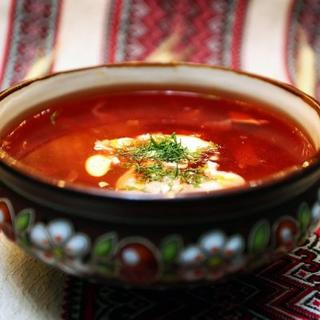
If you want to feel the difference in the simplest possible dish — one where everything depends on the stock and on time — try Ukrainian and Galician (western Ukrainian) cooking: Borshch Restaurant, Shlyakhtych, Komora and several dozen more in the selection of Ukrainian cuisine venues.
If technique is what interests you — searing, ageing, signature sauces — look at BER NAR DYN, Vinoteca Praha or Szkocka. For the full list, see restaurants in Lviv.
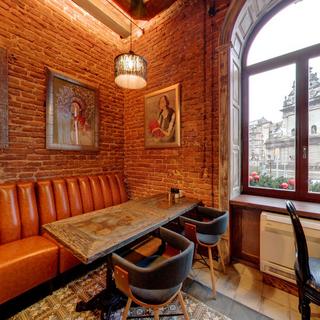
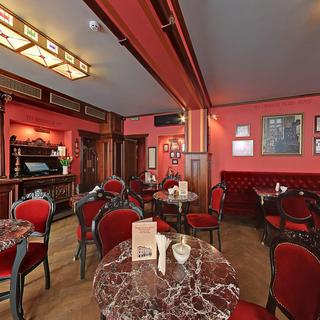
If the setting matters to you as much as the food, the space itself becomes part of the evening at Sim Porosiat, the honey-themed Beehive or the Pastry Pharmacy. Before booking, you can explore them in the venues with a 3D tour and see the actual dining room and seating rather than a promotional photo.
And if you're reading this in the morning and the question is simpler, places that serve breakfast and coffee shops have their own selections.