A Japanese restaurant and a restaurant that happens to have sushi rolls on the menu are not the same thing, even if the signs look alike. The same goes for Italian, Georgian and Ukrainian cooking: each has a few key techniques that reveal whether a dish is made properly, and they are hard to fake.
This isn't a ranking or a list of places. It's a guide to what's worth ordering in each cuisine, and the details that show the kitchen is doing it for real.
Galician cooking: not just another word for "Ukrainian"
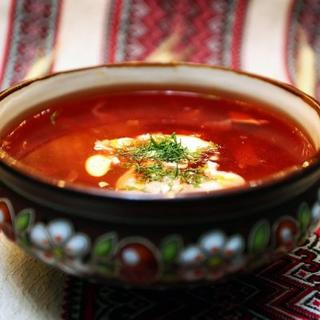
Galician cuisine is the regional cooking of the lands that once formed the Kingdom of Galicia and Lodomeria — today's western Ukraine. It is a borderland cuisine by origin: Polish and Ukrainian at its core, with strong Austrian, Hungarian and Jewish influences. Geographically it splits into several local traditions, and Lviv's is one of them.
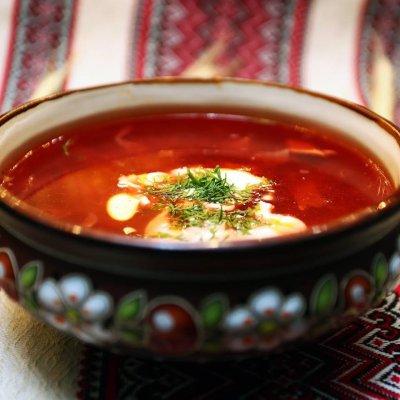
The simplest test is borscht. In Galicia it's served with vushka, small mushroom-filled dumplings; Poltava borscht comes with halushky dumplings, the Polissia version with mushrooms, and the Volyn one with cherries or prunes. These aren't variations on one recipe but different dishes that share a name — and a restaurant that knows this will usually tell you on the menu which borscht it serves.
Another hallmark of the region is porridge. In the Galician tradition it's a dish in its own right, whereas Polish cooking long dismissed grains as food for the poor — a divide that is still noticeable today. For dessert, the Lviv region has its own classics: Lviv-style syrnyk (a traditional Ukrainian cheesecake) and strudels.
To try them, head to Borshch Restaurant, Shlyakhtych, Komora or Hutsulska Grazhda, or browse the full selection of Ukrainian cuisine venues.
Japanese cooking: the rice matters more than the fish
The heart of sushi isn't the fish but the rice. It's called shari, and two of its qualities are noticeable right away.
The first is temperature. Shari should be served warm, close to body temperature — never cold. The reason is physical: as the rice cools, its starch retrogrades and the texture is lost, the one that should be sticky yet still separate into individual grains. Cold, dense rice means it was made in advance and kept in the fridge.
The second is the seasoning. The vinegar dressing is folded into the rice while it is still hot, at around 70–75 °C, because only then is it absorbed evenly. It's typically made with roughly ten percent sugar and five percent salt — which is why well-made shari has a distinct flavour of its own, even without fish.
Ramen is a different story, and here the test is even easier. Tonkotsu broth needs 12–18 hours at a rolling boil, not a gentle simmer: the constant agitation breaks the fat into microscopic droplets that the gelatine holds in a stable emulsion. That's where the opaque, creamy white colour comes from. A reliable sign: genuine tonkotsu sets into a firm jelly as it cools. A clear broth "like the one in ramen" is a different dish altogether.
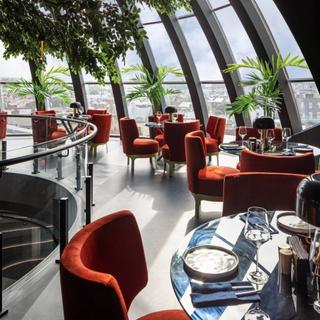
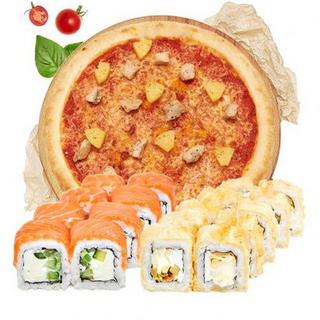
The place to start is the selection of venues serving sushi, including SushiGoPizza and CLOUD no.7.
Italian cooking: how to tell if pasta is cooked properly
Al dente doesn't mean undercooked; it means the pasta keeps a noticeable firmness at its centre. There are three ways to check: it doesn't stick to your teeth, its colour is even when you cut it, and you can feel it as you bite.
This matters most for pasta that is baked afterwards or served al forno: if it's already fully cooked, it will turn soft and lose its texture in the oven. So if the pasta arrives perfectly soft and uniform, the kitchen may be taking shortcuts.
To put this to the test, try La Famiglia or Tutti, Italian Vibe Cafe.
Georgian cooking: the region matters more than the name
In Georgia, khinkali aren't a single dish. In the mountain regions — Khevsureti, Khevi, Pshavi and Tusheti — the dough, shape and filling all differ, and the herb that gives mountain khinkali their characteristic flavour is thyme. Some versions are filled not with minced meat but with dried meat, which makes them an entirely different dish under the same name.
Khachapuri is no different: the tradition of making it is recognised as part of Georgia's intangible cultural heritage, and each region has its own version. So a menu that simply says "khachapuri" usually means just one kind — most often the Adjarian boat-shaped bread.
The question worth asking is which region the recipe comes from. Either the staff can answer it or they can't — and that alone tells you a lot.
Signature and fusion cuisine: substance or marketing?
Both labels can mean almost anything. The test is simple and requires no expertise: signature cuisine means the dish was created by a particular chef and can't be ordered anywhere else. If a "signature" menu is full of dishes you'll find in every other restaurant, the word is just decoration.
Fusion blends culinary traditions, and chefs are divided about it precisely because combining is easy, while creating a coherent dish is not. The test is the same: is there a reason for these two cuisines to meet on the plate, beyond the fact that both appear on the menu? The Split restaurant complex works in exactly this genre.
How to put this to use
There's no need to memorise everything. One question for each cuisine is enough — and the answer can reveal how well the restaurant understands what it cooks.
For Galician food: which borscht is it? For Japanese: is the rice warm? For Italian: can I have the pasta al dente? For Georgian: which region are the khinkali from? For signature cuisine: which of these dishes can I only get here?
None of these questions requires any culinary knowledge, and none sounds like a complaint. Yet the answer to any one of them will tell you more about a restaurant than the photos on its menu.
Explore the full selection of restaurants in Lviv, where venues are grouped by cuisine, so you can start with whatever you're in the mood for today.