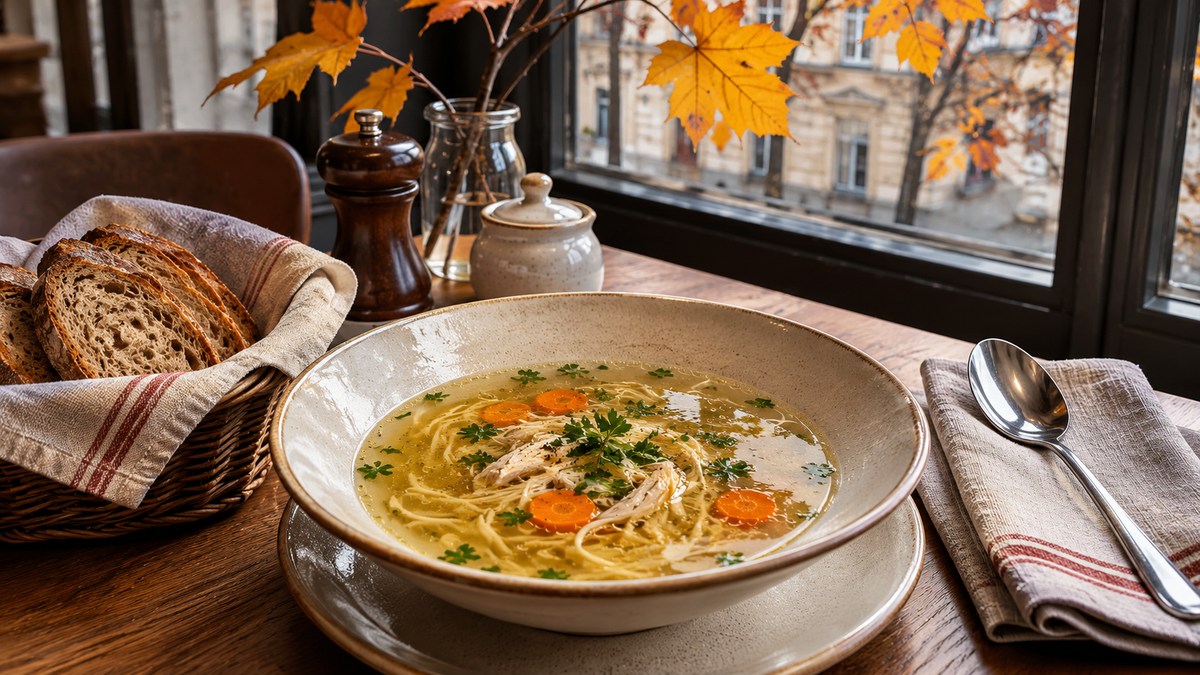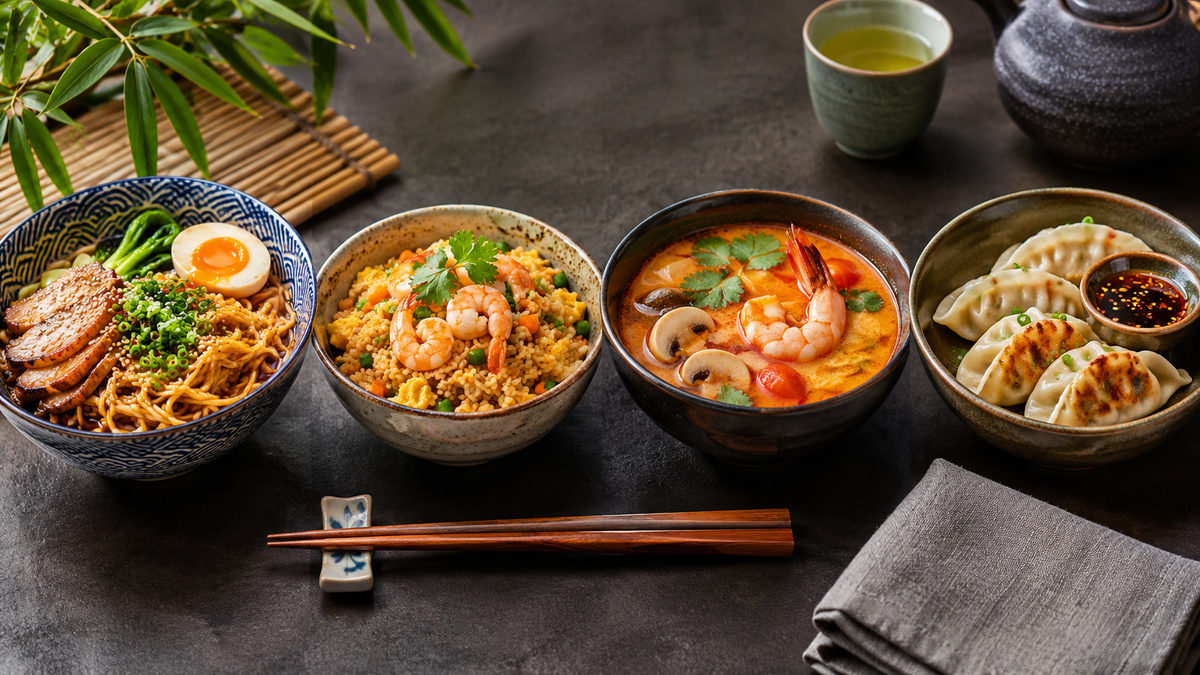
The sign says "Asian cuisine", and the menu lists sushi rolls, tom yum and pho side by side. No such cuisine exists in nature, any more than a single "European" one where bouillabaisse shares a table with varenyky (filled dumplings). The label is handy for menus, but some very real borders run through it. Here are four that make it easy to take apart.
Border one: fish or beans
Food researchers traditionally divide East Asia into two seasoning zones. In the south-east, flavour is built on fermented fish: Vietnam, Thailand, Cambodia. In the north-east, fermented beans dominate: China, Korea, Japan.
China, in fact, had fish sauce more than two thousand years ago before it gave way to soy products. It reportedly returned to the southern provinces only in the 17th–18th centuries, with traders from Vietnam and Cambodia.
It's a rough guide with plenty of exceptions, but it helps explain why Thai and Korean dishes are salty in such different ways.
Border two: a grain with two personalities
Researchers believe domestic rice was first cultivated in China between 8 and 13.5 thousand years ago. On the plate, though, it behaves in two ways. The short-grain japonica subspecies is cooked so the grains cling together slightly: it's the rice for sushi and, as it happens, for Italian risotto. An unexpected kinship. Long-grain indica falls into separate grains, as basmati and jasmine do.
The whole difference lies in the ratio of two components of starch. Japonica has more sticky amylopectin and indica more amylose, so in the kitchen one variety can't replace the other.
Border three: what you eat with
There's even a phrase for it, the "chopstick cultural sphere": China, Japan, Korea and Vietnam. Beyond that circle the rules change. In Thailand traditional dishes are eaten with a spoon and fork, chopsticks being reserved at most for noodles, and in the Philippines it isn't customary to ask for them either. Where chopsticks are used every day they vary too: Japanese ones tend to be shorter and pointed, Korean ones are often steel.
It's hard to say when they were invented. Popular writing speaks of five millennia, but the oldest chopsticks ever found, bronze ones from the ruins of Yin, date from about 1200 BC. They're thought to have been used first for stirring pots, reaching the table only later.
One prohibition turns up in many countries: don't stand chopsticks upright in rice. It looks like incense at a funeral offering.
Border four: a fire you can't get at home
Cantonese cooks speak of wok hei, literally "the breath of the wok". It's a smoky, slightly charred aroma produced over very high heat. It comes from Maillard reactions, caramelisation, the breakdown of oil on red-hot metal and tiny drops of fat flaring above the burner. A wok is three times thinner than an ordinary European frying pan, so it cools quickly: add too much food and it stews instead of frying.
The figures are disputed. Authors of a study on the physics of fried rice and culinary publications give very different temperatures for the wok. These texts don't explain what exactly the higher figure measures, so treat it as a sign of very fierce heat.
The concept stayed local for a long time. It was explained to the world by the Chinese American writer Grace Young, who called it "the breath of a wok" in the 1990s. She says the aroma lasts a minute or two. ⇒ A dish from the wok should be eaten at once, and delivery loses out here.
What sits under one label
Sushi and sashimi. Japan: vinegared rice with fish, while sashimi is fish without the rice.
Ramen. Wheat noodles in a rich broth.
Udon. Thick wheat noodles, also Japanese.
Phở bò. A Vietnamese soup of clear beef broth with rice noodles.
Tom yum. A Thai hot and sour soup with lemongrass.
Spring roll. The name hints at the season. The Tang poet Du Fu wrote about this dish, but the first versions were fresh: spring greens in a thin pancake. It turned golden and fried later on, and it resembles ingots, which is why it's eaten at the Lunar New Year.
Kimchi and bibimbap. Korea: fermented vegetables, and rice with vegetables and egg in a bowl.
Funchoza. Clear starch noodles, most often in cold salads and stir-fries.
Wok. In this case a pan to cook in rather than a dish.
Green tea. A drink the region shares, with Japanese matcha as its powdered form.
Where to test this in Lviv
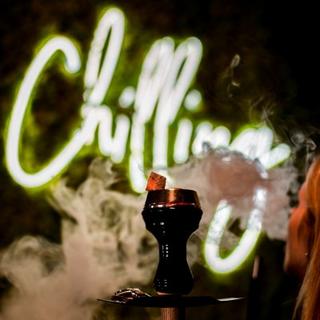
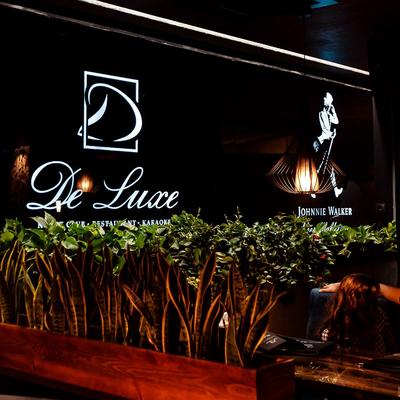
The list is in our selection of Asian restaurants. Comparison is easiest where dishes from different countries sit side by side and the borders show at once. The Chiling hookah bar has a wok with prawns, funchoza with seafood and tom yum in its "Eastern cuisine" section. At De Luxe Restaurant, the pan-Asian section combines udon with beef, sushi rolls and tom yum with tiger prawns. And at Veronica you can order Vietnamese pho with veal.
The word "Asian" is best taken as an invitation to ask where exactly this dish comes from.
Menus change, so a dish mentioned here may no longer be available. If it's the reason you're going, it's best to call ahead.