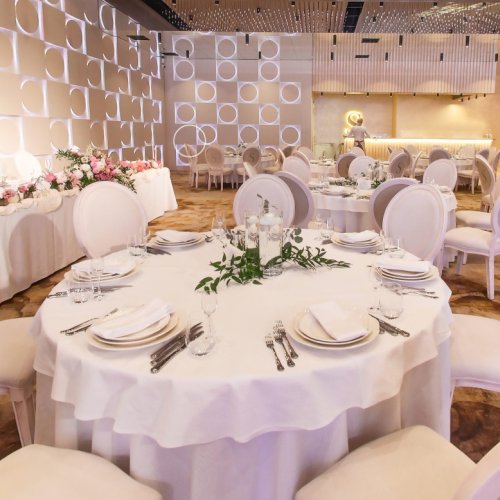
In December the choice comes down to a number: one venue charges this much for the evening, another twice as much. It seems the second offer must be twice as good — otherwise why would it exist? In fact, price really does affect how much you enjoy something, and the effect has been measured. But it isn't price that makes or breaks the evening; it's something else entirely, and that's exactly what's hardest to see in the advert.
Price changes taste — and that's not a figure of speech
The same wine, presented as expensive, tastes better to people. This has been tested several times, in different ways.
In one experiment, participants were poured identical wine over several rounds, each time with a different "retail price". A higher price produced higher ratings of enjoyment, and the effect was strong and consistent. Researchers from the INSEAD business school and the University of Bonn repeated this with thirty participants — fifteen women and fifteen men, with an average age of around thirty — and found the same: wine with a higher price tag was rated more highly.
An interesting detail: it made no difference whether participants paid for the wine or got it free. So what's at work is the price information itself.
The phenomenon is known as the marketing placebo effect: a product is perceived differently because of a quality attributed to it, just like a placebo pill. The belief that "you get what you pay for" changes not only people's opinion but what they actually experience.
The researchers themselves point out the limits of this evidence: the well-known experiment at the California Institute of Technology had twenty participants, mostly male graduate students. That's too few to generalise about everyone.
What spoils an evening lies in the description
Now for the key point. Alongside the price effect there's another, much stronger one — and it works against the expensive package.
In an experiment, the same dish was described in three ways: accurately, greatly exaggerated and not at all. Satisfaction was measured afterwards. It turned out that dissatisfaction is a function of the gap between expectation and what people actually got. The exaggerated description raised expectations, the reality stayed the same, and the gap produced a worse result than an honest description of the very same dish.
In other words, an expensive package carries a built-in risk: it has to promise more to justify its price, and in doing so raises the bar for itself. A modest venue with an accurate description starts from lower expectations — and finds it easier to exceed them.
There's a third detail, measured separately: the influence of initial expectations fades over the course of the evening. It strongly colours first impressions, but after that what actually happens starts to count. So price carries the opening of the evening, and the rest is down to the food, the service and the company.
Anticipation helps; predictability doesn't
There's one more observation, and it explains why "the safe option, same as last year" sometimes disappoints.
In a study in which people were surveyed while actually engaged in activities, two opposite things emerged. Anticipation — looking forward to an event — increased enjoyment. Predictability, on the other hand — the feeling of "I know exactly how this will go" — reduced it.
This points to a practical conclusion that costs nothing: an evening needs at least one unknown element. It doesn't have to be expensive — a new place, a dish you haven't tried, a programme you know only by name.
How to read a New Year's Eve offer so you don't overpay for words
A few questions that close most of the gap between the promise and the evening.
What exactly is included in the price. Dinner, drinks, entertainment and service are four separate items, and in adverts they're often lumped into one. An offer that lists them separately is almost always more honest than one with a single figure and the words "all inclusive".
How many people will be in the room. This matters more than the menu: the same dinner for forty and for a hundred and forty people makes for two different evenings. The venue knows the number and will usually tell you.
Who exactly is performing, and for how long. "Live music" can mean a duo for two hours or a band for the whole night.
What happens after midnight. Some venues end their programme at one in the morning, others carry on until dawn, and for anyone planning an unhurried evening that's a decisive difference.
And the flip side: an overly detailed description full of superlatives isn't a sign of quality but a raised bar. The more that's promised in words, the bigger the gap the kitchen will have to close.
Lviv has more choice than the adverts suggest
The city's listings include 42 banquet halls alone — not counting restaurants that take groups without a separate hall, or hotels with their own kitchens. So there are far more New Year's Eve options in Lviv than the handful that make it into your advertising feed.
The practical upshot: rather than comparing the first two offers you come across, compare three or four from different price levels — that's how you see what the difference between them actually consists of.
Where to look
If you need a large hall and a dedicated kitchen for the event, look at the city's banquet halls: among them the banquet hall at Premier Hotel Dnister, Warszawa Banquet Hall and Benketnyy Dim — each has its own seating layout and its own maximum number of guests.
For a smaller group that still wants a space of its own, banquet service in ordinary restaurants works well — for example, Valentino. It's usually cheaper than a separate hall and enough for twenty to thirty people.
And if the evening is planned as a trip rather than just a dinner, the listings also include places such as the banqueting space at Svirzh Castle, where the journey itself becomes part of the occasion. The rest of Lviv's restaurants are listed separately.
The conclusion is simple and a little awkward: price really does improve the first impression, but you spend the rest of the evening with whatever actually arrives on the table. So pay for specifics in the description, not for words that stand in for them.