Every year, from around mid-December, the question comes up in conversation: which animal is next, and what does it mean? The answer is short, but the first thing worth knowing usually gets skipped: the Year of the Goat doesn't begin on 1 January. There's more than a month between our New Year and the Lunar New Year, and throughout that time the previous year is still running.
The first thirty-six days of 2027 belong to the Horse
The Year of the Fire Goat begins on Saturday 6 February 2027 and runs until 25 January 2028. Everything before that — January and the first five days of February — is still the Year of the Fire Horse.
So New Year's Eve on 31 December has nothing whatsoever to do with the Chinese calendar. When a restaurant promises to help you "welcome the Year of the Goat" as the clock strikes midnight, it's just a figure of speech: by that calendar you're welcoming the Horse's final month.
The Goat is the eighth of the twelve signs. In the Chinese system of Heavenly Stems and Earthly Branches, this year is called Ding-Wei (丁未): "Ding" is fire in its gentle, yin form, and "Wei" is the eighth Earthly Branch, which corresponds to the Goat. The same animal is also translated as the Sheep or the Ram — in Chinese it's a single word (羊), and the choice between "goat" and "sheep" depends on the translator, not on the zodiac.
Why "Fire" — and why the word will come round again next year
There are five elements in the cycle, and each lasts for two consecutive years. That's why 2026 was a fire year and 2027 is too: first the Horse, then the Goat. A full cycle takes sixty years, because the twelve animals combine with the five elements.
It follows quite simply that "Fire" in the name doesn't describe the next twelve months; it marks a position in the cycle. The element changes on schedule, not according to circumstances.
Three dates in circulation — and why they're all "right"
This is where it gets interesting. Ukrainian media this autumn have been giving three different dates for the start of the Year of the Goat, and the confusion isn't random.
6 February is Chinese New Year, the Spring Festival. This is the main date: it's when the animal changes in everyday life, in celebrations and in greetings. The festive period lasts fifteen days and ends with the Lantern Festival on 20 February.
4 February is the start of spring according to the solar calendar (立春, lìchūn). Traditional almanacs and those who cast horoscopes count the year from this date. It's two days away from the previous one, and in everyday life nobody notices the difference.
29 January, on the other hand, is a mistake, and it does crop up in Ukrainian publications. Its origin is easy to see: the writer takes the Spring Festival date from a neighbouring year or carries over last year's.
It's easy to check, even without a calendar: Chinese New Year falls on the second new moon after the winter solstice. That's why the date changes every year and always falls between 21 January and 20 February. If a text gives a date outside that window, it's a slip.
What tradition says about the Goat — and the limits of that claim
In Chinese culture, the Goat is associated with a peaceable nature and a leaning towards harmony and home comforts rather than competition. This is a description of a symbol, not a forecast: the Chinese zodiac is a cultural tradition with centuries of history, and it contains neither prediction nor any mechanism of influence.
So there's nothing here to debunk and nothing to promise. What's interesting about this subject isn't what the year has in store, but the calendar itself: a system in which months are counted by the phases of the moon, the year is aligned with the sun, and the animal changes on the second new moon after the shortest day. It has been running unchanged for longer than most of our own traditions have existed.
For us it's a third winter celebration — and the only one on a Saturday
There's no shortage of celebrations in the Galician (western Ukrainian) winter cycle as it is: Christmas, the festive period that follows, Epiphany — and in the old days the New Year itself was celebrated on the night of 13–14 January, in the middle of the festive season rather than at its start.
6 February 2027 comes after all of that. The family feasts are behind you, the fasts are over, and yet here's another reason to get together. What's more, it's a Saturday, which for anyone planning a dinner makes it just about the most convenient day of the year.
If you'd like a themed evening, the easiest route isn't fancy dress but food: Lviv has restaurants with Asian menus, and that's enough to give the evening its own character.
It's worth knowing that there's no separate Chinese cuisine category on the portal — "Asian" here mostly means pan-Asian and fusion menus. If you're looking specifically for Chinese food, check with the restaurant before booking for the occasion.
Where to go for an evening like this
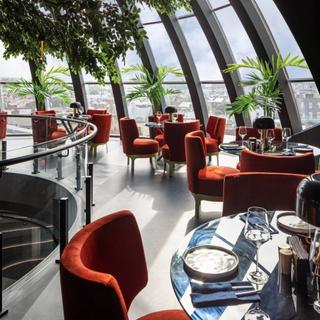
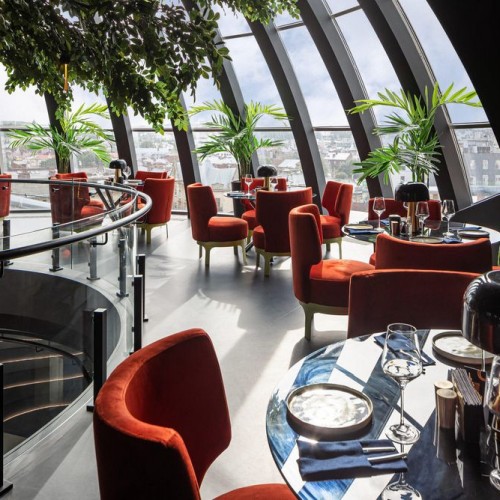
For a group that values a view and an unhurried pace, CLOUD no.7 Panorama works well — its Asian menu comes with a panoramic dining room, so the evening isn't only about what's on the table.
If you're a larger group and need space to move around and swap seats, look at the Split restaurant complex and Terminal-A: both have several areas, and that matters more than the menu.
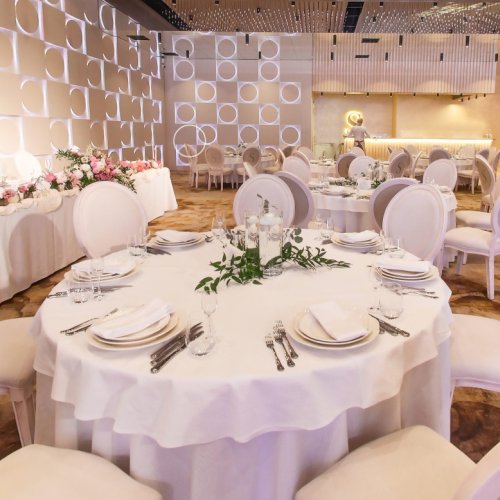
And when dinner turns into an event with guests to look after, it's easier to choose a venue offering banquet service — such as Premier Hotel Dnister or PANORAMA Lviv Hotel. The rest of the city's restaurants are listed separately, and in February it's much easier to get a table than at the end of December.
The main thing to take from all this: winter has more than one calendar, and none of them obliges you to celebrate every occasion. But once you've found a reason to get together — whosever calendar it comes from — it's no longer about the animal of the year.