These three types of accommodation are usually compared on price, which is exactly why the comparison ends up being pointless: they solve different problems, and the cheaper one isn't "the same thing for less money". Here's what actually decides the choice.
What you're buying in a hotel besides a bed
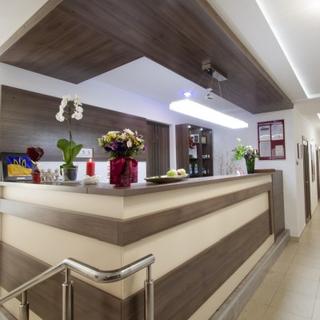
A hotel doesn't sell a room so much as a list of things you no longer have to do: cleaning, fresh linen, a reception desk that's open when you arrive at two in the morning, breakfast you don't have to think about, and someone responsible for making sure everything works.
That's worth paying for in two cases. The first is a short trip where your time is worth more than the price difference: over two nights, the money you save won't make up for an hour spent hunting for groceries and doing laundry. The second is a trip on which you don't want to make any practical decisions at all.
And there's a third, less obvious one: if you're travelling for work, a hotel gives you predictability. You know there'll be a reception desk, the room will have been cleaned, and there'll be coffee in the morning. In a flat, all of that depends on the particular host.
When apartments beat a hotel
The turning point is the moment you start living somewhere rather than just sleeping there.
Signs that this is you: you need to do laundry; you want breakfast when you wake up, not when the restaurant opens; there are more than two of you and you'd rather have a kitchen than three separate rooms; you need a proper workspace, not a table next to the bed.
An aparthotel is a hybrid, and that's precisely its value: the kitchen and independence of a flat, the reception and housekeeping of a hotel. In practice it most often comes out on top in two scenarios — families with children (your own daily routine, the chance to cook familiar food and do the washing) and stays of four or five days or longer.
You'll find options in the selection of serviced apartments and aparthotels: Modern Properties on Doroshenka Street, on Fredra Street, and the short-let flat on Mechnikova Street.
One question worth asking in advance, specifically here: who will meet you, and on what terms? The difference between an aparthotel with a reception desk and a flat where the owner hands over the keys by arrangement shows on the day you arrive, especially if your train gets in at night.
Hostels: saving money isn't the main reason people choose them
This is where stereotypes are strongest, and the data doesn't back them up.
According to a Hostelworld survey, 53 % of respondents chose a shared room rather than a private one, and around three quarters of bookings on the platform are for dorms. It's no longer just a question of price: 19 % of travellers name shared spaces as their most important criterion when choosing where to stay, and the importance of free group activities — from yoga to cooking classes — has grown by almost a fifth in recent years.
But the most interesting finding in hostel research is something else: people don't make friends in the dorm. Studies of travellers' social interactions show that the dorm remains a place to sleep and have some time alone, while conversations happen in the shared kitchen and the lounge — precisely because evenings there involve a lot of unstructured time.
The practical takeaway: if you're choosing a hostel for the people, look at the kitchen and the lounge, not the number of beds in the room. If you don't need company and just want a good price, book a private room in a hostel with shared areas: it's cheaper than a hotel and leaves it up to you whether to join the others.
The things that make a hostel genuinely comfortable rather than merely cheap: the number of bathrooms per guest, curtains or a high headboard on the bunks, lockable lockers, quiet hours and ventilation in the room. None of them is visible from the price. Hostels in Lviv include Na Ruskiy, Lviv Lucky Hostel, Hostel 59 Avenue, the hostel on Romanchuka Street and several dozen more.
The short version
One or two nights, central location, as few decisions as possible — a hotel. Four days or more, travelling with friends or children, need a kitchen — apartments. Travelling solo, on a budget or keen to meet people — a hostel. Arriving by car — the first filter to apply is parking, because in central Lviv that matters more than the distance to Rynok Square, the historic heart of the city.
Where comparing on price really misleads you
A cheaper room can end up costing more overall, and that isn't just a figure of speech. The final total includes parking, which is paid in the centre; breakfast, if it isn't included; getting to the centre and back twice a day; and extra charges that only appear at check-in. Compare the cost of the whole trip, including everything you'll actually use.
The flip side of the same mistake is paying for things you won't use. A pool you'll see once and a breakfast you won't get up for because you're leaving early — they're in the room rate, but not in your trip.
The most useful question before booking isn't "where is it cheaper?" but "what will I actually be doing here?". Hotel Suputnyk and Taurus Hotel are different hotels for different trips.