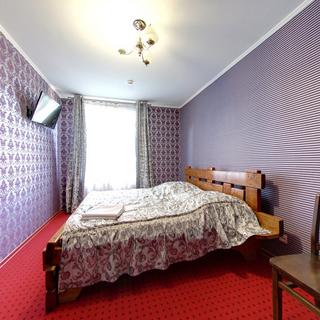
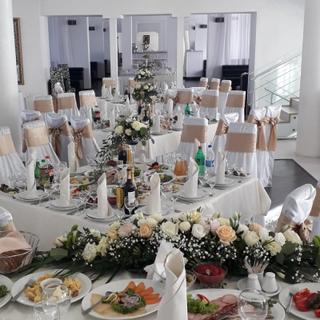
The doubt usually goes like this: two days in one place where everything is already laid on — won't you be bored by lunchtime on day two? Behind that doubt lies the assumption that rest equals the number of things you do. Research on holidays suggests rather the opposite.
A short break isn't a lesser version of a long one
A meta-analysis by researchers at the University of Georgia concludes that a holiday brings a significant improvement in well-being. And the most important detail in that finding is what happens afterwards: once people return to work, the positive effect fades, but it stays at a higher level than before the holiday.
Longer breaks do give more benefit; that is confirmed too. But the question of the ideal length is still open among researchers, and some experts explicitly recommend spreading time off across the year rather than taking it all in one block: that way you get more chances to unwind.
For a weekend at a resort complex, this means something specific: it isn't a stand-in for a holiday for want of anything better. It's the very form of rest that the research recommends repeating more often.
And one addition that's easy to miss: the benefit of a break grows noticeably when it includes physical activity. So the pool, a long walk or a bike ride aren't "extras" — they're part of why the weekend works at all.
Why boredom at a resort isn't caused by too little to do
The typical disappointing scenario looks like this: you arrive at lunchtime, head straight for the pool, then the sauna an hour later, then a massage, then dinner with entertainment, the pool again in the morning — and by midday on day two you feel you've done it all.
The problem here isn't the number of activities but the fact that they were scheduled with no breaks in between. When treatments follow one after another, each one feels weaker than the last — and the third adds nothing but tiredness, which is easy to mistake for relaxation.
A schedule that works for two days looks loose, and that's precisely why it works: one "big" item per half-day, a long lunch or a nap in between, and at least one walk in the open air. Everything else is optional, depending on what you feel like once you're there.
What actually decides whether the weekend works
The grounds matter more than the room. At a resort you spend the least time in your room. What counts is whether there's somewhere to walk: the landscape, the distance between buildings, whether the windows look out onto a busy spot. A small room and large, quiet grounds make for a better weekend than the other way round.
Space for different paces. If you're travelling with friends or family, and some want activity while others want peace, you need a place where the two groups aren't constantly crossing paths. A pool and a walking area at opposite ends of the grounds are what make this possible.
Whether everything is open in your season. An outdoor pool in November, a terrace in February, bike hire out of season — these appear in the description all year round but aren't always available on site. That's a question for the venue, not for the photos.
The distance you'll drive twice. There's more on this in a separate article about trips out of town; in short, far away and for just one night is the worst combination.
Three types of complex, for three kinds of weekend
A city or suburban complex — when the main thing is to get there quickly and have everything on site. Resort complexes near Lviv: Ozerny Kray, Aquatel, Terminal-A and Chagari.
A complex built around water — when the weekend is planned around the pool and the steam room. Here it's worth looking at the narrower selections: places with a pool and places with a sauna. Park & Hotel Aquarell and Sherwood work in exactly this way.
A country complex with extensive grounds — when what you need is space rather than facilities. Complexes in the Lviv region: Chavered Manor, Shepilska and Sobieski Hotel & Restaurant in Zhovkva.
Is all-inclusive worth it?
It solves one specific problem: it removes decisions about food. If you're going away so as not to plan anything, this saves more than it seems — because by day two, "where shall we eat?" becomes the most frequent question of the day.
It doesn't pay off in two cases. The first is when there are places nearby you'd like to go out to: then you're paying for dinners you won't eat. The second is when the food itself is what interests you: with all-inclusive, the cooking is almost always simplified, because it's designed for volume.
The question that settles this faster than comparing prices: how many times over the weekend do you want to leave the grounds? If the answer is "none", the format is for you. If it's "at least once", you're better off paying for what you actually eat.
The main thing to take from the research
The effect of a break doesn't disappear completely once you're back — it stays above where you started. That's the strongest argument for taking short breaks regularly rather than waiting for a two-week holiday once a year. A weekend at a resort complex is the cheapest way to do it, and it requires no planning, no visa and no agreement from anyone but yourself.