A cold plunge after the sauna is the most vivid part of the whole ritual — and also the part that causes the most confusion. A single fact from physiology clears up most questions: the strength of the body's reaction depends on how quickly your skin cools, not on the water temperature.
What actually happens in the first minute
When your skin cools suddenly, it triggers what is known as cold shock. Its components are well documented:
Breathing. The first breath is a reflexive gasp, after which breathing speeds up sharply, sometimes to more than sixty breaths a minute. This lasts for the first two or three minutes, and it's not a question of willpower but a reflex.
Circulation. A surge of adrenaline and noradrenaline raises your heart rate and blood pressure. Blood vessels in the skin constrict, which conserves heat but sends more blood to the chest, increasing the strain on the heart.
And most importantly: the size of this reaction is proportional to the rate of cooling, and it subsides thanks to reflexes and the skin's temperature receptors getting used to the cold.
One figure is worth knowing because it surprises people: cold shock from water at 10–15 °C can be just as strong as from water at 2 °C. And even water at 25 °C can trigger the reflexive gasp. So a plunge pool that "isn't that cold" is no guarantee of a gentle reaction.
The practical conclusion follows directly from the mechanism: get in slowly. Not heroically, not with a run-up — slowly. The same water produces a completely different reaction when you lower yourself in gradually than when you jump.
Who should skip the plunge
This needs to be said plainly, without hedging.
If your heart is healthy, the reaction described above usually isn't a problem. But people with heart rhythm disorders — including atrial fibrillation — should avoid cold plunges: the excess adrenaline can disrupt the rhythm. The same applies to unstable blood pressure and to recovery after a cardiac event.
If you don't know which group you're in, that's a question for your doctor, not the spa receptionist. Until you have an answer, a cool shower does the job: the same principle with a much gentler effect.
And one rule with no exceptions: never plunge alone. Not because of the depth, but because of those first two or three minutes when your breathing isn't under your control.
Does it actually work — and what for
Contrast therapy, meaning controlled alternation of cold and heat, has its own body of evidence. A review of seven studies involving 303 patients with muscle and joint pain found reduced pain, improved range of motion, less muscle soreness and swelling, and better circulation.
The mechanism makes sense: heat dilates blood vessels and increases blood flow, cold constricts them and reduces swelling, and alternating the two boosts circulation more than either does on its own.
An honest caveat: these studies are about therapeutic use for specific conditions, not an evening at a spa. It would be wrong to stretch their findings to "a hot tub after the sauna will make me healthier". For an evening out, what remains is what's obvious anyway: the contrast feels good and leaves you distinctly refreshed.
The same mechanism also brings good news: a study with three cycles of "heating, then cold water" found that heart rate and diastolic blood pressure stayed stable from one cycle to the next. In other words, a properly structured round doesn't build up fatigue.
A routine that works
- heat for 10–15 minutes — sauna, steam room or hot tub;
- cold for 1–2 minutes, water below about 15 °C; get in slowly and keep your head above water;
- rest for at least as long as the heat phase, somewhere warm and dry;
- two or three cycles, no more.
If your body doesn't warm up on its own within a few minutes after the cold, skip the next cycle. That's not weakness; it's a sign you didn't get enough heat.
Three formats, and they're not the same
A wood-fired tub. Hot water in the open air, known locally as a chan; the contrast comes from stepping out into the cold air rather than plunging. It's the gentlest of the three, and the best place to start.
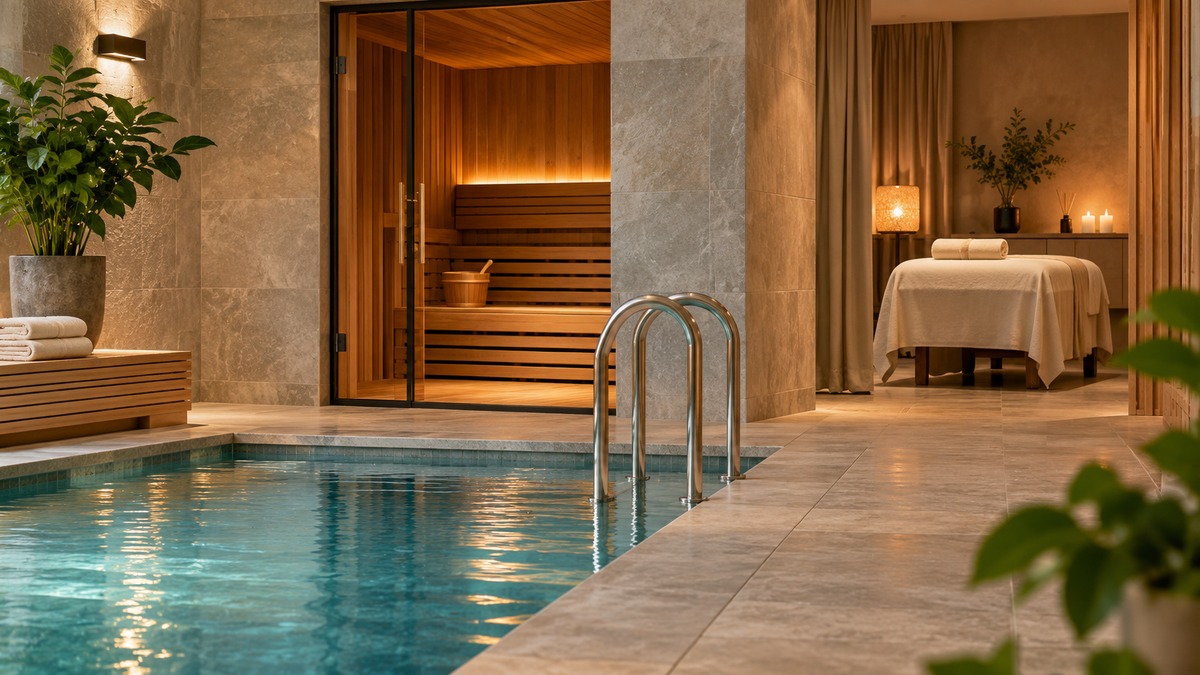
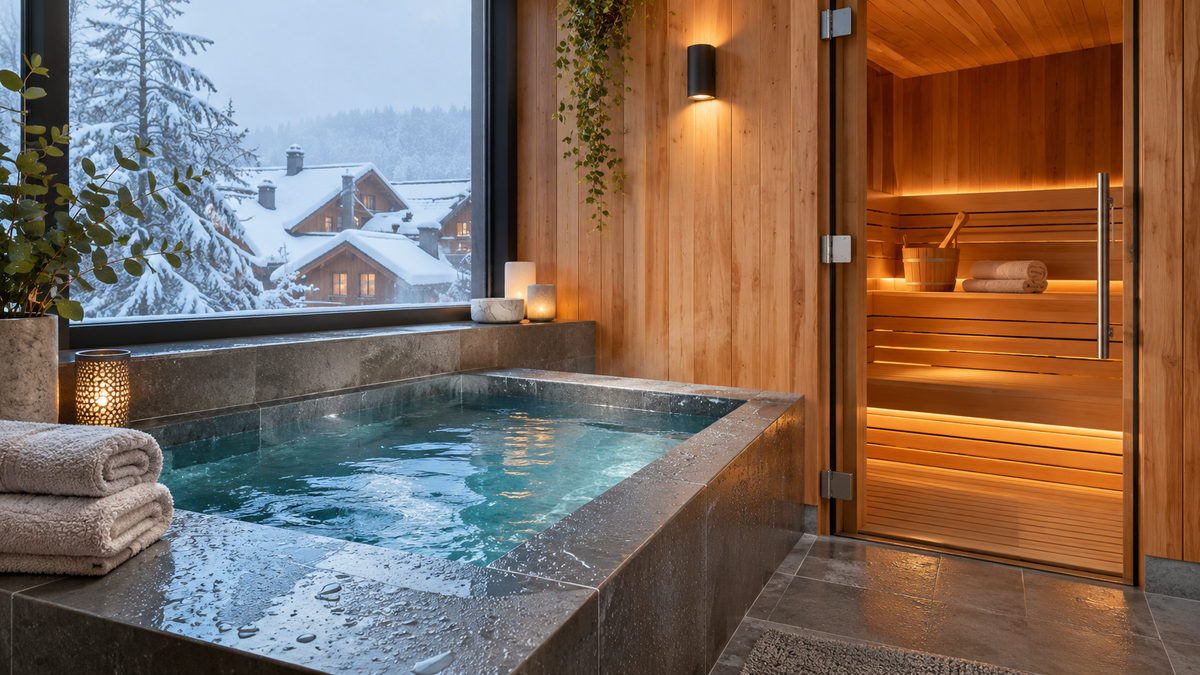
A plunge pool or cool swimming pool. You control the depth and the pace, which is why a slow entry is easiest to manage here.
A cool shower. An option that always works and needs nothing but a sauna nearby.
For places with a hot tub, see accommodation with a hot tub and, separately, wood-fired tubs in the relaxation section. Venues include Hotel Mars, Fazenda na Goncharah, Atlas DeLuxe Hotel and Luxor. If you need a pool to cool off in, see places with a swimming pool.
What's available in Lviv in winter: 18 locations with an open-air hot tub, 13 of which have their own profile. A hot tub in December is the least abrupt form of contrast there is: the water is warm, the air is cold, and it's mostly your face and shoulders that cool down. Ice plunge pools don't exist as a separate category in the city's catalogue at all.
In short
Speed matters more than degrees. Lowering yourself slowly into cool water gives you all the pleasure of the contrast without that first minute when your breathing stops obeying you. And if you have any doubts about your heart, take a cool shower instead of a plunge — your evening will be none the worse for it.