Lviv is hard to plan "in general". One thing works in July, another in November, and a list of places put together for August will give you a spoiled day in February. Below is a way of planning the city by season, plus a few things better known before you set out.
Over twenty parks, and they're not interchangeable
Lviv has more than twenty parks, and what sets them apart above all is what you can do there.
The oldest is Ivan Franko Park, founded at the end of the 16th century and formerly known as Kościuszko Park. It's central and small — more a place to walk through than to spend a day in.
The largest is Znesinnia, at 312 hectares. It's more a stretch of landscape where you can walk for hours without retracing your steps.
Stryiskyi Park is a landmark of landscape design of national importance, and this is one case where the status is obvious on the ground: it has been designed, not just planted.
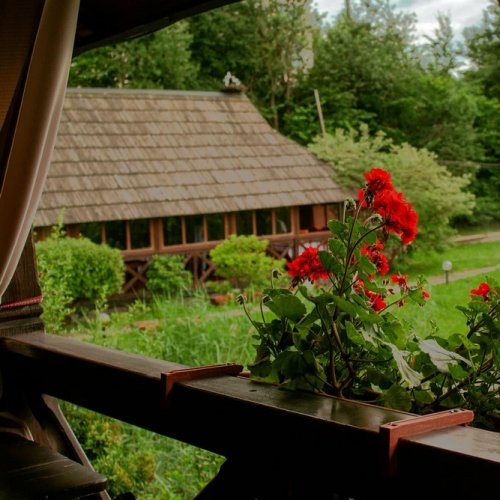
Two stand apart: Shevchenkivskyi Hai, an open-air museum of wooden buildings moved here from elsewhere — a walk with a storyline; and the university Botanic Garden, which has greenhouses — making it the only "park" that works in January too. The Culture and Leisure Park is the option for those who want entertainment alongside the trees rather than the trees themselves.
The full list is under parks in Lviv.
Why there's no castle on Castle Hill
Everyone who climbs Castle Hill (Vysokyi Zamok, literally "High Castle") for the first time asks the same question: there's a view, but where's the castle? The answer is specific, and more interesting than the ruin itself.
The first fortress mentioned in written sources appeared on this hill under Prince Lev Danylovych, although excavations in the 1950s uncovered the foundations of a round tower older than the fortress itself. In the days of Galicia-Volhynia, the medieval state in what is now western Ukraine, the hill held the main treasury: the regalia of power — crowns and thrones — along with valuable crosses. After the Polish King Casimir III captured Lviv in 1340, the wooden fortifications were damaged; the stone castle is usually dated to 1362.
Then came what turned it into a ruin. During the Khmelnytsky Uprising the castle was taken by Cossack troops under Maksym Kryvonis. By the time Charles XII's Swedish army stormed Lviv, nobody was defending it any more — and over the 18th century it gradually fell into ruin. In the 19th century it was dismantled almost entirely: the stone went into building townhouses and paving streets.
Part of old Lviv is quite literally built out of the High Castle. For a walk, this knowledge costs little, but it changes what you're looking at from the hilltop.
One museum doesn't mean one visit
The most common planning mistake is "going to the Lviv Historical Museum". It doesn't exist as a single building — it's a group of branches in different buildings across the city, and each needs its own time and its own frame of mind.
The Arsenal — weapons, in a medieval building. The Glass Museum — cellars with a completely different atmosphere. The Museum at the Potocki Palace — above all the palace itself, where the interiors matter as much as the exhibition. On top of that, there are branches devoted to historical treasures, the feudal era and the struggle for independence, as well as the Bandinelli House.
Separate from these are places that are museums on paper but a different kind of experience in practice: the Under the Black Eagle Pharmacy Museum, which still works as a pharmacy; Lvivarnia, a museum of brewing history; and Lychakiv Cemetery, a museum-reserve which, as a format, is closer to a park than to an exhibition.
The full list is under museums in Lviv; architectural landmarks are listed separately under historic buildings.
How it breaks down by season
April–June. The time for parks and everything outdoors: it isn't hot yet, and the days are long. This is when to put Znesinnia, Shevchenkivskyi Hai and Lychakiv on your list — here the walk itself is the exhibition.
July–August. The heat shifts activity to the morning and evening, so it makes sense to give the middle of the day to museums and buildings, where it's cool. That's the reverse of how people usually plan: museum in the morning, park in the afternoon.
September–October. The most versatile period: both work, there are fewer people, and the light for photos is soft in a way it rarely is the rest of the year.
November–March. It gets dark early, and that limits the day more than the cold does: by five it's already dusk. So count the daylight hours: one park before lunch, one building after. The Botanic Garden greenhouses and the museums come into their own at this time of year simply because they don't depend on the weather.
Why the low season isn't the worse season
In November and February there are fewer tourists in Lviv — and that has several practical consequences beyond cheaper accommodation.
In museums you can actually see the exhibits rather than other people's backs. In cafés that have a queue in August, there's a seat by the window. Tours run in smaller groups, so you can ask questions. And most importantly, in the low season the city looks like a place where people live rather than a stage set — and for some travellers that's exactly what they come for.
What you lose is everything that depends on weather and light. Terraces, long walks, views from above — in fog, all you can see from the High Castle is the fog.
One rule that works in any month
No more than two "big" items a day. The third simply won't stick: after two hours in a museum, the next exhibition feels like a continuation of the last one.
So a day that works looks like this: one place outdoors, one indoors, and a long lunch in between. Everything else is whatever you happen upon along the way — and that's usually what you remember.