"Don't eat after six" is one of the most often repeated rules of healthy living. When you look at the research, the picture turns out to be more complicated — and in some cases the opposite. The key is to be clear about the question being asked, because the answers for sleep and for metabolism are different.
Sleep: a late dinner didn't spoil it
In a study using EEG recordings, healthy volunteers had their dinner moved from five hours before bedtime to one hour before. Researchers measured the structure of their sleep through the night.
The authors describe the result plainly — contrary to the existing literature: there were no significant negative changes in sleep architecture. What's more, after a late dinner, sleep in the first part of the night was deeper (delta activity rose by 2.5 %), while in the second half it was lighter.
So, in itself, eating close to bedtime doesn't ruin a healthy person's sleep. Something else does — and that's what the rest of this article is about.
Metabolism: here the question is different
A parallel line of research looks not at sleep but at blood glucose, and it paints a different picture.
Insulin sensitivity falls in the evening — it's part of the body's daily rhythm. Melatonin, which rises at night, reduces glucose tolerance. So the same food eaten late produces a bigger rise in blood sugar than when it's eaten early.
But there's an important caveat here too. In a crossover study, a late dinner eaten while melatonin levels were high impaired glucose tolerance in carriers of a particular gene variant and did not in people without it. So even on this question, the answer depends on the individual.
An honest summary: for a healthy person's sleep, the timing of dinner matters little; for metabolism, it does matter, and how much depends on the person. There is no universal "nothing after six".
What really ruins a night's sleep
Here the evidence is much firmer, and it's about what you consume, not when.
Coffee. Caffeine is linked to a reduction in total sleep time of about 45 minutes and less deep sleep; no effect on REM sleep was found. But the key figure is a different one: the half-life of caffeine in healthy adults ranges from 2 to 10 hours. That's a fivefold spread, and it's exactly why there's no single correct cut-off time for your last coffee. If you sleep badly, experiment with your own limit rather than following someone else's advice.
Alcohol. In studies, drinking more alcohol in the evening is consistently linked to poorer sleep the following night. On the same list as alcohol are large amounts of fat, cholesterol and red meat.
So a late-night meal that won't spoil your night looks roughly like this: no coffee, no alcohol, a moderate portion and not the heaviest food. The time you eat it is the least important of the four factors.
Why you crave different food at night
One more observation from the same research, and it's a practical one. Shorter or poorer sleep is linked to higher energy and carbohydrate intake the next day — in other words, a short night pushes you towards sweet, heavy food the following morning.
It becomes a vicious circle: a heavy late dinner with alcohol spoils your sleep, poor sleep changes your appetite the next day, and that altered appetite makes the next dinner heavier. The easiest place to break the cycle is at one point — the moment you decide what to order at half past eleven.
What's actually open at night in Lviv
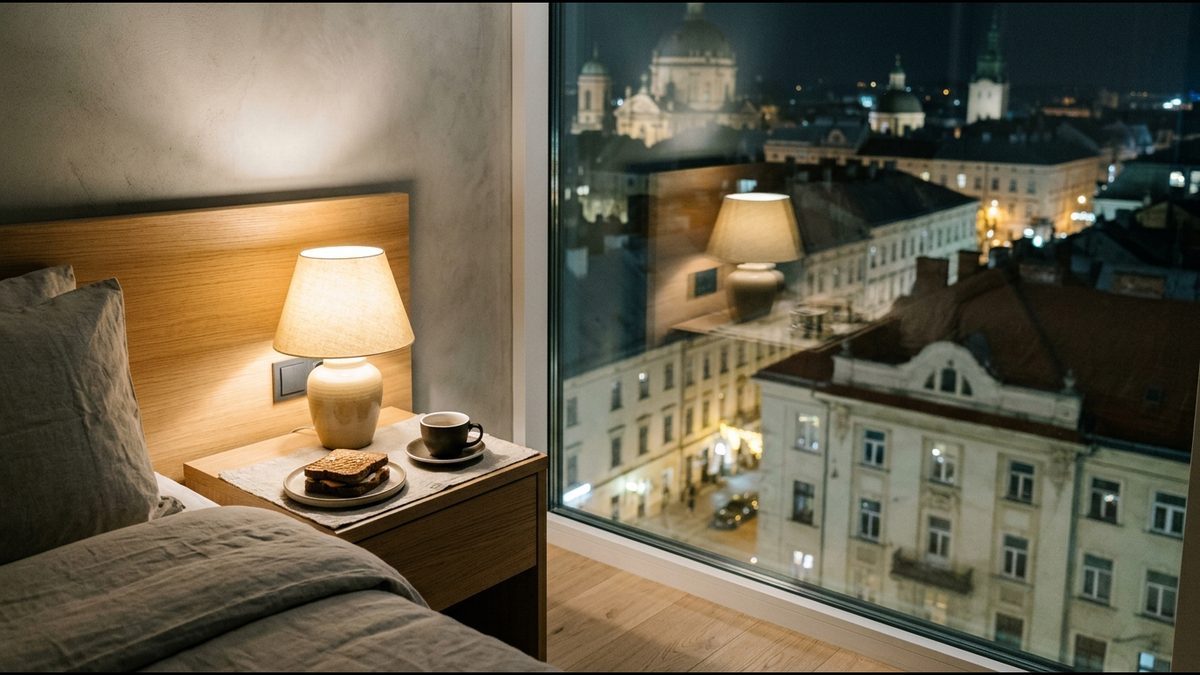
There's an interesting feature worth knowing in advance: in the portal's category of 24-hour venues, hotel restaurants outnumber stand-alone late-night cafés. The logic is simple — a hotel has to feed its guests at any hour, so its kitchen is still running when those on the street have closed.
The practical upshot: if you're looking for somewhere to eat after midnight, hotels are the place to look — and you don't have to be staying there, as the restaurant is usually open to everyone.
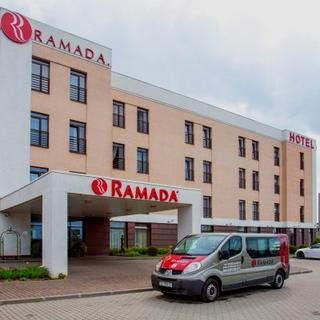
The full list is in venues open 24 hours. Among them are Modern Art Hotel, Ramada Lviv, Tourist Lviv Hotel, Jam Hotel on Hnatiuka Street and Inn Lviv Guesthouse.
If you'd rather not go out, there are places that deliver; and if you've planned a night in the city in advance, it's easier to book a hotel with its own kitchen than to hunt for somewhere open at three in the morning.
In short
The timing of dinner is the weakest of the factors. Coffee, alcohol and portion size matter more — coffee most of all, and everyone's limit is different because the rate at which it's cleared varies fivefold. So the question "is it OK to eat at night?" has a boring answer: yes, as long as it's food and not coffee with brandy.