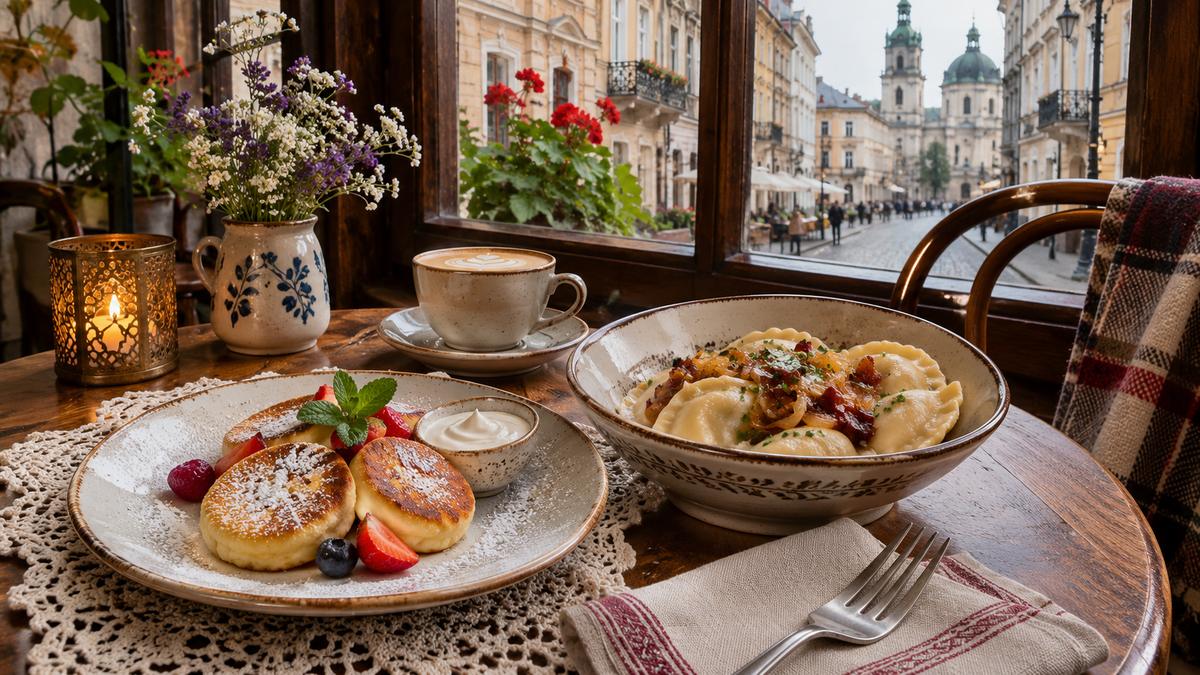
Food guides usually just list dishes. Here it's more useful to understand first why they are the way they are — because Lviv's cooking works differently from that of any other Ukrainian city, and you can see it in the menu at a glance.
Why the dishes have such unusual names
Galician cuisine is the regional cooking of the lands that once made up the Kingdom of Galicia and Lodomeria within Austria-Hungary — today's western Ukraine. It is a borderland cuisine in the literal sense: a blend of Ukrainian and Polish cooking, with strong Austrian, Hungarian and Jewish influences.
It has its own internal divisions too: Lviv's cooking belongs to the eastern part of Galicia and differs from Hutsul (Carpathian highland) or Kraków cooking. That explains the names that puzzle visitors: palyushky, lazanky, flyachky, knedli, bigos, shpetsle.
In practice: if the menu lists a dish you've never heard of, it's most likely a genuine Galician dish rather than the restaurant's own invention. Ask about it instead of skipping it.
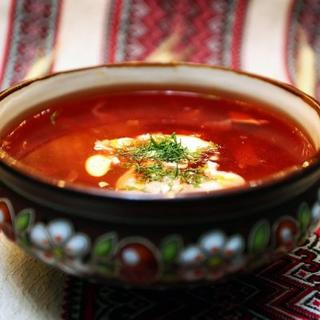
Borscht: the same soup, a different logic
This is the most interesting detail, few people know it, and it's directly about Lviv.
In central and eastern Ukraine, borscht gets beans along with grated beetroot, potatoes and cabbage. In the west, apart from vushka, nothing else goes into it. So Galician borscht is a deliberately more restrained dish, not an "incomplete" one.
Vushka are small pinched dumplings filled with mushrooms. If your borscht arrives with them and without potatoes, the kitchen hasn't made a mistake — that's simply how it's done here.
Borscht has been inscribed on the list of intangible cultural heritage, and its regional variations are part of the reason it was included. So it's worth trying both versions, and Lviv is the easiest place to do it.
Syrnyk, a dessert with disputed authorship
Lviv (or Galician) syrnyk, a traditional baked cheesecake, is the city's best-known dessert. Its method is quite specific: full-fat farmer's cheese pressed through a sieve, butter, and boiled potato or semolina to help it hold its shape. It is glazed with chocolate and served chilled.
Who invented it is disputed, and that too is part of the story. Some sources credit the well-known Ukrainian cookery writer Daria Tsvek, who published the recipe in her book "Solodke pechyvo" ("Sweet Baking"). Historians, however, point out that similar recipes existed in Galician cooking long before that.
A practical tip that follows from the method: if the syrnyk is dense and dry, the cheese wasn't sieved. If it falls apart, it lacked potato or semolina. A good one should be tender yet still hold its shape.
The dishes that define this cuisine
Kapusniak and kvasnytsia are soups made with sauerkraut, often cooked with a pork bone or pork rind. The most "homely" part of the menu.
Knedli are boiled dough dumplings, usually filled. An Austrian legacy.
Palyushky and lazanky are made from dough and potatoes; they appear on menus less often, which is exactly why they're worth looking out for.
Flyachky is a heavily seasoned veal tripe soup. Not for everyone, but a true Galician classic.
Potato pyrohy are not sweet; other regions would call them something else entirely.
Bigos and braised cabbage dominate in the west where central Ukraine would serve a different side dish.
Yaryna soups are vegetable soups; the word "yaryna" on a menu means precisely vegetables.
Where to try them
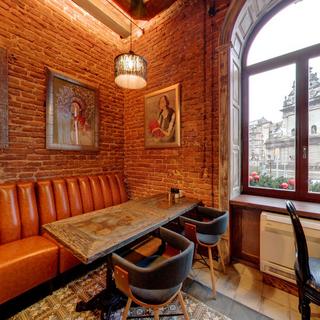
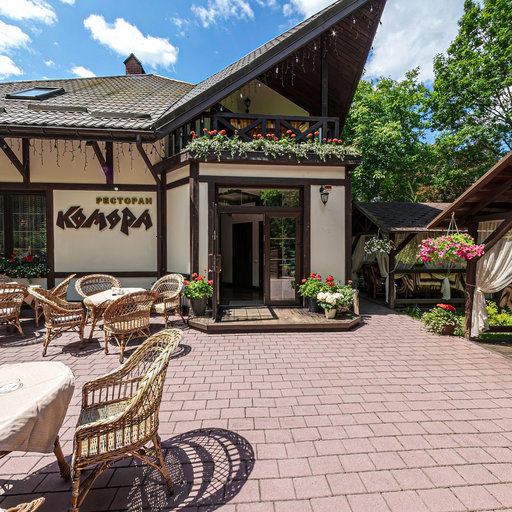
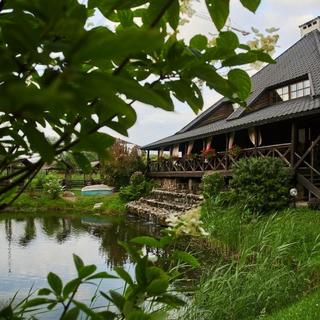
For places where Galician and Ukrainian cooking is the core of the menu rather than a single section, see the full list of Ukrainian cuisine in Lviv. Among them are Borshch Restaurant, Shlyakhtych Restaurant, BER NAR DYN, Warszawa Restaurant, Hutsul'ska Grazhda, with a distinctly Hutsul part to its menu, and Komora.
For something sweet, try bakeries and patisseries, where the syrnyk is usually made in-house rather than bought in. For the wider choice, see restaurants in Lviv.
How to fit it into one trip
Three meals, no more — and each with just one "new" dish rather than all of them at once.
First lunch: borscht with vushka plus one main: knedli or potato pyrohy. Dinner: something you definitely won't find at home — flyachky, bigos or a yaryna soup. On its own, not after dinner: syrnyk with coffee. It's actually quite heavy, and after a full meal you won't appreciate it.
The main thing to avoid is trying to taste everything in two days. Galician food is rich, and you get the most out of it not by quantity but by noticing how it differs from what you're used to.