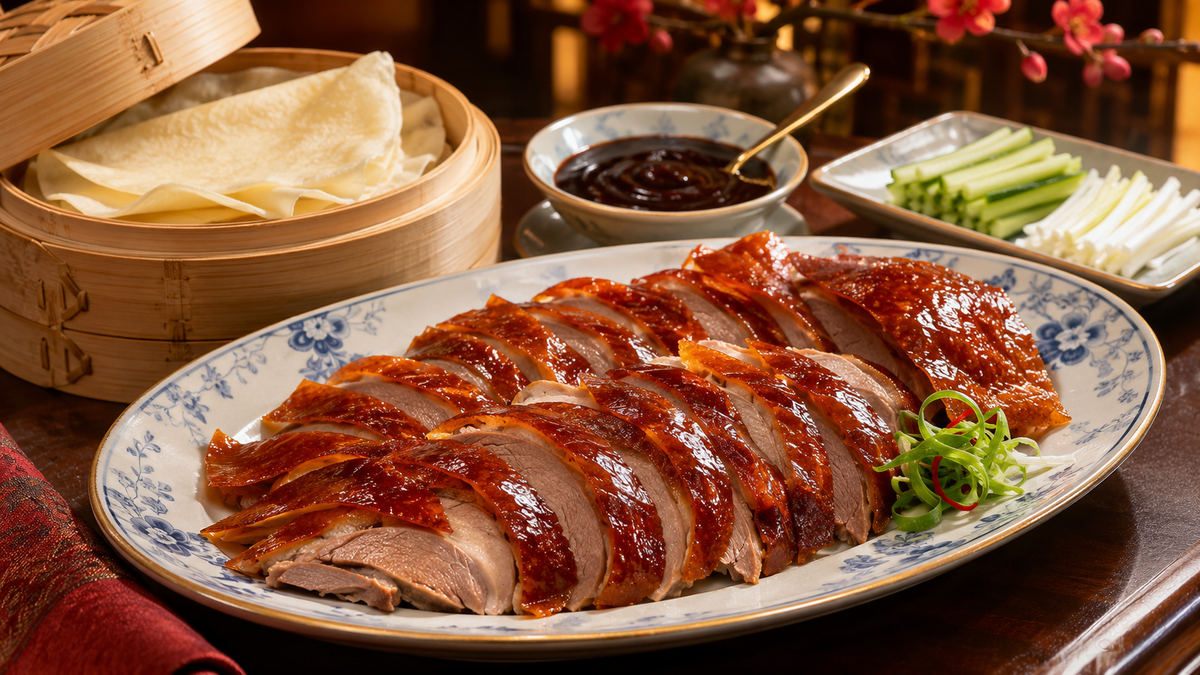
A Chinese menu in translation is easy to read and explains very little. One dish is named after the title of a palace guardian, Peking duck has a past in Nanjing, and a pepper turns out to be the berry of a lemon's relative. Let's read a few names literally, since that makes it easier to remember what you're ordering.
First, the word "Chinese"
There's no such thing as "Chinese cuisine" either. People usually speak of eight great culinary traditions: Sichuan, Hunan, Cantonese, Fujian, Jiangsu, Zhejiang, Anhui and Shandong. Sichuan cooking is famous for heat and spice, for example, while Cantonese relies on the natural taste of the produce. Sichuan isn't uniform either, and it's divided into several branches by district.
So a restaurant advertising "Chinese cuisine" nearly always means something narrower, and it's perfectly reasonable to ask which province stands behind the menu.
Kung Pao: a chicken with an official title
Kung Pao chicken (Gongbao in standard romanisation) is named after a person, or so the most common version goes. Ding Baozhen (1820–1886) was a Qing dynasty official and governor of Sichuan province. Gongbao, "palace guardian", was his honorary title. The second character adds a puzzle: in the Chinese name, the word ding means a small dice, the way the meat is cut, and it also matches the official's surname. That makes it a pun on a menu, one and a half centuries old.
The origin remains disputed. The provinces where Ding served, Guizhou, Shandong and Sichuan, each have their own version. The Sichuan form became the best known, with diced chicken, peanuts and chillies. The world also knows sweeter variants today, so Kung Pao can taste very different from one place to the next.
Peking duck came with the court from Nanjing
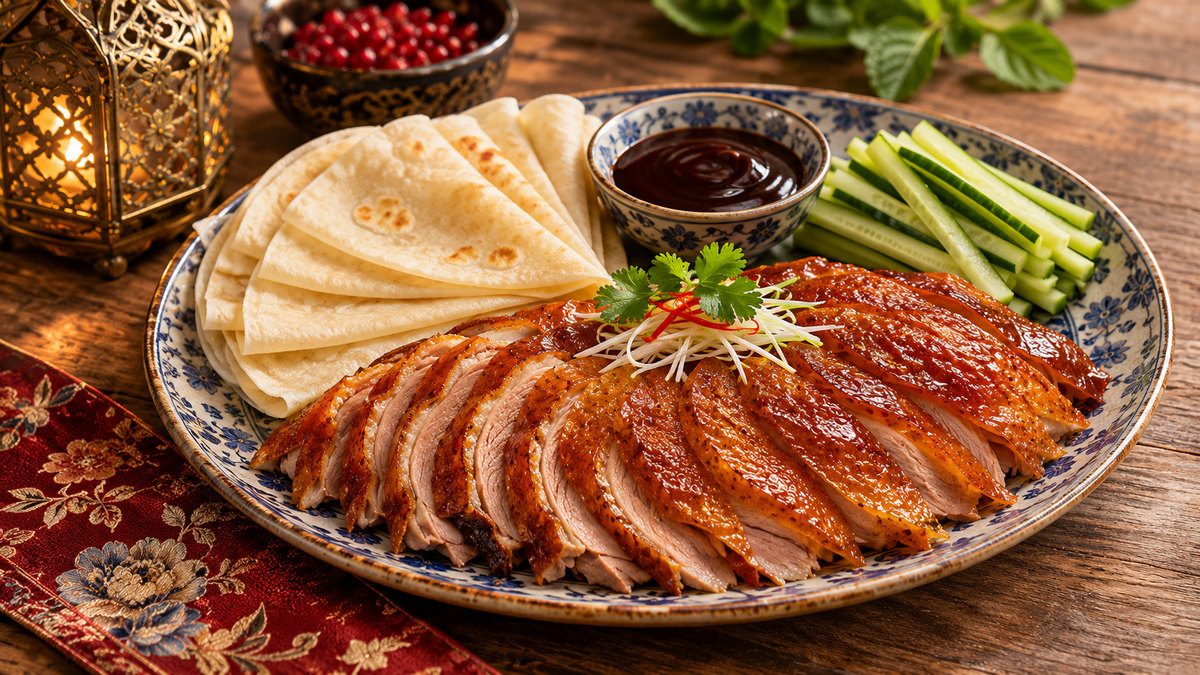
Duck was already being roasted in China under the Southern and Northern dynasties. An important turning point came under the Ming. The dynasty's first capital, Nanjing, loved duck, and when the Yongle Emperor, who seized power in 1402, later moved the court to Beijing, the cooks, by the common account, went too. There are, however, several versions of the dish's origin.
Then came two schools. Bianyifang, considered Beijing's first duck restaurant and dated to 1416, roasts the bird in a closed oven. Quanjude, opened in 1864, staked its reputation on hanging the bird over the fire. It's also said to have made the dish more accessible beyond noble circles.
So the name points to a city, while the real story is cooks being relocated along with the court.
Dim sum: "to touch the heart"
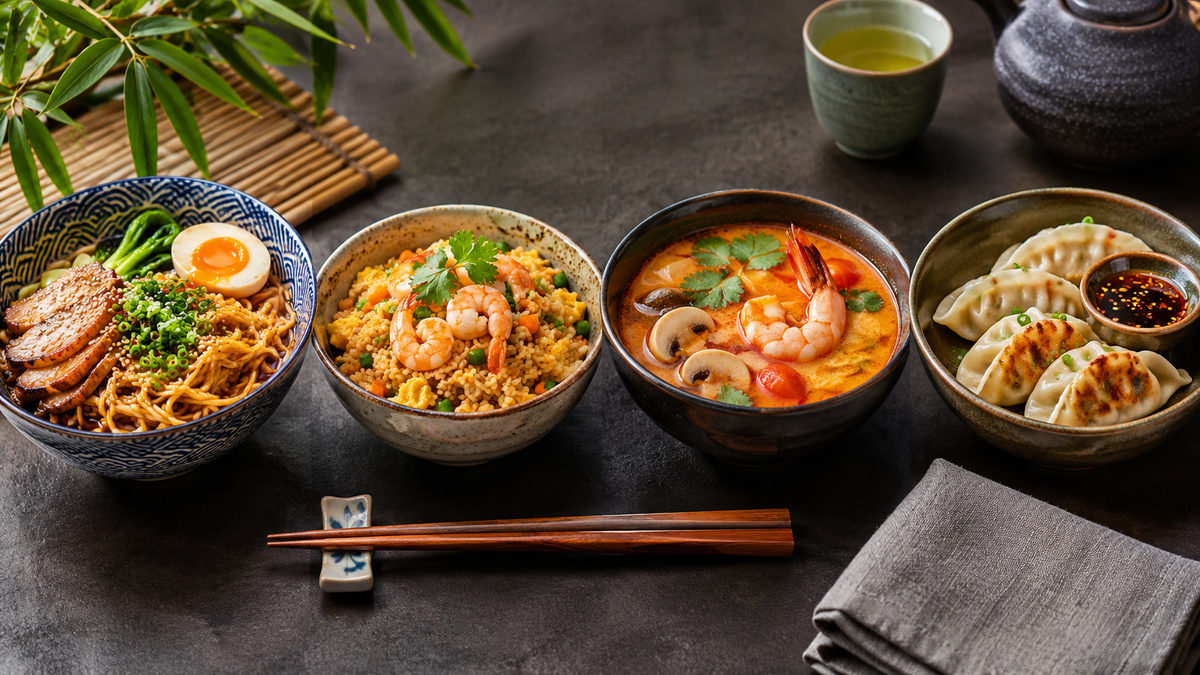
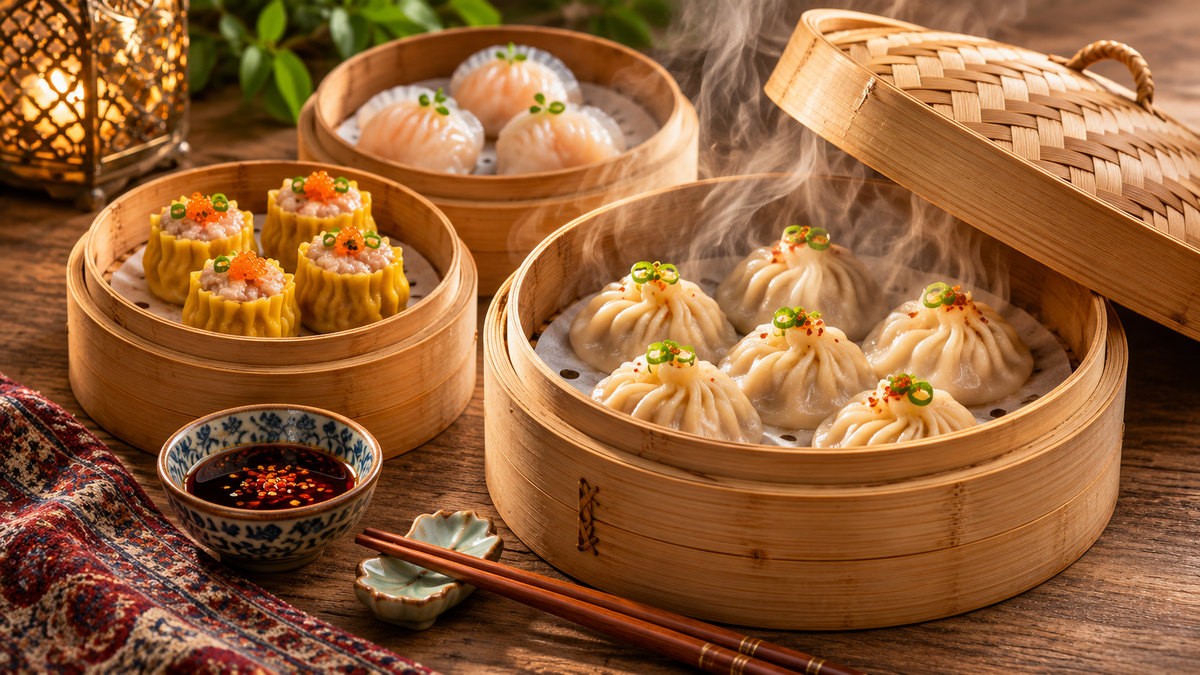
That's the literal translation of the Cantonese dim sum. Dim sum is a whole family of small portions, steamed, fried or boiled, served in bamboo baskets. They're eaten with tea, and the whole meal is called yum cha, "drink tea".
In the old days Canton's teahouses offered travellers "one cup and two pieces". A complete format grew from the custom: tea on the table and plenty of small portions. Fluffy steamed bao buns belong to this culinary family too. A popular legend credits them to the strategist Zhuge Liang, though a legend is all it is. More cautious sources place the arrival of the filled bun in the Three Kingdoms period.
Sichuan pepper isn't pepper
What tingles on your tongue in a Sichuan dish is the dried husk of a fruit from a tree in the rue family, distantly related to citrus. It's nothing like black pepper or chillies. Its peculiar effect comes from a compound called hydroxy-alpha-sanshool, which excites touch receptors rather than pain receptors, so your lips feel a vibration of about 50 hertz, as if someone had touched them with an electric toothbrush.
Sichuan cooks pair it with chillies: ma is numbing and la is burning. In the combination known as mala, the sensation seems to soften the heat. Some people are thrilled by it and others just find it a strange numbness that lasts a few minutes, so your first such dish is best shared.
An intriguing detail: the United States banned imports of this spice from 1968 to 2005 because of the threat to citrus orchards, although before 2002 the ban wasn't closely enforced.
An illness that was never proved
In 1968 a letter appeared in an American medical journal and gave rise to the phrase "Chinese restaurant syndrome". Monosodium glutamate got the blame. The substance occurs in many everyday foods, including tomatoes and breast milk, and major reviews in 1987 and 1995 concluded that it's safe for most people. Even the letter itself is murky: half a century later someone claimed to have written it as a joke, but this could be neither confirmed nor refuted. Many people now consider the phrase outdated and offensive.
What else is on the menu
Mapo tofu. Sichuan tofu in a hot sauce, a classic dish with Sichuan pepper.
Hot pot. A boiling broth on the table into which diners dip the ingredients. The Chongqing version is fiery.
Jiaozi. Chinese dumplings, folded for big family holidays.
Dan dan. Sichuan noodles in a spicy sauce.
Spring rolls. A crisp snack in the shape of an ingot.
Tea. Green, oolong, pu-erh: in Cantonese teahouses it matters as much as the food.
Where to try it in Lviv
The portal has no separate selection of Chinese restaurants yet, so look among the Asian restaurants. The Split restaurant complex has a whole section of bao, momo and dim sum as well as "duck à la Peking style", and the "à la" is honest, because this is a fusion restaurant. Look for the Sichuan line in the same place, in its duck with Sichuan sauce. The poultry section at the Black Cat Pub & Restaurant includes a sweet and sour Sichuan Kung Pao chicken.
Read a dish's name aloud and a whole biography comes into view.
Menus change, so a dish mentioned here may no longer be available. If it's the reason you're going, it's best to call ahead.