It sounds odd, and the objection is always the same: why pay for a bed when your own is twenty minutes away? Yet in recent years this format has become a category of its own in the hotel business — so much so that researchers have started studying it. And guests' motives turn out to be different from what you might expect.
How often matters more than how long — and that's been measured
Let's begin with a figure that changes the terms of the discussion.
A meta-analysis of thirteen studies with a combined sample of 1,428 people and an average holiday length of 11 days found that the length of a break has almost no bearing on how restorative it is. A separate study found no difference between holidays of 4.5 and 9 days.
And a 2025 study added the key point: short breaks every two months support wellbeing better than rare long ones.
The conclusion is simple: one night away from home isn't a pale imitation of a holiday, but a format with a similar effect. The difference between one day and nine is smaller than the difference between one day and none.
There's also a less pleasant part worth knowing: the wellbeing boost from a break fades almost completely within the first week of returning to work. That's exactly why frequent short breaks come out ahead.
What people want from a hotel in the city where they live
This question has been studied in its own right: interviews and surveys identified 28 different motivations and three quite distinct types of guest.
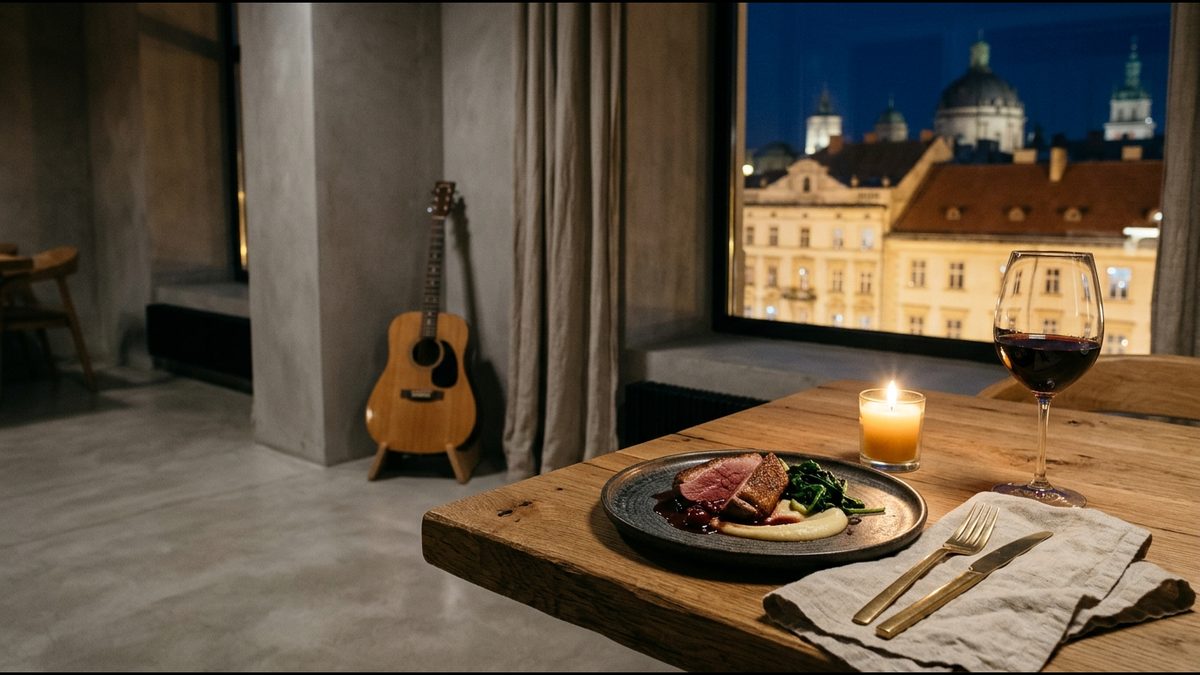
Experience seekers. What they want isn't a bed but an occasion: a different view from the window, a dinner they wouldn't have at home, a sense that the evening is marked out as special.
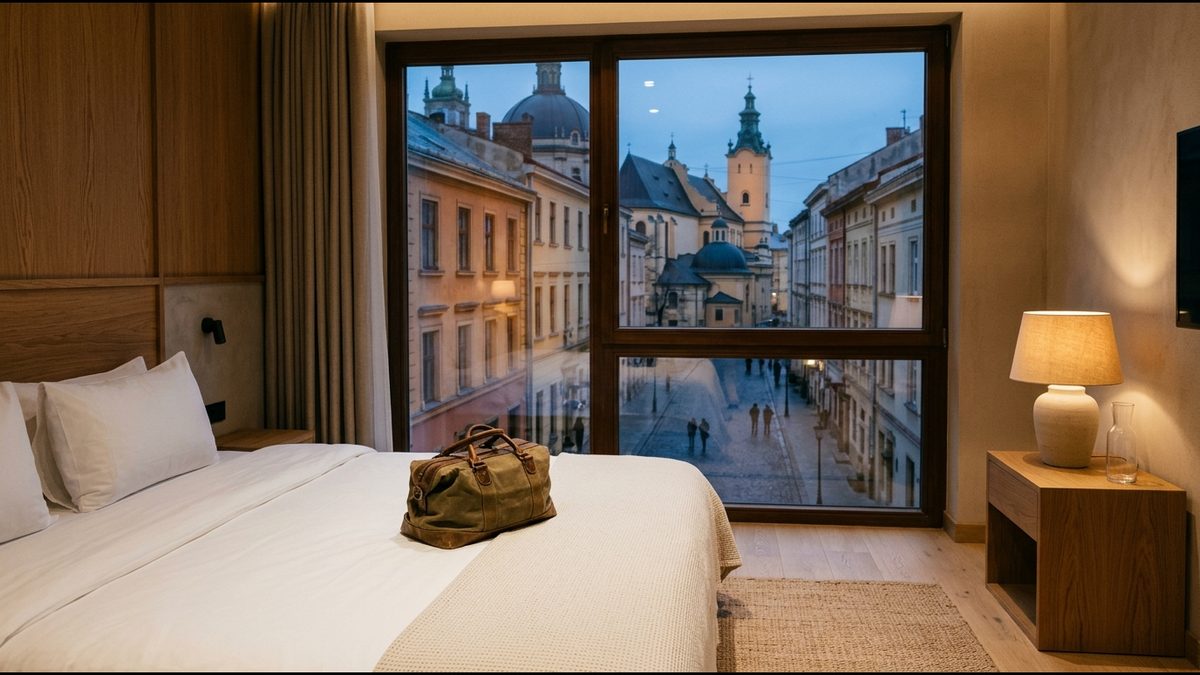
Explorers. For them, a hotel in their own city is a way to see their neighbourhood through a visitor's eyes — to go to places you never visit when you live nearby.
Luxury seekers. The most straightforward motive: treating yourself to what you don't have at home — a pool, a spa, service, a breakfast someone else has made.
On New Year's Eve the first type is the most common, and the reason is practical: having the celebration and the bed under one roof removes the biggest headache of 31 December — getting home.
What a hotel actually does for the evening
No logistics after midnight. Nobody's driving, nobody needs a taxi at three in the morning, nobody leaves early because they "have to get home".
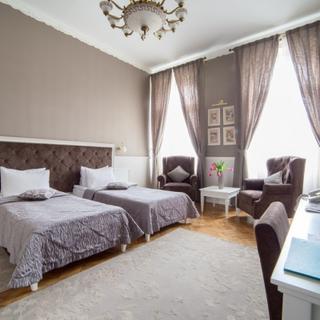
A different space — something your own flat can never offer by definition. No tidy living room gives you the feeling of "we're not at home".
A morning with nothing to do. The dishes, the crumbs, the leftovers — none of it is your problem. For many people it's 1 January, rather than the night itself, that is the reason to book.
And the limits. A hotel doesn't create a celebration on its own: if there's nothing to do in the room and no plan for the evening, you'll simply get a night in a different bed.
How to do it without disappointment
Book with dinner, not separately. If the hotel has its own restaurant, the short walk from table to room is the whole point. Otherwise you'll just be relocating after dinner.
Find out what's happening at the hotel on the 31st. Some hotels put on their own programme, some don't, and these are two different nights.
Ask about breakfast and check-out time. New Year's Day is the one day of the year when "check-out by noon" really matters.
Don't take the cheapest room in an expensive hotel. Of all the options, this one disappoints most often: you pay for the name and get a room without a window.
Look at the room once. If there's a 3D tour or honest photos, that's five minutes that settle the matter.
Where this works in Lviv
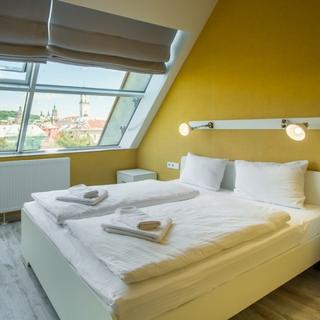
In the city centre, the "dinner plus overnight stay" format is easiest to arrange at hotels with their own restaurant: Hotel Europe, Modern Art Hotel or Opera Passage Apart Hotel — the latter is handy for a group that needs several rooms close together. For a wider selection, see hotels in Lviv.
If the third motive appeals to you — doing what you can't do at home — look at accommodation with a pool or places with a hot tub (in Ukraine, often a traditional outdoor wood-fired vat): they turn a single night into an occasion without any programme at all.
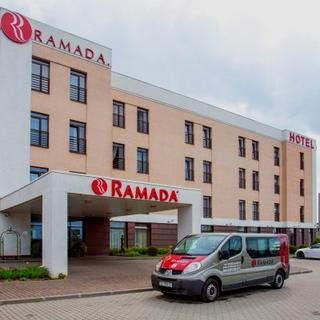
And for the "just not at home, inexpensive and nearby" option, the catalogue has the Tourist Lviv Hotel and Ramada — both outside the centre, which on a night when you don't feel like walking around town is more of an advantage than a drawback.
And the thought worth taking away: you're not paying for a bed, but for the fact that on 1 January nobody in your flat will have to clean up. Research shows a short getaway works almost as well as a long one — and one evening a year is something everyone can manage.