Articles on this subject tend to promise that an alcohol-free party will be just as much fun, only more mindful. It's more honest to start from the opposite end: there is an experiment showing that alcohol really does do what it's kept around for at these events. And that is precisely what turns the conversation about an alcohol-free format into something practical rather than a pep talk.
Alcohol really does bring people together — tested on 720 people
The experiment worked like this: 720 people (equal numbers of men and women) were seated in groups of three, all strangers to one another. Each group was given a drink: alcoholic, a placebo (looking and tasting like alcohol but containing no ethanol), or an ordinary soft drink. They drank for 36 minutes while the group's behaviour was recorded.
The result: groups given real alcohol showed significantly more social bonding than the placebo groups. In other words, it wasn't expectation or atmosphere doing the work, but the substance itself.
This matters because it closes off the most common argument — that people only "think" they can't relax without wine. They don't just think it. The effect is real and pharmacological, and most of the time it's needed for one thing: breaking the ice between people who barely know each other.
So the question isn't "what can we serve instead of wine?" but what else can break the ice.
Your audience has already changed — and that's not a guess
Before designing the evening, it's worth knowing who you'll be spending it with.
In Britain, the share of young people who had drunk alcohol in the past week fell from 67 % in 2002 to 37 % in 2021, making this age group the lightest drinkers among adults. Among 15-year-olds, the figure dropped from 52 % to 20 %. In the US, the share of adults under 35 who drink at all fell by ten points over two decades, to 62 %. In Sweden, the share of 15- and 16-year-olds who don't drink at all rose from around 20 % to 50 %.
Some of this shift may be down to changes in survey methods, and researchers say so openly. But the direction is the same across several countries and has held for two decades.
The practical upshot: in a team with an average age of around thirty, people for whom alcohol isn't the focus of the evening are no longer a minority. An alcohol-free party isn't a concession to one person.
What can actually do the ice-breaking
If alcohol's job is to remove the awkwardness of the first hour, its replacements have to do the same thing — not just sit in a glass.
Something to do together from the very first minute. Not a standing buffet where everyone clusters in threes, but an activity that keeps people's hands busy: cooking, an escape room, a game, a workshop. The tension eases because there's a topic nobody has to invent.
Structure instead of free time. An evening with clear markers — what happens when — removes most of the discomfort. Someone who doesn't know what to do for the next twenty minutes feels worse than someone without a glass in hand.
Roles, not a host. When everyone has a small job — one person in charge of the music, another of photos, another of a game — you end up with more participants than spectators.
Drinks that don't feel like a punishment. It's a small detail with a measured effect: in a study of office parties, offering both alcoholic and non-alcoholic options reduced the share of disappointed guests. A glass of water among wine glasses marks someone out as the exception; a good alcohol-free cocktail doesn't.
A shorter format. An evening without alcohol won't hold for five hours, and that's fine. Three hours with a programme beats five with lulls.
What to avoid
Don't announce a "dry rule". A ban draws attention to what's missing. A different order works better: an interesting programme in which alcohol simply isn't the centre of things.
Don't swap alcohol for alcohol-free beer "so it feels the same". If the format rests on imitation, it's a stronger reminder of what's absent than water would be.
Don't make attendance compulsory. This is a general rule for office parties: when people feel obliged to be there, the event loses its value — for them and for everyone at their table.
Where in Lviv this format is easier to pull off
An alcohol-free evening needs things to do, so choose a venue not for its bar but for whether there's something to do and room to move around.
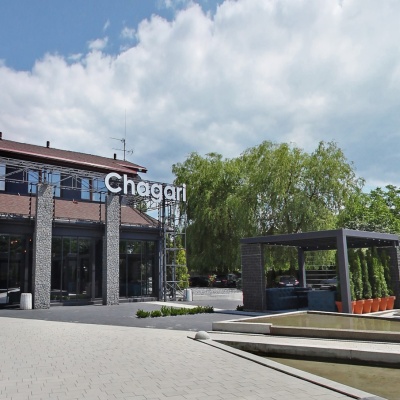
Spaces with several areas work best: Chagari, the conference hall at the Swiss Hotel or the conference hall at the Warszawa Hotel. In venues like these the programme can be spread across rooms rather than keeping everyone at one table.
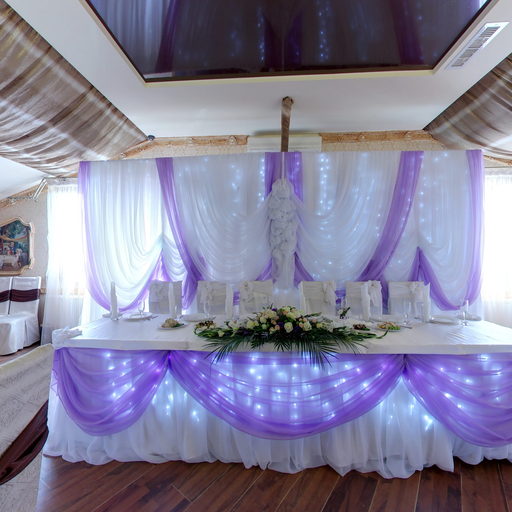
If the evening is still built around dinner, banquet halls such as Capital offer a separate space where it's easy to get up and change seats — which matters more for an alcohol-free format than the menu. For a wider choice of places with their own activities, see the leisure and entertainment section.
For a daytime option — often a better fit for this kind of format than an evening one — try cafés and coffee shops or the lobby bar at the Swiss Hotel: short, bright, and without the expectation that "the night has to go on".
And a conclusion without the cheerleading: alcohol really was doing part of the work, and now the programme has to do it instead. The good news is that a programme, unlike wine, works the same way for everyone.