The less documentation a Christmas custom has, the more confidently people tend to talk about it. "It's always been done this way" is the most common phrase in Christmas writing — and the one least often checked. Sort the traditions of Galicia (western Ukraine) by the strength of the evidence and you end up with three separate piles: what ethnographers have recorded, what is plausible but unconfirmed, and what appeared in the 20th century and only looks old.
This article is about telling them apart. The holiday loses nothing by it, and you'll know what you're actually doing.
What's on record: the sheaf, kutia and a meatless table
The most solid part is the Holy Supper on Christmas Eve, and it's described in field records.
The ethnographer Lesia Kostiuk, who studied Christmas and Epiphany rituals in Eastern Galicia from the second half of the 20th century to the early 21st, records that on the morning of Christmas Eve the head of the household brings into the house a sheaf of wheat, oats or rye — the didukh. For Galicians it stands not for a lone ancestor of the nation but for the father of the first family, and these days it is placed near the icons.
The second documented element is the meatless nature of the supper. The explanation is simple and well documented: Christmas Eve falls on the last day of the Nativity Fast. So dishes without meat, milk, eggs or fat are not symbolism — they're the calendar.
The third is kutia and uzvar as the core of the table. Kutia is made from wheat berries with honey, poppy seeds, nuts and raisins (in some regions from rice); uzvar is a drink of dried apples, pears, prunes and rosehips, sweetened with honey.
If you want to know what it really looks like, go by these three things. They are older than any advertising.
The vertep, a traditional Nativity puppet play, is a special case. It is known from written references in the 17th century, but the actual stage props and a written script survive only from the 18th. In other words, we know about the vertep in the 17th century but have none of its objects — a distinction worth keeping in mind when you read that "the vertep is more than four hundred years old".
Twelve dishes: a number with more than one tradition
This is where the second pile begins, and it consists of interpretations.
There are at least two explanations for the number. Believers read twelve as the number of the apostles; ethnographers suggest a link with the twelve months. Neither explanation has the status of a document — they are interpretations, and they are presented as such.
What's more, the number itself isn't the same everywhere. Ethnographic records note seven, nine and seventeen dishes, depending on a family's means and local custom. The writer Yurii Vynnychuk quotes the ethnographer Ksenofont Sosenko, according to whom there must always be twelve dishes — and the same author questions how old this rule really is. The sources openly contradict each other.
The honest way to put it: twelve dishes is a widespread norm, but there is no proof that it is either ancient or universal. If you have nine on your table, you haven't broken the tradition — you've simply followed a different version of it.
What turned out to be a later addition
The third pile is made up of customs that almost everyone considers "ours since time immemorial", even though they are younger than photography.
The polaznyk is the exception that doesn't belong here, which is why it comes first, for contrast. The first visitor on Christmas Day brought good luck for the whole year, and nobody sat down at the table until he arrived. The old omen was a rule for the whole family, not a private wish.
The Christmas tree. The custom came from Western Europe, starting in 16th-century Germany. It reached Ukraine late and for a long time remained a mark of wealthy families and the gentry.
Grandfather Frost (Ded Moroz). He is a Soviet replacement for St Nicholas, not a parallel folk figure. The Snow Maiden is even younger: the character took shape in the 19th–20th centuries and became popular thanks to Rimsky-Korsakov's opera.
The New Year table with Olivier salad and champagne as the clock strikes midnight. This familiar ritual took shape in the late Soviet period, in the 1980s: the salad, tangerines, sparkling wine, a wish written down and burnt. Ethnologists describe it as a set of rituals adapted to the needs of the time, not as heritage.
And the key point about the order of the holidays: in the old days New Year wasn't treated as separate from the Christmas season. It was celebrated in the middle of the festive period, between Christmas and Epiphany, on the night of 13–14 January. The underlying theme of the winter rituals was the coming year's harvest, not a review of the year just ended.
"Shchedryk" isn't a Christmas carol
A special case: almost everyone gets this wrong, and it's easy to put right.
"Shchedryk" is a shchedrivka, not a koliadka — a New Year song, not a Christmas carol. Shchedrivky were sung to praise a household and wish it plenty for the New Year by the old calendar, that is, on the night before 14 January, not at Christmas. Mykola Leontovych worked on his arrangement of this folk melody for years; the final version dates from 1916, and it was first performed in Kyiv at the end of December 1916 by the Kyiv University choir.
The English lyrics that turned the melody into "Carol of the Bells" were written by Peter Wilhousky, who worked for NBC radio.
The date of the English-language premiere, however, varies between sources: some give March 1936 in New York, others a 1921 performance at Carnegie Hall, but without the English words. So "since 1936" and "since 1921" are claims about different things, and it's best not to merge them into one.
If you sing "Shchedryk" on 24 December, you're singing a New Year song at Christmas. No harm done — but now you know.
A date that changed within our lifetime
The newest layer of the tradition is the calendar, and it has changed before our eyes.
In 2023 the Ukrainian Greek Catholic Church announced its move to the Revised Julian calendar from 1 September, the start of the new liturgical year. That same year the Orthodox Church of Ukraine made the corresponding decision: fixed feasts, including Christmas, Epiphany and St Nicholas Day, moved to new dates. Easter and Pentecost were not affected.
The state side of the story is older: the Verkhovna Rada, Ukraine's parliament, introduced an additional public holiday on 25 December back in 2017.
How this plays out in practice is known from surveys rather than a census, so it's a trend rather than a precise picture. A comparison of two polls by the Rating sociological group showed the share of those celebrating only on 25 December rising from 4 to 11 per cent, and of those celebrating on both dates from 18 to 25 per cent; the change of date itself was supported by 44 per cent of respondents.
In Lviv the Christmas season today lasts longer than a single evening. Some people celebrate on 25 December, some on 7 January, some on both — and restaurants cater for both scenarios. Add the Lunar New Year, which this time falls in early February, and there are more celebrations than people usually assume.
How to do it in Lviv
There's one thing worth knowing in advance: in Galicia, Christmas Eve supper is a home occasion. People don't go to a restaurant for it: that's simply the custom here.
Restaurants have a different place in your Christmas plans: the days between Christmas and Epiphany, when the family has already gathered and wants to go out together.
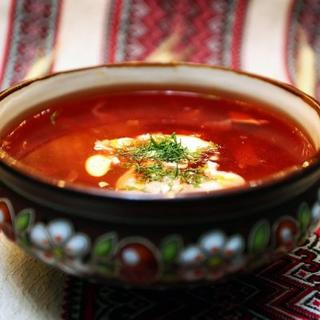
For a table rooted in Galician cooking, look at restaurants serving Ukrainian cuisine: Borshch Restaurant, Shlyakhtych Restaurant, Komora, Hutsuls'ka Grazhda, whose Carpathian style of cooking is closer to the ritual food than the urban tradition, and Lviv Outskirts Restaurant. For a large family that won't fit around a home table there's a separate category — restaurants with banquet service; among the venues with their own Christmas programme, Bachevski Restaurant is often mentioned.
Kalach (a braided festive loaf), poppy-seed rolls and other festive pastries are the domain of bakeries and patisseries, and here it's worth asking when things were baked rather than what's on offer.
Three questions that separate tradition from decoration
The next time you read "an ancient Galician tradition", ask three questions — the same ones researchers use.
First: who recorded it, and when? An ethnographer's field record from a specific region is a document. "They say that…" is not.
Second: is it a description or an explanation? "There is kutia on the table" is a description. "Kutia stands for the unity of the family line" is an explanation, and it may have appeared much later than the dish itself.
Third: are there other versions? Where a tradition is alive, there are always several versions — village by village, family by family. Where there is only one version and it's the "correct" one, you're most likely reading an advert or a retelling of a single book.
And one last thought that settles most Christmas arguments: a tradition you pass on yourself matters more than one you try to prove to someone. A didukh in the corner and nine dishes made with your own hands mean more than twelve brought by a delivery driver.