Every December, lists of "colours to wear to see in the new year" start doing the rounds, with references to the year's symbol, its element and good luck. None of this can be tested — predictions have no mechanism. But there's a related question that science really has looked into: whether what we wear has any effect at all. The answer turned out to be more interesting than any horoscope, and it comes in two parts.
The red effect: tested and not found
The best-known claim about colour in clothing goes like this: wearing red makes a person more attractive to the opposite sex. It's widely repeated in "what to wear to the party" advice.
The claim has been put to the test again — in independent replications. The result: no confirmation was found. The researchers stated plainly that their data do not support the idea that red increases attractiveness. Another series of tests, including an experiment with a considerably larger sample, produced the same result.
This doesn't mean "don't wear red". It means that colour doesn't work reliably enough as a way of influencing others to count on it.
But clothes do affect the person wearing them
The second part of the story is more interesting. There's a line of research called "enclothed cognition": the idea that clothes change not only how others see us, but how we ourselves think and behave.
The mechanism is described as twofold: it depends on the symbolic meaning of a garment plus the physical experience of wearing it. One without the other has no effect: knowing that a white coat belongs to a doctor isn't enough — you have to put it on.
An honest note on the quality of the evidence is needed here. Early studies in this field were small and lab-based, and their replication raises questions. However, a separate analysis showed that studies published after 2015, when methodological standards in psychology rose noticeably, do carry evidential weight and support the core principle.
So the practical conclusion is turned on its head: choose your outfit not to meet other people's expectations or to match the colour of the year, but according to who you want to feel like that evening. That's the only part with measurements behind it.
Why a "festive look" still works
If colour as a signal to others doesn't hold up but the effect on yourself does, then festive clothing works in a completely different way from what the advice promises.
When you put on something you don't wear every day, you're making a physically tangible marker: this isn't an ordinary evening. It's this marker that does the work — through symbolism plus the feel of the fabric, an unusual cut, heels, cufflinks. Colour is just one of the carriers of that symbol in this picture, and far from the main one.
The flip side follows: if an outfit chafes, pinches and won't let you sit down, the physical experience of wearing it sends the opposite signal — "I'm uncomfortable, I want to go home". A look in which you can't eat, dance and sit for five hours works against an evening you'll spend exactly five hours at.
What this means in practice
Dress for yourself, not for the colour of the year. The question isn't "what suits the year's element", but "what will make me feel like the person I want to be tonight".
Test your outfit in real life. Sit down, raise your arm, walk up some stairs, hold a plate and a glass at the same time. Five hours is a long time.
One unusual detail works as well as a complete change of look. A symbolic marker doesn't need a budget: something you don't wear every day is enough.
Find out about the dress code in advance — not for the sake of etiquette, but so you're not the only person in the room dressed differently. That's a physical experience too, and an unpleasant one.
Shoes matter more than the dress. It's a cliché, but they're what decides whether you dance the night away and whether you're really present at all.
In Lviv, the venue suggests the look
A practical point where the city has its own character: evening venues here vary hugely — from dining rooms with classic service to lofts and rooftop floors — and a "festive outfit" means different things for each.
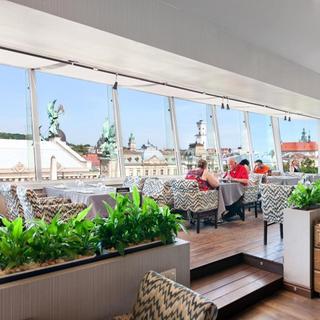
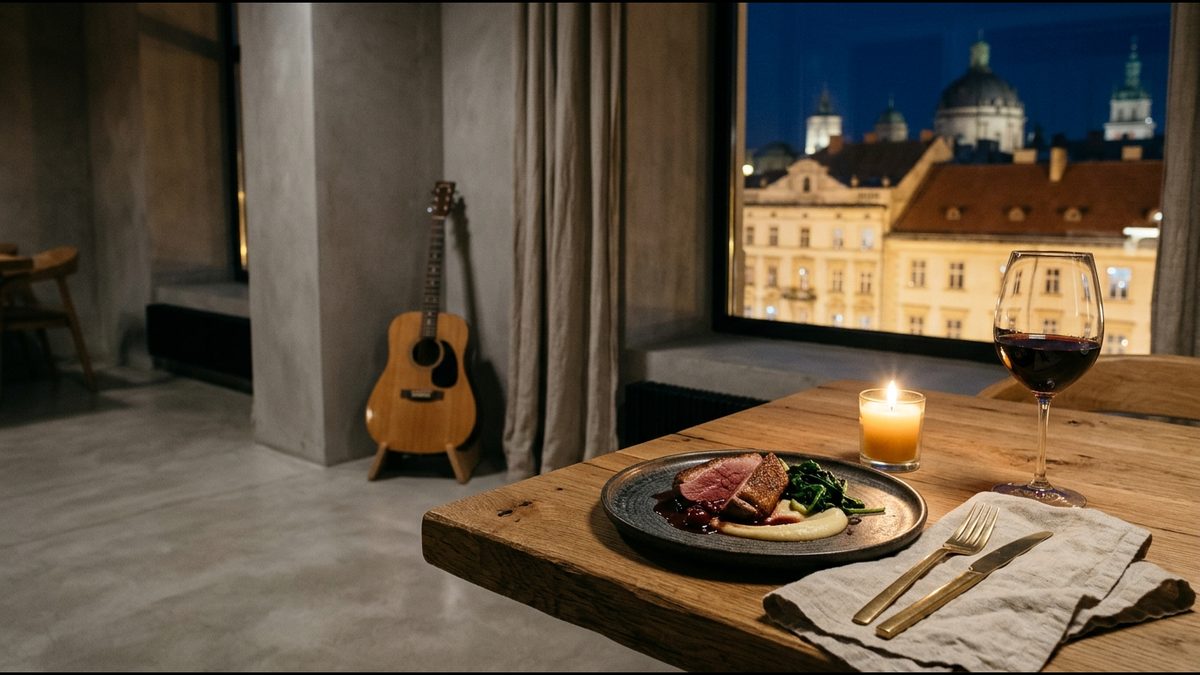
Dinner at a restaurant with a historic interior — for example, Bachevski Restaurant or Hrushevsky Restaurant — calls for one thing; an evening at Panorama with its view over the city, another; and Amadeus, with its musical theme, sets a third tone altogether.
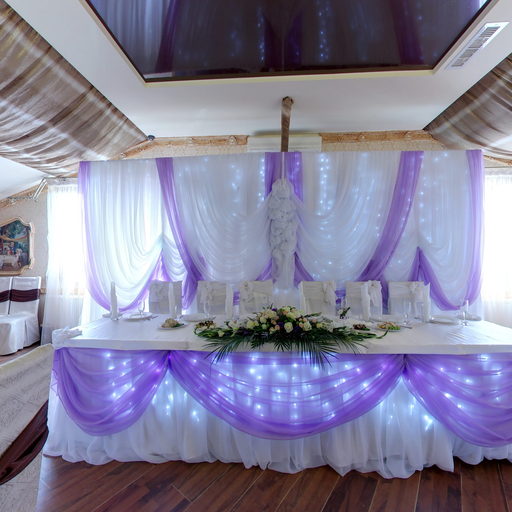
That's why it's easier to reverse the usual order: first the venue, then the look. And if the evening ends with an overnight stay — for 31 December, the most relaxed option — consider hotels with a restaurant, such as the Atlas DeLuxe Hotel: you can then change at any point during the evening, which takes care of half your outfit worries. For a large group, a private banquet hall plays the same role.
And the most useful finding of all: the colour of the year knows nothing about you. But when you put on something specific, you really do change a little — and that's worth using deliberately.