Most office parties follow a simple formula: the same team, just in a restaurant and better dressed. The result is a dinner with colleagues — not a bad one, but not an event anyone will still be talking about in March. What turns one into the other has been measured quite carefully, and the list turned out to be short.
Five things that work and two that spoil it
A researcher surveyed 359 employees from various organisations in Germany right after the holiday season — in the first days of January, while their impressions were still fresh. People were asked both about how much they enjoyed the evening and, separately, about disappointment; these are two different scales, and they don't simply mirror each other.
Enjoyment was boosted by: a culture of good personal relationships within the company itself, a venue away from the office, activities that give people something to do, informality and symbolism — that is, elements that mean something to this particular team.
Disappointment was driven by just two things: excessive drinking and formality.
So the main enemy of an office party isn't a weak programme or a modest budget. It's a stiff, official tone and too much alcohol — and both can easily happen at an expensive event.
The paradox of the speech
The study also looked at smaller elements separately, and one result was far from obvious.
A speech by the boss reduced disappointment — but didn't increase enjoyment. The same went for offering both alcoholic and soft drinks: they didn't make the evening better, but they noticeably reduced the number of people who left unhappy.
Some elements lift an evening; others stop it from falling flat. A speech, a choice of drinks and a clear running order belong to the second group. Nobody notices them when they're there, and everybody notices when they're missing.
Why those who helped organise it had a better time
The most interesting part of the survey was about people rather than the programme.
Employees who were involved in preparing the evening reported more high-energy positive emotions — elation, enthusiasm. The explanation is simple: being part of the organisation makes it feel like your event rather than something you've been invited to.
A second factor of the same kind is identifying with the company: those who felt connected to the organisation experienced more positive emotions at the party.
This points to the cheapest change you can make: involve more people in the preparations than just the department it's been assigned to. Three or four people from different teams, each responsible for their own part — and on the night there are already several people for whom the evening is personal.
When a shared tradition starts to backfire
A multi-country study of corporate traditions identified a condition under which the expected benefit of such an event disappears entirely: when employees feel excluded, unrecognised or obliged to attend.
The same study describes another familiar mechanism: routine, superficial recognition — even when presented as a tradition — undermines trust. If the same people are named on stage year after year, everyone else feels invisible, and the evening has the opposite effect.
That's why making attendance compulsory is the most expensive false economy here. Someone who has been dragged along won't just miss out on the benefit — they'll spoil the mood for two or three others at their table.
By contrast, an analysis of data from 25,285 employees showed that recognition significantly boosts engagement — more so than fairness or involvement in decision-making. Recognition works when it's specific and directed at someone who has genuinely achieved something.
What this adds up to in practice
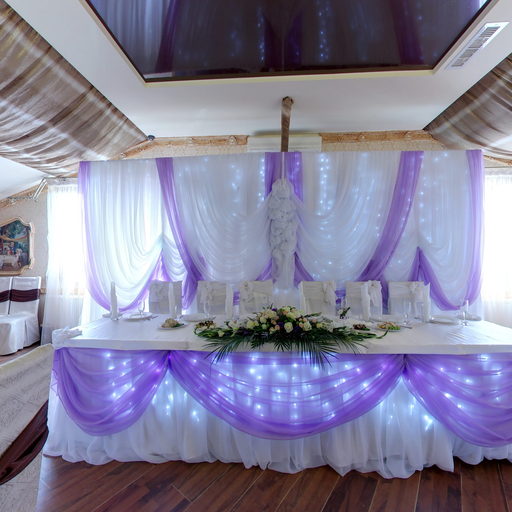
A venue away from the office is first on the list, and it isn't about prestige. A change of scene dissolves work roles faster than any programme.
Doing, not watching. An activity in which people do something together works; a concert that people watch leaves everyone exactly where they were sitting.
Informality is set by the host and the seating plan, not by the dress code. If management sits at a separate table, the evening will be formal however many ties come off.
Symbolism means whatever matters to this team: a nod to a project everyone pulled off together, an in-joke only they get, a photo from last year. It needs no budget.
Drinks of both kinds — and this isn't a minor detail but a measured factor. Nobody who doesn't drink should feel like the odd one out.
Attendance is voluntary. Always.
Where to find a venue in Lviv
The city is well placed here: in the conference services section, 46 venues out of the fifty or so we checked have their own profile — the densest partner coverage of any category we've measured. So there's a real choice, not just three options.
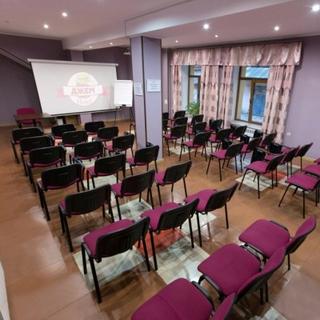
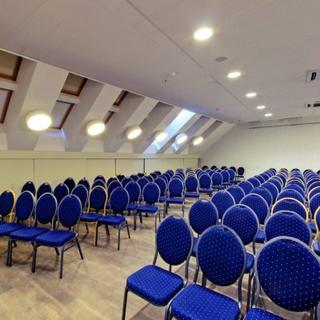
For a large group, look at halls for more than 50 people: the conference halls at Hotel Suputnyk, Leopolis Hall or the conference centre at Jam Hotel — each has its own seating layout, and that's worth finding out before you choose the menu.
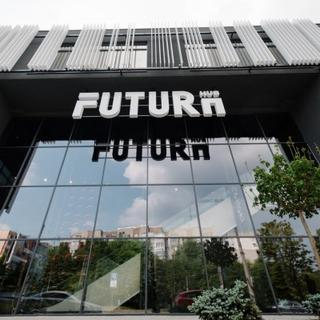
If your team is small and you'd like a format that's part work, part celebration, try spaces such as Futura HUB or the conference centre at Atlas Deluxe Hotel. And if the evening is meant first and foremost as a feast, banquet halls are listed separately.
And a conclusion that costs nothing: an office party becomes an event not when a lot of money has been spent on it, but when there's at least something in it about these particular people. Everything else is just dinner with colleagues, only more expensive.