This decision is usually made on a whim: if people fancy some nature, you head out of town; if they want something simpler, you book a restaurant. But if you break both options down by what they take away and what they add, the choice becomes much more concrete. And the key factor isn't nature.
Five points where the formats differ
| in town | out of town | |
|---|---|---|
| getting there | everyone makes their own way; getting home afterwards is an open question | shared transport; everyone returns together or the next day |
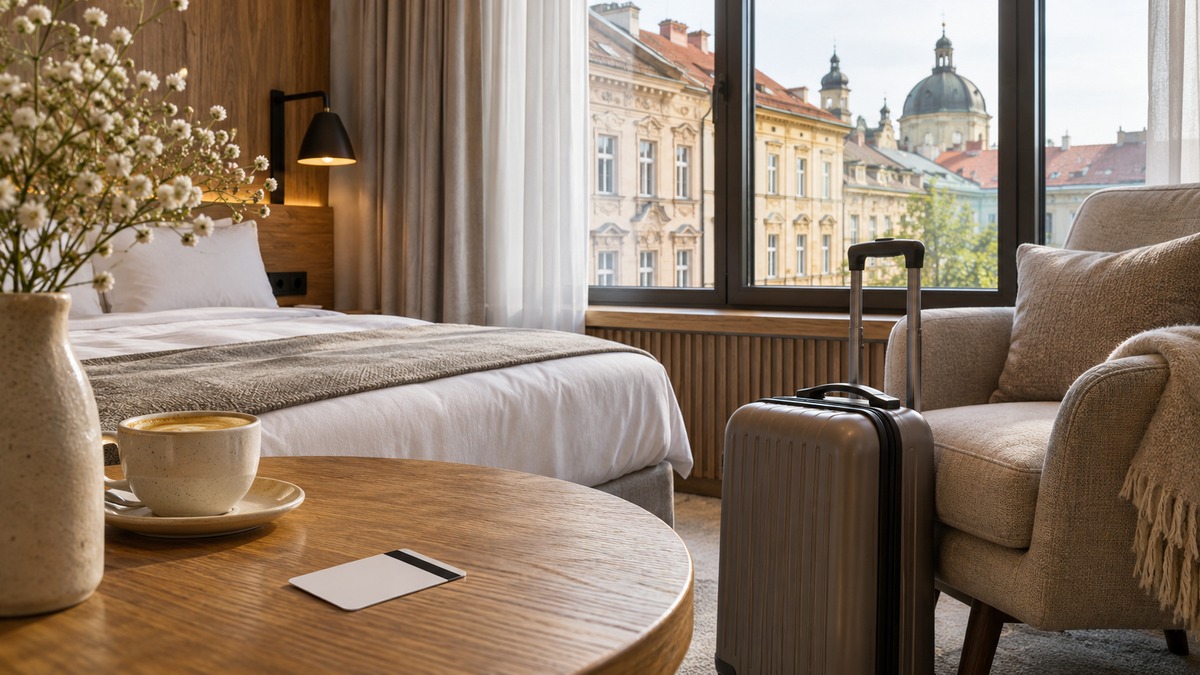
| overnight stay | a separate decision for each person | part of the package |
| time | an evening of 3–5 hours | a day and a half — effectively a different kind of event |
| who drops out | people who live far away | people with children, pets or plans for the next day |
| choice of venues | wide | limited, and the numbers show it |
The main thing an out-of-town event offers — and it isn't nature
An out-of-town party wins on one specific point: it takes the journey out of the equation. It doesn't make the trip more pleasant — it removes it, because a coach takes everyone there and back, and if you stay overnight, the journey disappears from the evening altogether.
For any event involving alcohol, this is the key point. In town, the question "how are you getting home?" hangs over everyone from the first hour, and some people leave early precisely because of it.
The second point is time. Going out of town turns a party from an evening into a day and a half, and that changes the nature of the event: there's room for several different activities, a walk, a sauna, a morning together. In town, the same budget buys one packed evening.
So the question "in town or out of town?" is really the question "an evening or a weekend?" They're hard to compare on price because they offer different things.
What an out-of-town event costs you
Part of the team won't come. For people with small children or pets, or those caring for elderly relatives, a night away from home is no small matter. An evening in town is more accessible for them, and it isn't a question of willingness.
There has to be a programme. In a restaurant, the table alone holds five hours together. A day and a half at a resort with no plan leads to a lull after lunch on the first day — and everyone notices it.
The logistics are more complicated. The coach, the departure time, what to do about people coming by car, who waits if someone is late. For a group of more than thirty, that's a job in itself.
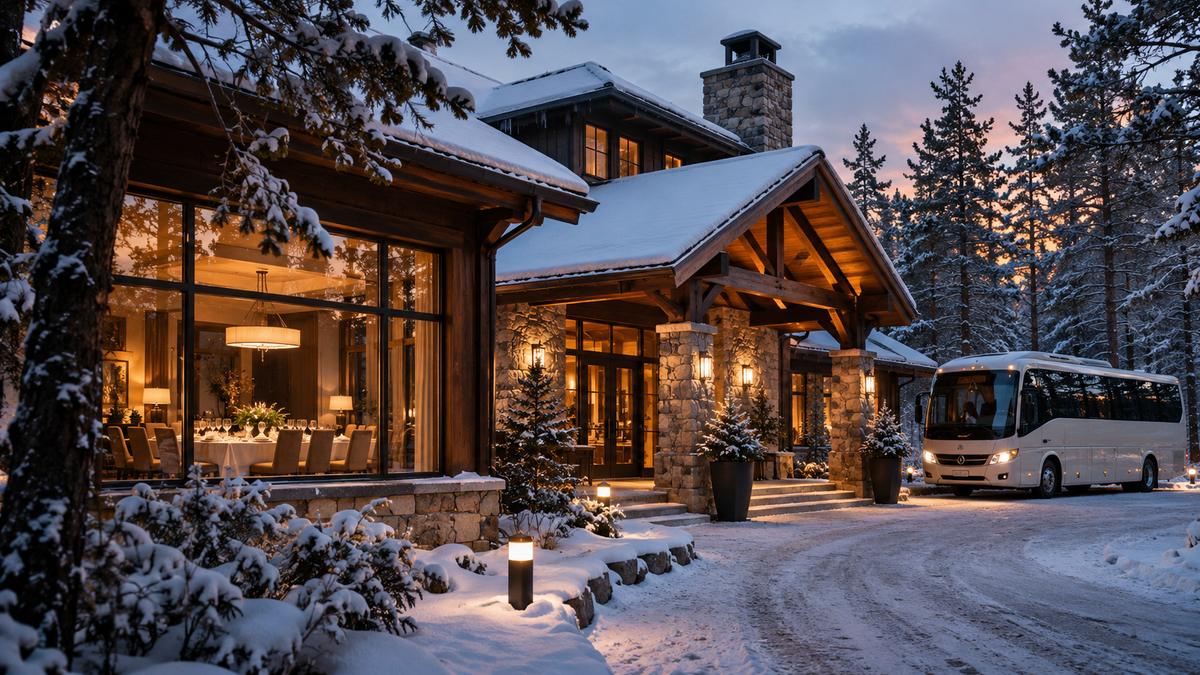
Winter roads are a separate issue, and almost nobody plans for them. In December it gets dark at four, and roads outside the city aren't always cleared as well as city streets. "Forty minutes' drive" in October can easily become twice that in December, and a coach carrying fifty people can't steer around black ice. So for an out-of-town event, have an answer ready for what happens if departure is delayed by an hour — and don't schedule anything important for the first two hours of the programme.
There's less choice of venues — and the catalogue shows it. Out-of-town listings have far fewer partners than city ones: the city conference services section has 46 venues with their own profile out of around fifty verified, while the out-of-town listing for recreation complexes has 21 entries and only 3 with their own profile. So the choice outside the city really is narrower — it doesn't just seem that way.
Which format suits which team
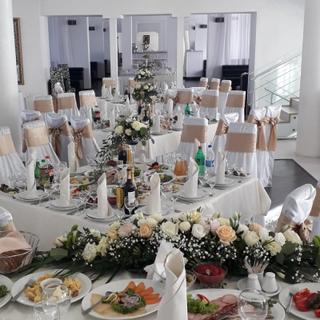
In town — if your team varies in age and family circumstances, if the budget covers one evening, if most people won't be driving, and if the main goal is to talk.
Out of town — if the team is small and fairly uniform, if you want to do something together rather than just sit at a table, if your plans include a sauna, a walk or a game, and if there's someone to handle the logistics.
The in-between option people forget about: a venue within the city that has its own grounds and accommodation. It gives you most of the advantages of an out-of-town event without the coach and the hour-long drive.
And in both cases, the general rule for office parties still applies: attendance should be voluntary. Going out of town makes this condition stricter, because someone who arrived by coach can no longer leave early.
Where in and around Lviv
For an out-of-town option, see the region's recreation complexes: Sobieski Hotel & Restaurant in Zhovkva, Hotel Navariya Nova, Ozerny Kray Hotel & Resort or Chavered Manor. If your programme includes a sauna — and on a winter trip it can fill half a day — there's a separate listing of out-of-town places with a sauna.
For an event in town with a separate hall and equipment, use the conference services section: for example, the conference halls at the Mars Hotel. When you need both a working session and dinner, this is more convenient than a restaurant: a room with a projector and a kitchen in one place.
And a conclusion worth saying out loud before you decide: people don't go out of town for the nature — in December you can barely see it. They go because the next morning nobody has to get anywhere.