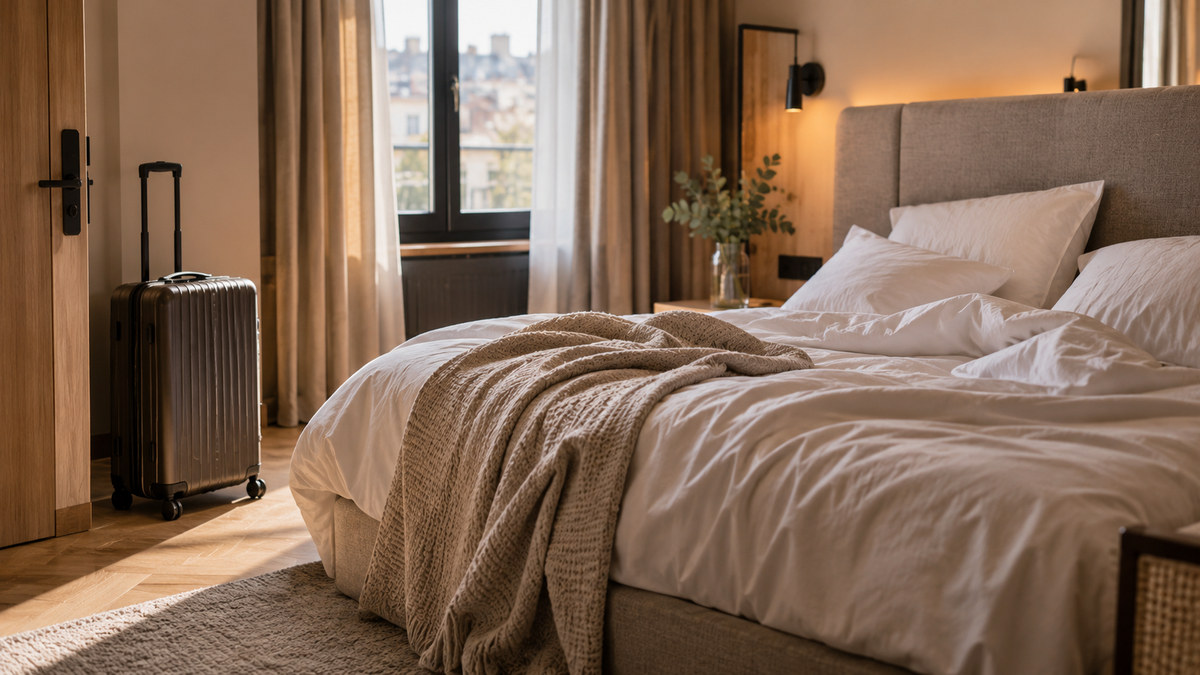
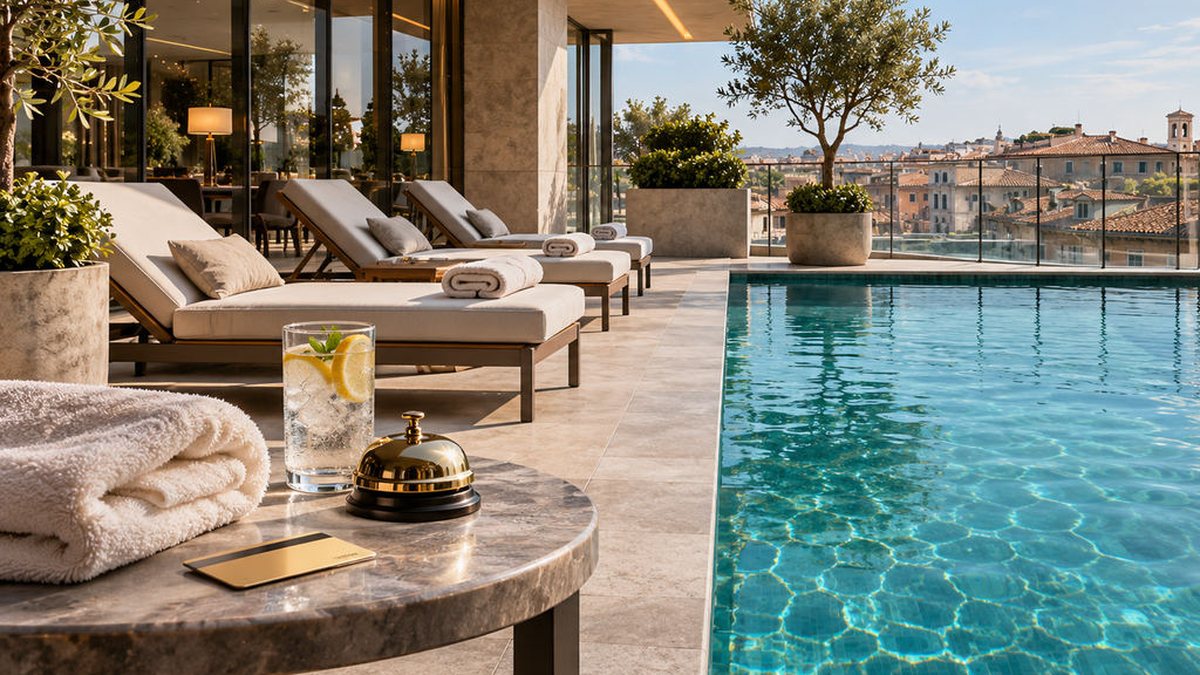
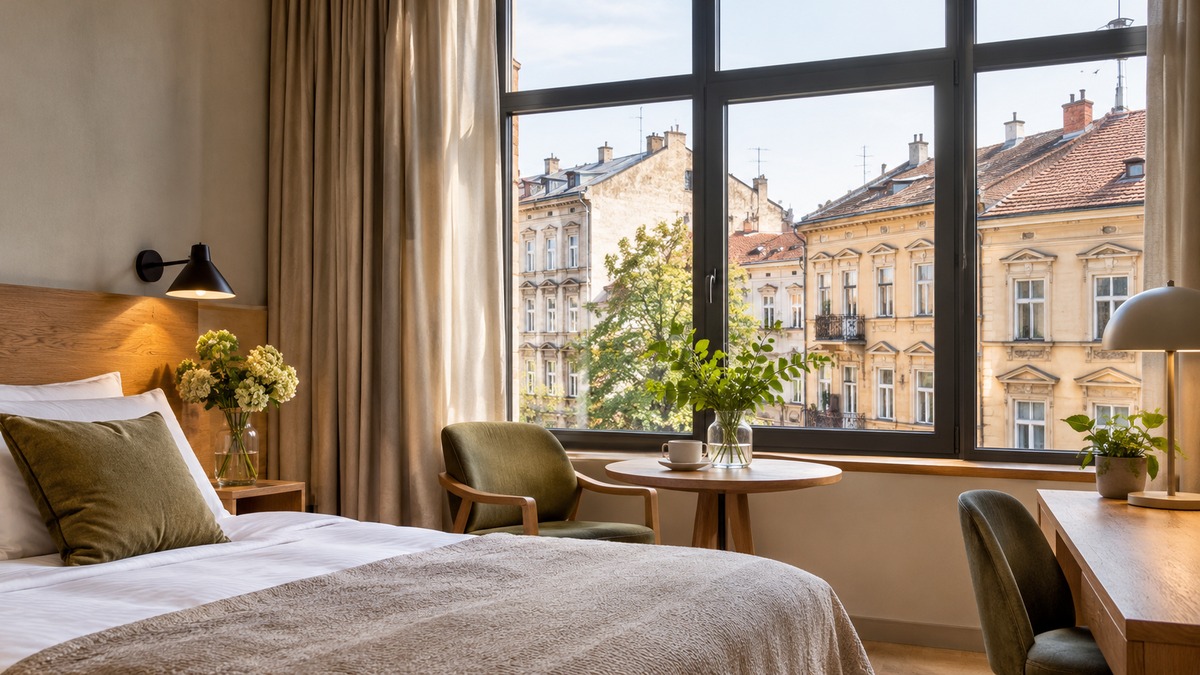
Accommodation listings always contain more photos of the rooms than of the grounds. That skews your choice: you end up comparing what is well presented rather than what will actually shape your trip.
Where you'll actually spend your time
Let's start with the obvious, which is easy to forget. In your room you sleep, get changed and scroll through your phone before bed. Everything else happens on the grounds, in the common areas, by the water and in the surrounding countryside.
Do the maths for a simple weekend: two nights means roughly sixteen hours of sleep, and about the same number of waking hours on site. Half your time is spent outside the room — and it's that half that decides whether the break was a success.
So the first question when choosing a countryside resort isn't "what does the room look like?" but "what will I be doing here between breakfast and dinner?"
Why greenery and water work, and design doesn't
Here there is a measured difference, and it favours the grounds.
Greenery. A large study of almost 20,000 people found that around two hours a week in natural surroundings is linked to better self-rated health and wellbeing. What's more, those hours don't have to come all at once — several short visits add up just as well. Grounds with parkland give you those hours without any planning.
Water. A study based on a million mood reports, collected at random moments during the day, found that people are happiest near water — noticeably more so than in any other setting. A pond or a river on the grounds does its work every time you simply step outside.
Interiors. There is no comparable data. Research does show that attractive surroundings make food taste better — but that concerns a restaurant dining room, not the wallpaper in your bedroom.
In other words, the imbalance isn't that interiors don't matter; it's that the effect of the grounds has been measured, while nobody has measured how the room affects your rest.
Two figures that explain the disappointment
A separate study compared how guests expected to use amenities with how they actually used them. It shows why a "resort with everything" often delivers less than it promised:
- in-room fitness equipment — a gap of around 90 % between intention and reality;
- spa — around 70 %;
- swimming pool — the smallest gap, and the only item on the list that people genuinely use.
This gives you a useful filter: of everything listed in the description, count only what people use for long stretches — water, space to walk, somewhere to sit outdoors. The rest looks good on paper and doesn't change the trip.
Four things to check about the grounds
Can you walk there? "Two hectares of grounds" can mean a park with paths or a lawn between the car park and the main building. The question is specific: is there somewhere to walk without leaving the property?
Is there somewhere to sit outdoors? A gazebo, a terrace, benches by the water. This is what turns "popping out for a look" into two hours of relaxation.
What can you see from the window and the grounds? A view of the forest and a view of the building next door make for two different trips at the same price.
What's open off-season? The most common disappointment: the grounds are lovely, but everything worth doing there is only open in summer. Ask about the specific month you'll be visiting.
When the interior does decide it
To be fair, there are cases where the room matters more.
A short business trip. You're there for one day and will spend the evening on your laptop — what counts is a desk, good lighting, quiet and power sockets, not footpaths.
Bad weather, with rain forecast every day. Then you really will be indoors, and the common rooms matter more than the lawns.
Travelling with a small child. Half your time will be spent in the room anyway, so how comfortable it is becomes critical.
How to read the grounds from the photos
Listings rarely lie, but they do choose their angles. A few signs you can spot from as few as three shots:
Paths. If the photos show a path leading SOMEWHERE with no end in sight, the grounds are large. If every shot was taken from the same corner, they're small — and you can tell precisely from how similar the angles are.
Shade. Big trees take decades to grow; they can't be planted just before the season. Shade in the photos means long-established grounds, not a freshly sown lawn.
People in the pictures. If there isn't a single person in the photos of the grounds, it's usually because in summer they're crowded, and that would show. No photo will tell you how many guests there are, but you can ask directly: how many rooms, and how many seats in the restaurant?
Where to look
Countryside resorts where the grounds are the main attraction: recreation complexes in the Lviv region and complexes within Lviv, plus a separate list of those with a swimming pool.
Places to consider include Shepilska Resort, Vezha Vedmezha Hotel, Sherwood, Hotel Zakhar Berkut and Ozerny Kray.
In short
You'll spend half your time outside the room, and it's that half for which measured effects exist — greenery and water. So when you look at a listing, focus on what it shows least: the photos of the grounds, not the interiors. And ask one question — is there somewhere to walk?