The usual assumption is that to get a proper rest you have to go away, and the further the better. Research on holidays says something quite different — and it has a very practical implication for an ordinary Thursday evening.
Two figures that undermine "the longer the better"
The first. A meta-analysis of thirteen studies (around 1,400 people, with an average holiday of eleven days) found that holidays really do improve wellbeing: less stress, less exhaustion, more positive emotions. But the effect fades quickly: within a week of returning to work, there's no difference left compared with how people felt before they went away.
The second, and stranger. The length of the holiday made no difference to the strength of the effect. A separate study of long holidays (23 days on average) found that wellbeing rose and peaked on the eighth day, then added nothing more. Three weeks gave no more than eight days did.
The conclusion more or less draws itself: since the benefit doesn't grow with length and wears off within a week anyway, frequent short breaks are simply better value than one long trip a year.
What actually works, if not geography
The same studies identify what the improvement is linked to — and neither distance nor the number of places visited is on the list. There are four things:
Detachment — a state in which you aren't thinking about work. In recovery psychology this is the central concept: it's the lack of detachment, rather than the number of hours worked, that is most strongly linked to burnout.
Relaxation — easing tension, both physical and mental.
Control — deciding for yourself when things happen. This turned out to be one of the strongest factors.
Enjoyment and "savouring" — the ability to notice something pleasant while it's happening, rather than registering it after the fact.
None of the four requires going anywhere. All four can be built into an evening, and that is what turns an evening into a micro-holiday rather than just an evening.
Five minutes that are hard to believe
A separate study looked at what restores attention after mentally draining work. It compared three groups: no break, a five-minute unstructured break, and a five-minute video of a walk through a forest.
Five minutes of simply not thinking produced the same recovery as the nature video. In other words, it isn't the scenery that works — it's stopping.
It's the same mechanism as on holiday, just on a scale of minutes. And it explains why an evening at a restaurant fifteen minutes from home can be more restful than a trip on which you spent two hours stuck in traffic, checking the work chat all the way.
How to plan an evening that works like a holiday
The four conditions above translate into concrete steps.
Change your surroundings, not your distance. All you need is a place where you aren't dealing with household chores. Dinner at a restaurant works not because of the food but because at home, at that hour, you'd be thinking about the washing-up.
Switch off work notifications. Detachment doesn't happen by itself — one glance at your phone is enough to break it. This is the only condition on the list that takes a decision rather than money.
Keep control for yourself. A rigid schedule — "there at 7pm, somewhere else at 9pm" — works against the effect. What sets a holiday apart from a working day is that you don't answer to a timetable.
Plan ahead. Looking forward to something is a source of pleasure in its own right, and it kicks in before the evening begins. An evening decided three days in advance gives you more than the same evening decided an hour beforehand.
Three formats that cover all four conditions
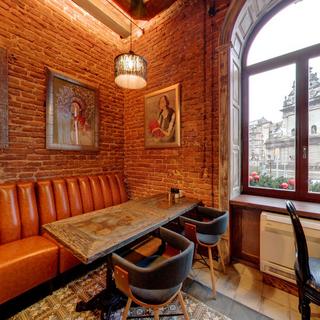
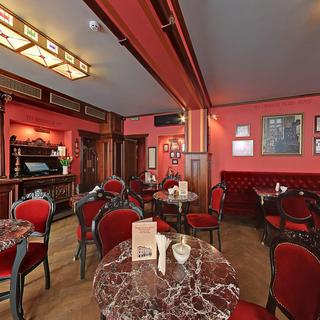
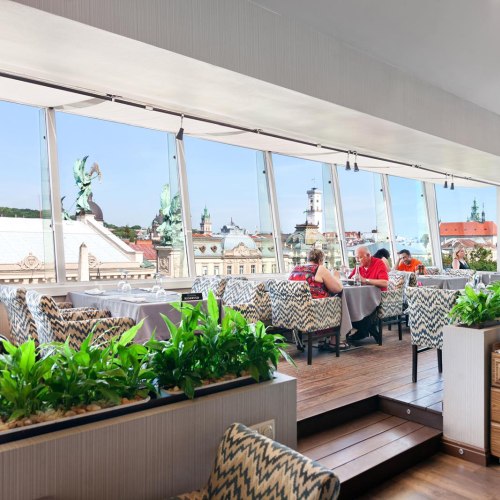
An unhurried dinner. A long dinner somewhere you won't be asked to give up the table: Vinoteca Praha Wine & Dine, Apothecary, BER NAR DYN or Komora.
Two or three hours at a sauna or spa. This covers relaxation and detachment at once — a phone is simply awkward in a steam room. Accommodation with a sauna often sells access without an overnight stay; in the city itself there's Luxor Recreation Complex, among others — and it's open around the clock.
A night in a hotel in your own city. It sounds odd, but it works well: you're ten minutes from home, yet none of your chores are there. Hotels in Lviv are an option for a single evening, not just for a trip.
And the cheapest format doesn't need a booking at all: an hour in a park without headphones or a phone gives you those same five minutes, multiplied by twelve.
In short
A holiday is valuable not for its length or the miles covered, but for the four things it makes room for. All four fit into an evening too — with the difference that you can have the evening this week rather than in July.