A piece of bryndza on a plate looks modest: white, salty, unadorned. Yet in the Carpathian Mountains, the height of the pasture, the number of days and the breed of sheep are all laid down for this brined cheese. Follow it from May to Christmas and most of the menu of the Hutsuls, the highlanders of western Ukraine, will start to make sense.
A cheese with a passport
The BBC called Hutsul sheep's bryndza Ukraine's first geographical brand, and the requirements really do read like a passport. At least 80% of the milk must come from Ukrainian Mountain Carpathian sheep, and the rest may be cow's or goat's. The sheep spend 120 days at an altitude of no less than 700 metres. The cheese is made in Transcarpathia, the Ivano-Frankivsk region and part of the Chernivtsi region.
There's never much of it. The BBC cites about 8–10 kilograms of cheese per sheep over a summer on the polonyna, the high mountain pasture; the newspaper Uriadovyi Kurier more cautiously says 6–7.
Writers are happy to dwell on its antiquity. The tradition is dated to the 15th century, and the geographical indication files say bryndza has been known in Ukraine since the 16th. Nobody in the materials we've seen quotes the oldest document itself, so these dates are best taken as legend with a respectable reputation.
Four months up top
Shepherds head up to the polonyna around 25 May and stay until about 27 September, moving the flock from pasture to pasture. The cheese is made up there too.
The milk is strained through several layers of gauze laid with spruce branches. It's warmed to 26–28 degrees and klyag is added, an enzyme from the stomach of a young calf or lamb. The amount is measured with a special stick. After an hour or two, the vatah, or head shepherd, gathers the curds into the gauze.
This produces budz. It dries and matures over the fire, or, as they say here, "vbuvaietsia", which gives it its name. Only then is the budz cut up and ground with salt, and only then does it become bryndza.
Nothing goes to waste. The whey is boiled to make vurda, which is often compared to ricotta. What's left after that, zhentytsia, goes to the animals.
A gunshot at Christmas
Bryndza was packed into a berbenytsia, a wooden barrel. For strength, tradition called for spruce that had grown on rock. The cheese was tamped down with a wooden pestle, the barrel was bound with metal hoops and sealed with wax.
It was usually opened at Christmas, and according to one report from the polonyna, the event came with sound effects. The master of the house stepped into the yard and fired a gun in the air, so the neighbours would know it was time to visit. Only a wealthy householder could afford a whole barrel, more than thirty kilograms of cheese, so the shot announced that as well.
What actually grows at this height
On steep slopes you can really only ripen beans, pumpkins, potatoes and carrots, and there has always been less grain here than in central Ukraine. Hence the livestock, the cornmeal and the mushrooms, for which several hundred recipes exist.
Banosh. Cornmeal porridge, usually with pork crackling, bryndza or mushrooms. With porcini it becomes a full main course.
Tokan. A cornmeal dish with bryndza and crackling, loved by Transcarpathian shepherds and a relative of Romanian mămăligă.
Mushroom yushka. A mushroom soup and the first course of a Carpathian lunch.
Plyatsky z bulby. Potato pancakes; "bulba" is the local word for potato.
Pine cone jam. A dessert you'd never dream up on the plains.
Ratafia. A liqueur made with spruce or yafyny, the local word for bilberries.
Bohrach under a Hutsul sign
This is where menus can easily mislead. The word "Carpathian" lumps very different cuisines together, and next to banosh you'll almost always find bohrach, which comes from a different story altogether. The Hungarian bogrács means a cauldron, and this goulash-style soup began to gain popularity around the mid-1880s in what is now Hungary and spread to Transcarpathia from there.
The border shows even within a single region. The lowland districts of Transcarpathia are dominated by the Hungarian school of paprika and goulash, while in the Rakhiv and Mizhhiria areas it's bryndza, corn grits and mushrooms that prevail.
Nothing stops you ordering both at the same table. Just know that paprika isn't the taste of the polonyna.
Pottery, cheese and craft
Tradition has tied food and craft together more closely than you might think. The painted ceramics of Kosiv, recognisable by their greens and yellows, joined UNESCO's Representative List in 2019, and the earliest mentions of them date from the 18th century. The national list of intangible heritage also includes traditional Hutsul cheese sculpting: here, cheese long ago became a material for craftsmen. And Rakhiv holds an annual festival dedicated to bryndza.
Where to look in Lviv
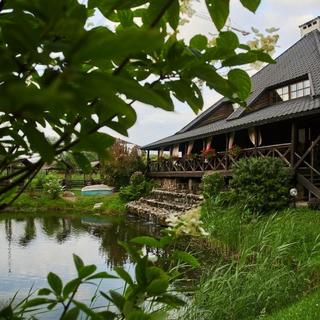
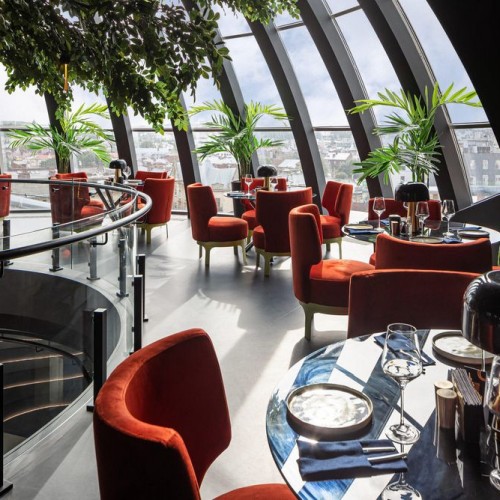
There's a list of places in our selection of Hutsul restaurants. Banosh with porcini and Hutsul-style potato pancakes are served at The Hutsul Yard. At Hutsuls'ka Grazhda, look for banush in the "Stravopys z hir" section of the menu, and the honey-themed restaurant Beehive makes Hutsul banosh with bryndza and mushrooms.
Next time someone brings you bryndza, remember the 120 days and 700 metres: they can be tasted too.
Menus change, so a dish mentioned here may no longer be available. If it's the reason you're going, it's best to call ahead.