You order a breakfast called shakshuka and assume you're eating something anciently Israeli. It really is on many menus there, but like almost everything else on this table it arrived with people. That's why a menu here reads best as a set of baggage tags: where from, when, brought by whom.
Flight from Tripoli: shakshuka
The word shakshuka translates roughly as "all mixed up" and is linked to the Amazigh language of North Africa. Jews from Libya and Tunisia brought eggs in tomato to Israel in the 1950s–1960s, yet it didn't dominate menus there until the 1990s.
A single establishment made the dish popular. In 1991 Bino Gabso, the son of immigrants from Tripoli, took over his father's restaurant in Jaffa, named it Dr Shakshuka and made the Libyan breakfast of his childhood the main attraction. The origin remains disputed: both Libya and Tunisia consider the dish their own, and some writers there object to it being presented as Israeli.
Flight from Baghdad: sabich
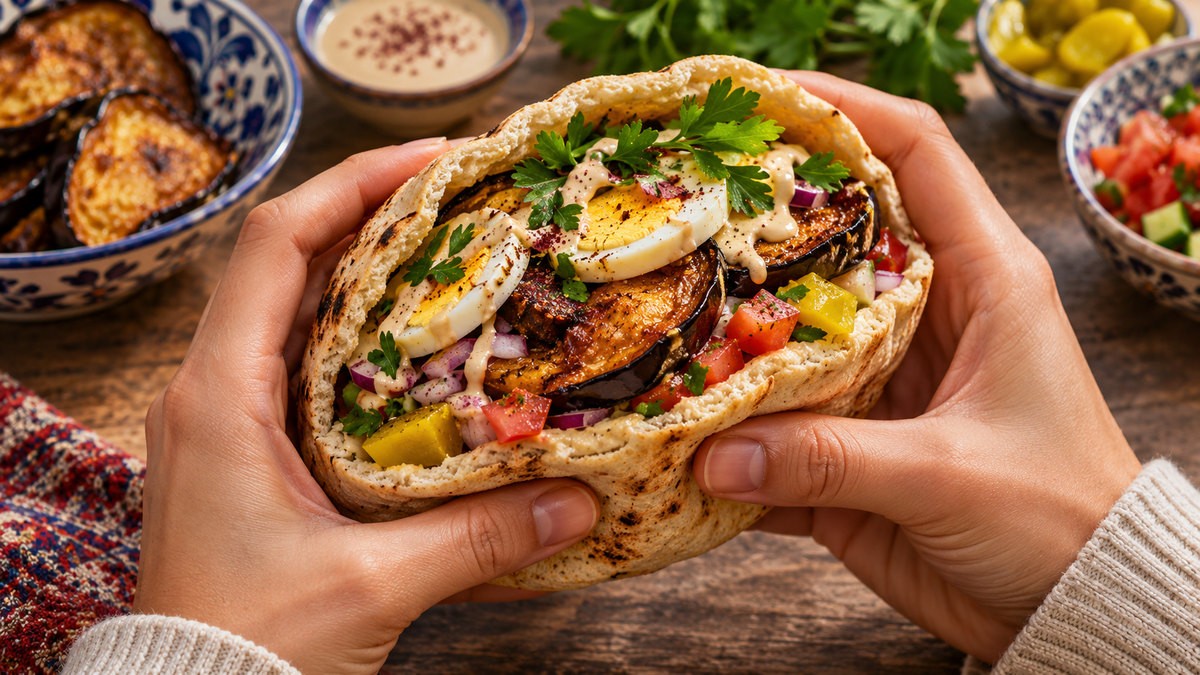
Sabich is a pitta with fried aubergine, egg, hummus, tahini, salad and a piquant mango sauce called amba. It's based on the Sabbath food of Iraqi Jews. Cooking isn't allowed on Shabbat, so aubergines were fried the day before and eggs were slow-cooked overnight.
The components used to sit separately on a plate. In 1961, in Ramat Gan, a Baghdad immigrant named Sabich Halabi kept a kiosk at a bus terminus. The drivers wanted something filling, so he put it all into a pitta. That, they say, is how a man became a dish. There's another theory, though, that the name comes from the Arabic sabah, morning.
Born in a queue: Ben-Gurion's rice
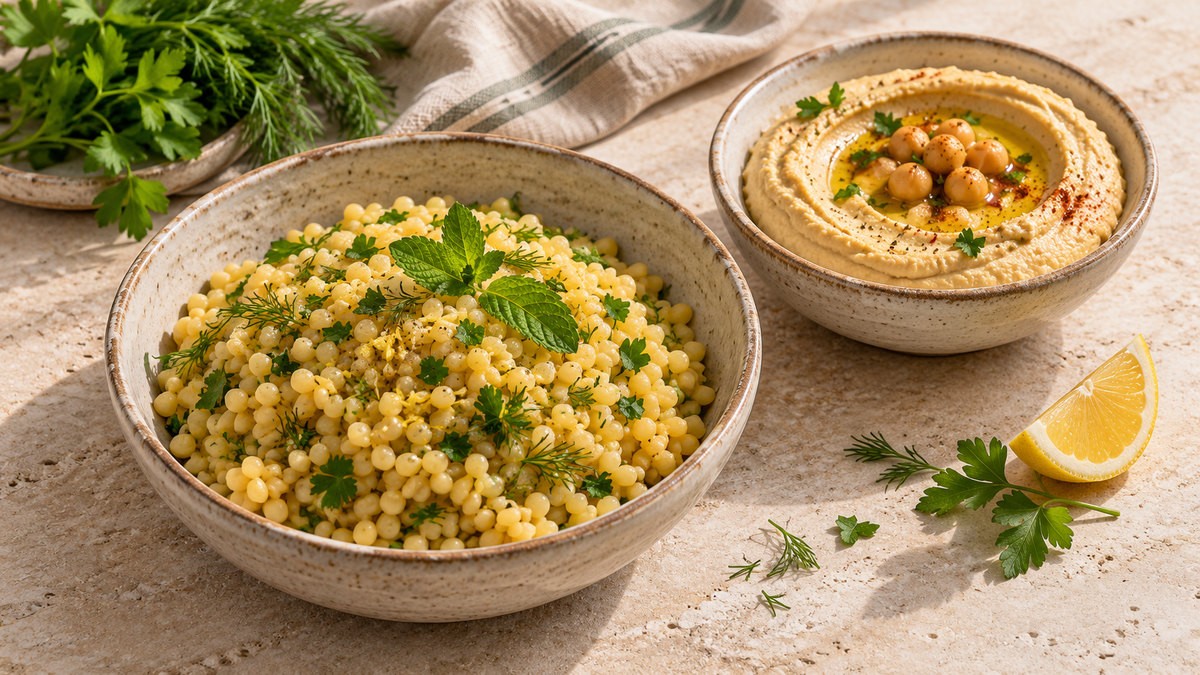
One dish really is local, and it's far from ancient. In the 1950s the country, having taken in about 700 thousand immigrants, was living on rations. Rice ran short, and Prime Minister David Ben-Gurion asked the food company Osem to come up with a cheap wheat substitute.
So ptitim was born, a toasted wheat pasta shaped like grains of rice. People nicknamed it Ben-Gurion's rice. Rationing ended and ptitim stayed. Little balls were added later, and the world knows them as Israeli couscous, although they aren't couscous.
A border drawn through fish
This is the most interesting part for a reader in Lviv. Gefilte fish, or stuffed fish, came from Central and Eastern Europe, and a dividing strip runs through this tradition. In the 1960s the linguist Marvin Herzog called it the Gefilte Fish Line. To the south and west, including Galicia (western Ukraine), the fish was made sweet. Further north, among the Litvaks, it was heavily peppered.
The reason is prosaic and tied to the local economy. Sugar in Galician fish can be traced to the early 19th century, when the first beet sugar factory opened in southern Poland. The sugar trade grew quickly, and even dishes that had no business being sweet became so.
One genealogist remarked, half in jest, that the taste of the fish can tell you where your family comes from.
What else was in the luggage
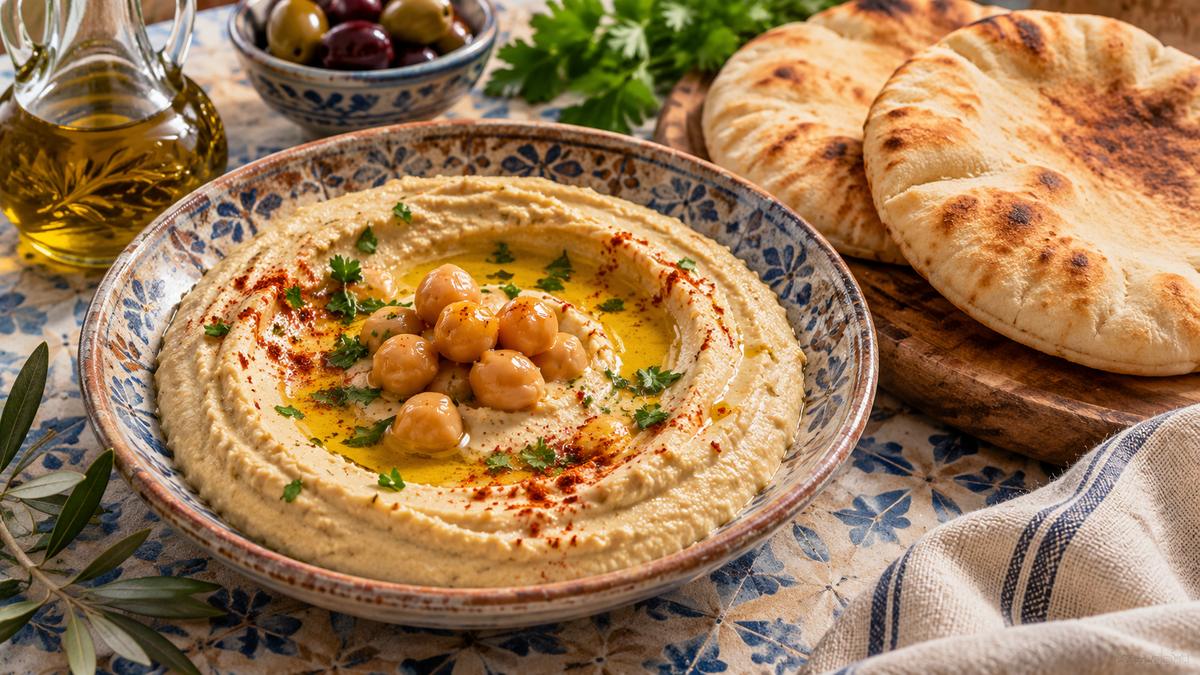
Hummus. A paste of chickpeas and tahini, old and widespread across the region.
Falafel. Fried balls, most likely from Egypt, where they were made with broad beans. In Israel the chickpea version became a street icon.
Israeli salad. Finely chopped cucumbers and tomatoes. The historian Gil Marks traces it to the Turkish shepherd's salad, which newcomers met in Ottoman Palestine and kibbutz breakfasts then popularised.
Tahini. A sesame paste that almost nothing here does without.
Forshmak. Chopped herring served as a cold starter.
Limonana. Lemonade with mint.
Where the word "ours" ends
There's a limit that has to be named. Neighbours share many of the dishes on this table, and the origins of hummus, falafel and shakshuka are seen very differently there. Some Arab writers speak of appropriation, while the Israeli blogger Shooky Galili compares claims to hummus with claims to bread or wine. A food article can't settle this dispute and doesn't try to.
One chef chose a practical path. Yotam Ottolenghi wrote the book Jerusalem with the Palestinian Sami Tamimi, and explains that cuisine never stands still. That's why he takes care to say whose recipe he has used, because there's a particular person behind it. It's a habit that's easy to pick up at the table too.
What makes this cuisine interesting is what it shows about people from very different countries sitting down at one table.
Where to try it in Lviv
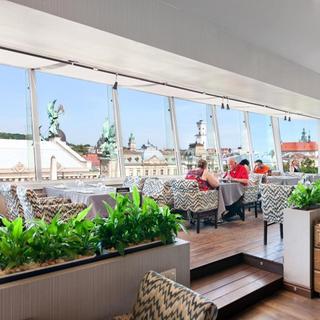
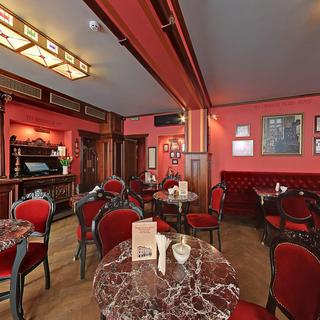
The page of Israeli restaurants will get you started, but it's short for now, so individual dishes have to be tracked down on menus. Panorama offers an "Israeli breakfast shakshuka" in the morning and forshmak cream on brioche in its Ukrainian traditions section. The pastry shop Under the Golden Star serves Jewish-style stuffed carp, so ask whether it's sweet or peppered. And Veronica has homemade hummus with crispy aubergine.
The most national thing about this cuisine, it seems, is that nobody invented it alone.
Menus change, so a dish mentioned here may no longer be available. If it's the reason you're going, it's best to call ahead.