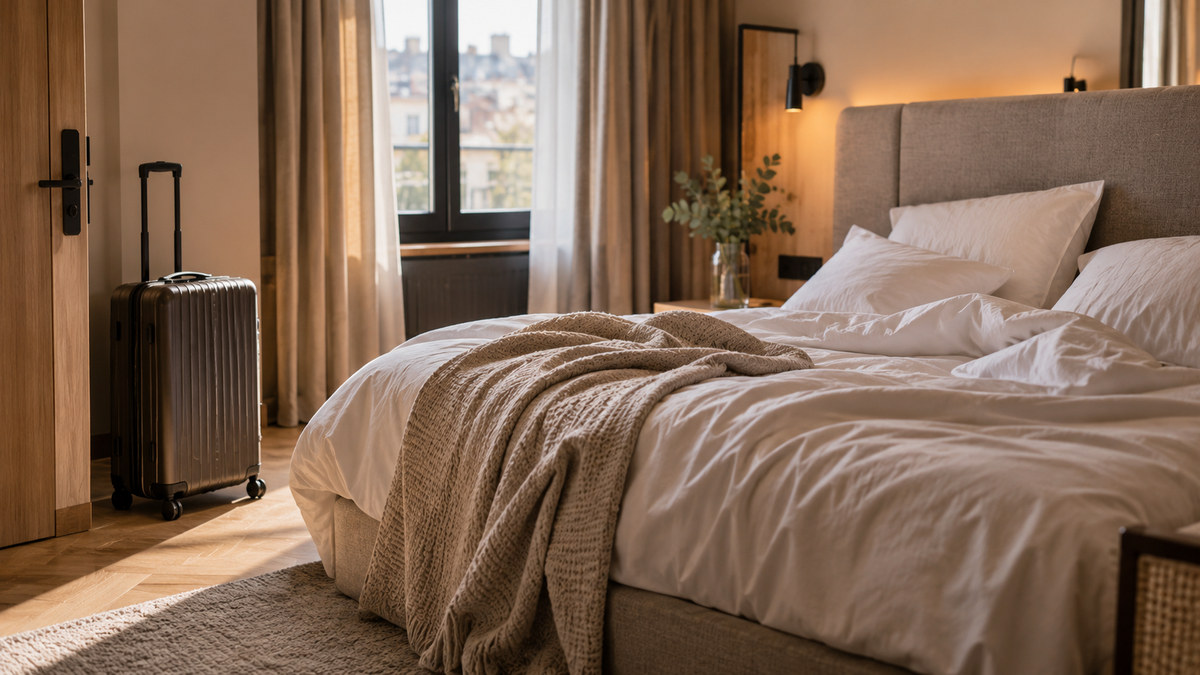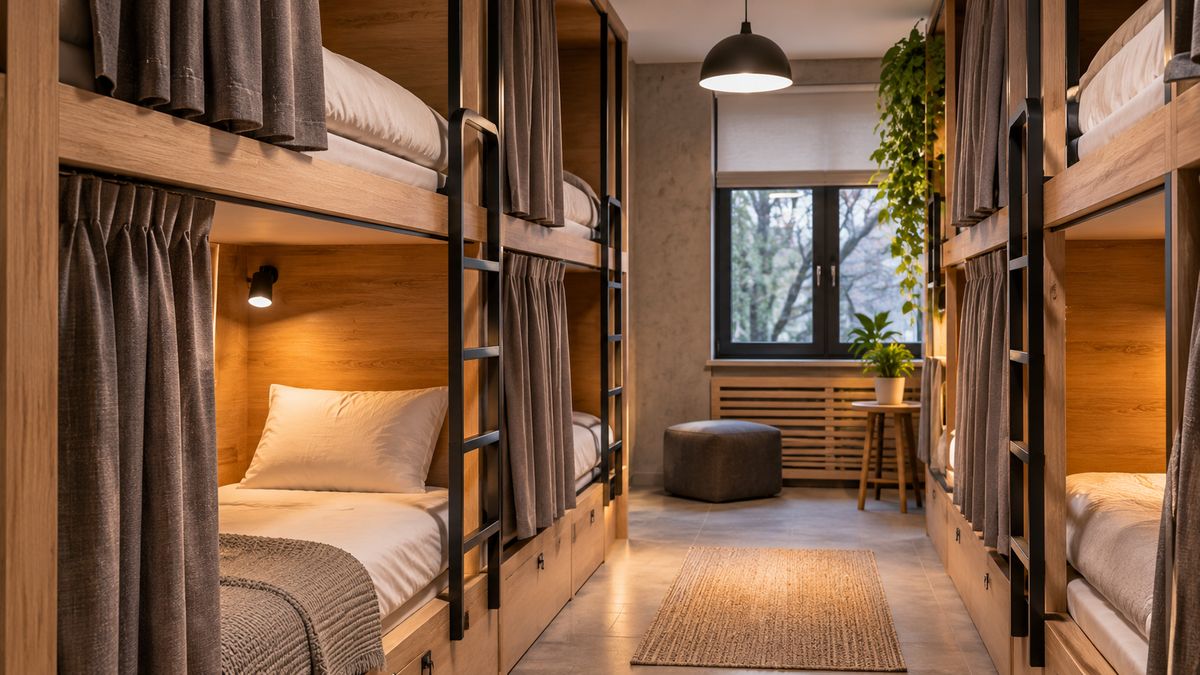
This is the question that decides whether a hostel is right for you. The answer depends on two things, and both come with concrete figures — one of them surprisingly high.
The key variable is snoring
In one study, 162 people had their snoring measured with a device mounted above the head of the bed. The results:
- in 66 %, snoring intensity exceeded 45 dB(A);
- in 14 %, it exceeded 53 dB(A);
- the average intensity was around 45 dB(A).
Now some context for those thresholds. World Health Organization guidance and empirical data indicate that sleep is usually disturbed at levels above 45 dB(A). The 53 dB(A) threshold is the WHO recommendation for road-traffic noise, not a limit below which there are no cardiovascular effects: they have been reported at lower levels too.
And here's the most striking comparison. Noise in a hotel room near a major motorway was measured at around 42 dB(A). In other words, two in three people snore louder than a motorway outside the window.
The first practical takeaway: the question isn't "am I a sociable person?" but a matter of statistics. In a six-bed dorm, the odds that someone snores loudly enough to disturb sleep are very high — simply by the numbers.
The second variable: the first night is worse anyway
There's a separate effect that kicks in even in silence. The first night in a new place is always worse: brain-activity studies have shown that one hemisphere stays more alert than the other — a kind of night watch.
So on your first night in a hostel, two factors stack up: your own vigilance and noise from outside. The second night is easier, and that's worth bearing in mind when you plan: if you're staying just one night and have something important in the morning, a hostel isn't the right choice.
What really works against noise
The good news is that both factors can be managed, and the tools are simple.
Earplugs. Studies show they improve subjective sleep quality — the cheapest and most effective remedy of all. Bring your own rather than relying on what's provided.
An eye mask. It works hand in hand with earplugs: light from someone else's phone at three in the morning disrupts sleep just as much as sound.
White noise through in-ear headphones. It doesn't remove the snoring but masks it — the peaks in sound become less noticeable, and it's the peaks that wake you.
Choosing your bed. A lower bunk away from the door and the window. The door is the main source of noise in a hostel, because people use it all night long.
How to choose a hostel if sleep matters to you
Room size matters more than price. The difference between a four-bed and a twelve-bed dorm isn't about comfort but probability: the more people, the higher the chance of a snorer and of someone coming in at two in the morning.
Ask about female-only and male-only dorms, and private rooms. Many hostels offer private rooms, priced somewhere between a dorm bed and a hotel.
Ask about quiet hours. Where they exist and are enforced, the night is noticeably quieter.
Lockers are a separate issue. Not just for valuables: not having to unpack your bag in the dorm late at night means better sleep for everyone.
Options include hostels in Lviv: Hostel Na Ruskiy, the hostel on Romanchuka Street, Lviv Lucky Hostel and Hostel 59 Avenue.
Looking at it from the other side
There's an angle to this topic that articles tend to skip: you could be the one who snores. Going by the statistics above, the probability is about two in three — and people usually don't know this about themselves, because it's others who hear them.
That's no reason not to go. It's a reason to know two things. First, regular loud snoring can be a sign of sleep apnoea, and that's something to look into for your own health, not because of your roommates. Second, if people have already told you that you snore, a private room in a hostel costs only a little more than a dorm bed — and solves the problem for everyone.
When a hostel is the right choice, and when it isn't
It suits: a trip of several days when you're out all day and only come back to sleep; travel where the company is the point; a budget where the difference between a bed and a room is decisive.
It doesn't suit: a single night before an important morning; a trip where you're a light sleeper and sleep is critical for you; a business trip with early-morning calls.
For the second group, there are in-between options that are cheaper than a hotel: serviced apartments — especially good value if there are two or three of you — or budget hotels outside the city centre.
In short
You can sleep well in a shared dorm, and what decides it is earplugs, an eye mask and the size of the room, not your personality. But if you have something important the next morning, the odds are against you: two in three people snore at a level that already disturbs sleep.