This is a subject full of confident advice and short on numbers. Yet the numbers do exist, and they add up to a fairly precise plan — with the most important step taken before you even enter the steam room.
How much fluid your body loses
In a half-hour session, your body loses between 0.5 and 1.5 litres of fluid. A threefold range isn't a margin of error: it depends on temperature, humidity, body size, fitness, how used you are to heat, and even how much you move around in the steam room.
What you lose is simple: sweat from the eccrine glands is more than 99 % water, and nearly all the rest is sodium and chloride — the components of ordinary salt. There are also tiny amounts of potassium, magnesium and calcium.
So what you mainly need to replace is water, plus some salt after a long session. No special drinks are needed for this.
The key step: an hour or two beforehand
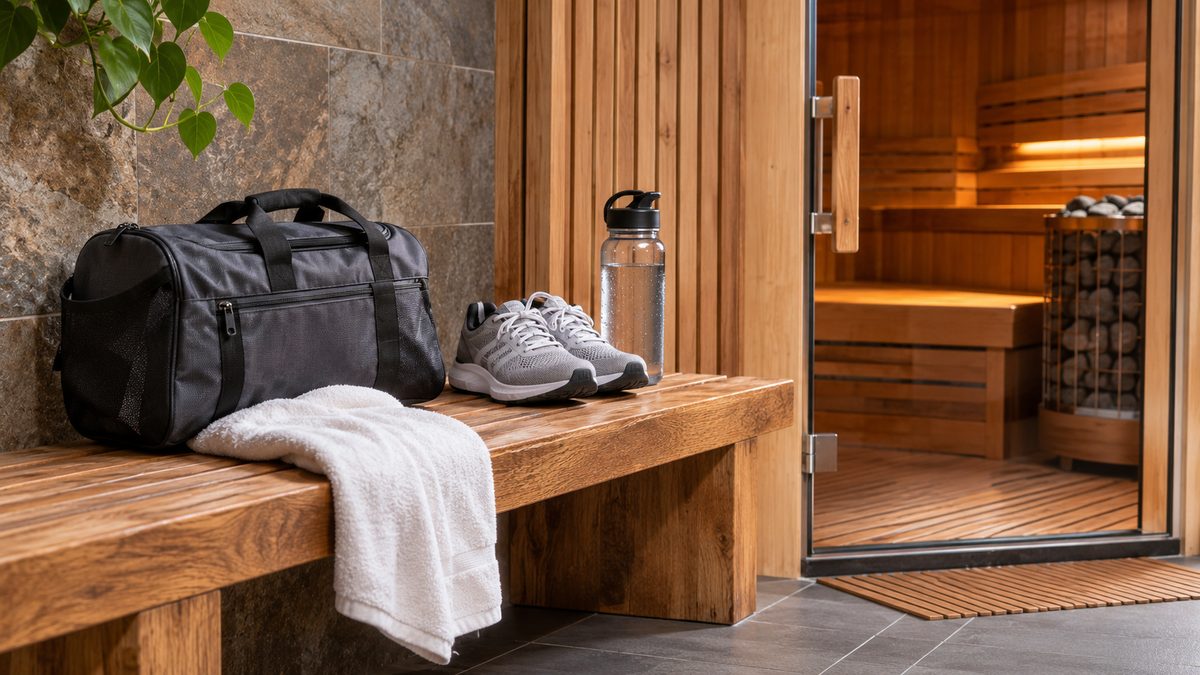
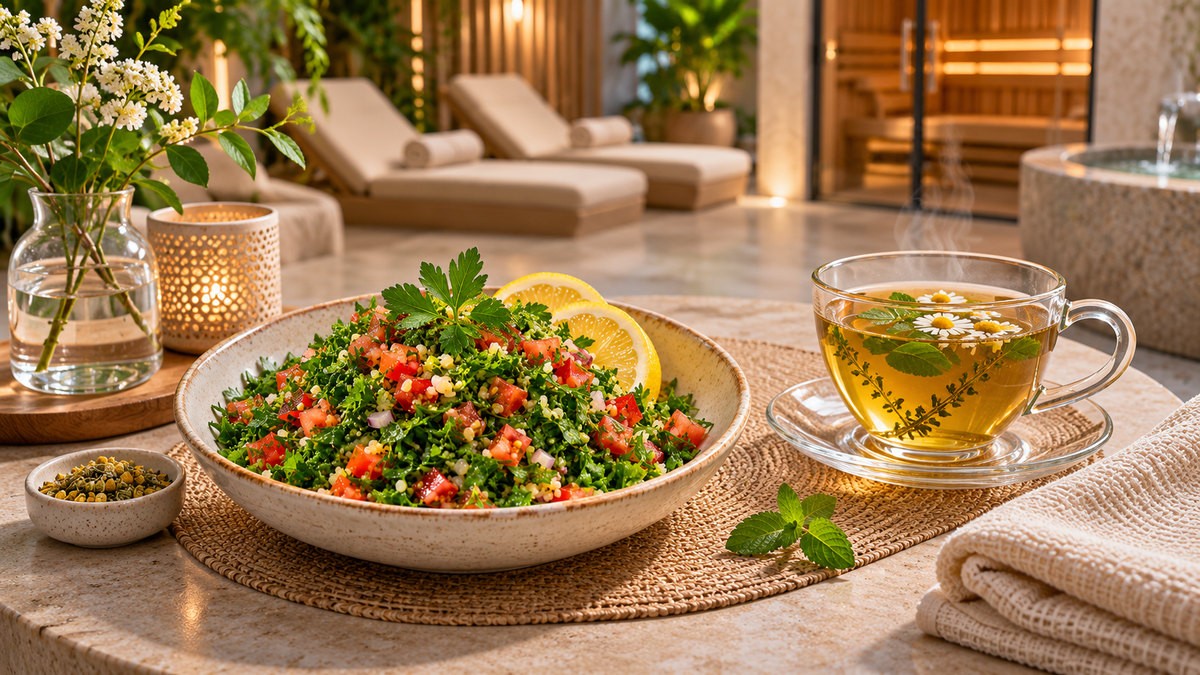
The advice is consistent: drink about 250–500 ml of fluid one to two hours before the sauna. Well in advance, that is — not just before going in, and not during.
The reason is practical. Water gulped down right before the steam room hasn't been absorbed yet; it just sits in your stomach and gets in the way. Water you drank an hour earlier is already doing its job: you go into the heat without a deficit.
The flip side: someone who arrives at the sauna after a day of coffee and no water gets through the same session less comfortably — and puts it down to "saunas just aren't for me".
What to drink
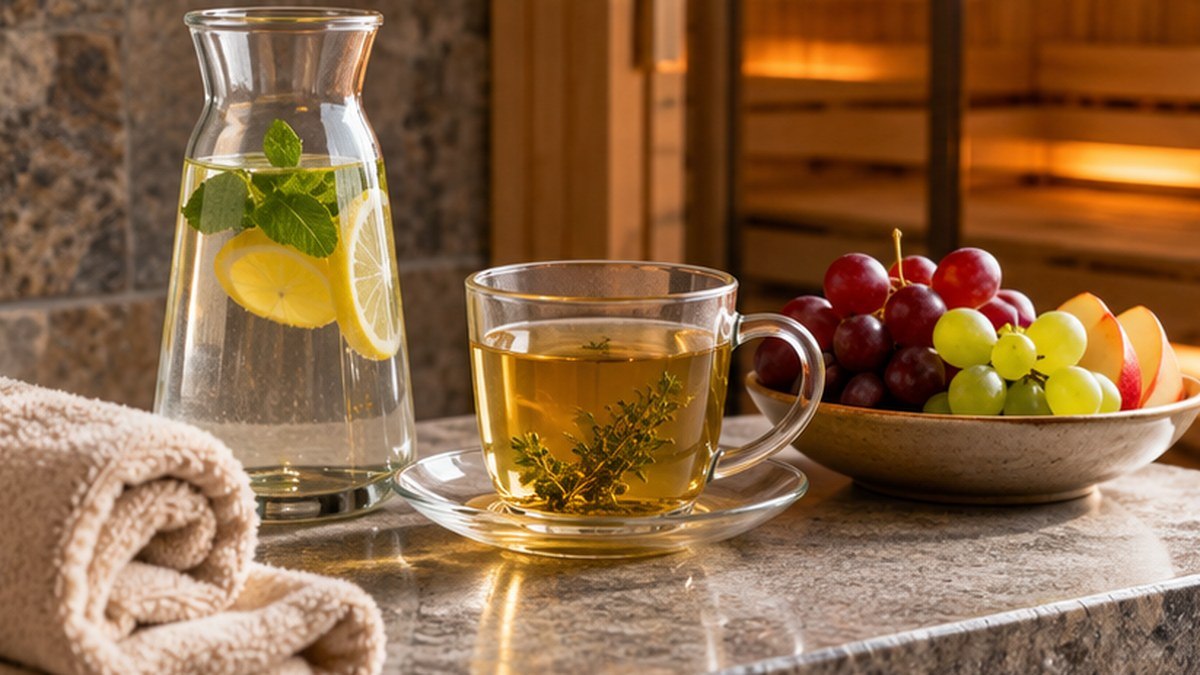
Water is the main thing, and it's enough 90 % of the time.
Mineral water or electrolyte drinks if the session is long or you sweat heavily. The point isn't that they're "healthy" but the sodium, which is what you lose most of in sweat.
Herbal teas work too; after the steam room, a warm drink tends to feel easier on the body than a cold one.
Coffee is a questionable choice for this particular evening, and not because of the sauna. Caffeine cuts total sleep time by about 45 minutes, and its half-life in healthy adults ranges from 2 to 10 hours. If you're planning a good night's sleep after the spa, coffee in the evening works against that plan.
Alcohol is the one item worth being categorical about. It dehydrates you, adding to the fluid you're already losing. Worse still, it dulls exactly the signals that would tell you it's time to leave the steam room.
What to eat — and when
Not on an empty stomach. If you tend to feel faint when hungry, the heat will make that feeling stronger.
Not after a big meal. Your body is busy digesting, and the sauna adds to the load. The rule is simple: leave at least an hour or two between a heavy meal and the steam room.
Before the sauna, eat something light: a little protein and a few carbohydrates, without much fat.
After the sauna, hunger often hits suddenly — a normal response to heat stress and fluid loss. Drink some water first and wait about fifteen minutes: often part of that "hunger" turns out to be thirst.
Have a proper dinner afterwards, not between rounds. Between cycles, water is what you need and, if you really want something, a small snack.
The whole plan at a glance
| when | what |
|---|---|
| 1–2 hours before | 250–500 ml of water, a light meal |
| between rounds | water in small amounts, warm or cool |
| straight after | water; mineral water after a long session |
| 15–20 minutes later | dinner, if you're hungry |
| all evening | no alcohol; coffee only if you're not planning an early night |
Three myths worth naming
"Drink as much as you can." No: too much water in a short time, combined with heavy salt loss through sweat, can upset your electrolyte balance. The guideline is to drink steadily and when you're thirsty, not to stock up.
"Beer after the banya (a traditional bathhouse) is a tradition, so it must be fine." The tradition is real, but alcohol works against the session itself: it adds to the dehydration you already have and removes the signals that would tell you you've had enough.
"You need a big meal after the sauna because you've lost a lot." You do weigh less — but that's water, not energy. What you've lost is replaced with water; your body hasn't burned anything that needs refuelling.
Why it's easier where there's a kitchen
The plan points to something practical: a sauna with a restaurant or kitchen nearby isn't a luxury; it's what lets you do everything properly. Otherwise, after two hours in the heat, you either drive home hungry or eat whatever you can find.
Places where the steam room and the kitchen are in the same complex: Hotel Status, Kopa Hotel-Restaurant, Na Ozeri (On the Lake), Terminal-A Hotel & Restaurant and Halitsiya Hotel Complex.
For the full lists, see accommodation and complexes with a sauna, the relaxation section and restaurants, if you're planning dinner separately from the sauna.
Lviv has one convenient feature here: saunas in the city are almost always part of hotels and complexes, and the selection of accommodation with a sauna has at least fifty listings. So a kitchen is usually close by, and the question of where to eat after the steam room is settled on the spot — no travelling, and no random snack from a kiosk.
In short
Drink 250–500 ml an hour beforehand, sip water between rounds, skip the alcohol, and don't go into the steam room either hungry or straight after a feast. Four steps, all of them free — and they change how a sauna feels more than the choice between a Finnish and an infrared one.