This cuisine inspires jokes more often than recipes: boiled vegetables, grey sauce, porridge for life. The best thing about the joke is how old it is, and how specific the circumstances that kept it going. Let's begin with the dish the English were teased about and took pride in anyway.
An insult turned into a badge of honour
The French have long called the English les rosbifs, "the roast beefs". The English made it a slogan: Henry Fielding's 1731 ballad "The Roast Beef of Old England" became almost a patriotic anthem. In 1748 the painter William Hogarth produced a picture of the same name, in which hungry Frenchmen at the gate of Calais gaze with envy at a great joint of English beef.
The nation built itself on meat, but the image in the song was some way from reality. Researchers point out that most people in medieval England hardly ever ate roast beef.
Yorkshire pudding grew out of the same joint. A batter of flour, eggs and milk was baked under the meat to catch the dripping fat. This thrifty dish became an essential part of Sunday lunch, where meat with potatoes and vegetables turned into a family habit.
The breakfast that grew up in a country house
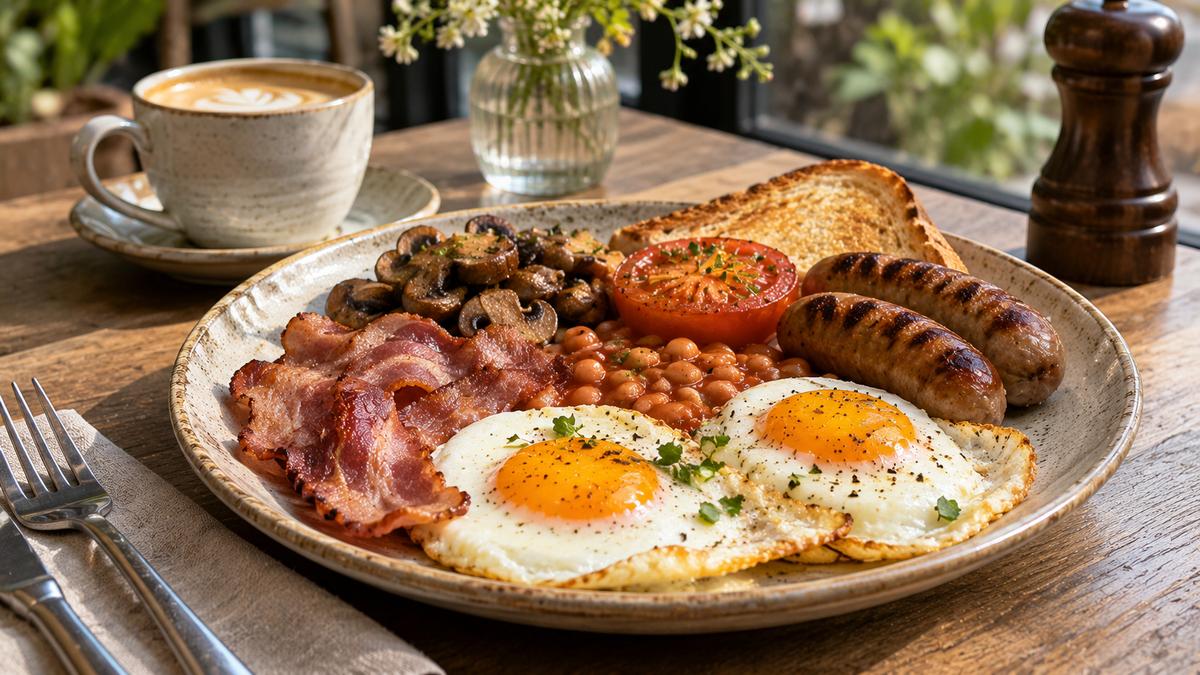
What's known as the English breakfast (eggs, bacon, sausages, mushrooms, tomatoes, toast and beans) goes back to the customs of wealthy country estates, where guests were fed generously and at length in the morning. The Victorian middle class, keen to look like gentry, then adopted the style. Breakfast recipes already appear in Isabella Beeton's book of 1861.
Beans in tomato sauce joined later, in the 20th century, along with Heinz tins. The breakfast kept gaining ingredients until it became a full plate to last the whole day.
Where the fish met the potato
The most British of dishes was put together from two foreign traditions. Fried fish is linked to Sephardi Jews in London: Alexis Soyer's cookbook of 1845 includes "fried fish, Jewish fashion". The researcher Barbara Kirshenblatt-Gimblett cautions, however, that the English were frying floured fish earlier. Chips are associated with the industrial north of England. Who first put the two together is unknown. In the 1860s Joseph Malin, a Jewish immigrant, was working in London, while further north, in Mossley, John Lees began trading around 1863. The dates are shaky, and the title of first mostly goes to Malin.
The practical test of this dish is simple. The batter should be crisp and dry, and the fish moist inside. No sauce can hide it if they aren't.
The duke credited with a beef dish
Beef Wellington is a piece of fillet with mushroom paste in puff pastry. The usual claim is that it was named after the Duke of Wellington following Waterloo. No evidence has been found. The British journalist Leah Hyslop searched 19th-century cookbooks and found no mention of it. The first written records come from the American press of the early 20th century, and it was Julia Child's TV show of 1965 that brought it wide popularity. Its ancestor is generally thought to be the French fillet in pastry.
So the showpiece of patriotic English cooking most likely has French roots and American press cuttings.
Where the reputation came from
The war usually gets the blame. Rationing was introduced in Britain in 1940 and lifted only in 1954, nine years after the war ended, and a whole generation grew used to cooking with whatever it was given. It's a convincing story, but it doesn't explain everything: the French were joking about the English table long before ration books, and some historians think English cooking is simply judged for what it isn't.
Its simplicity has more to do with the quality of the ingredients. This cuisine hides almost nothing, so mediocre meat shows at once.
Where to look in Lviv
There's no separate selection of English places, so start with our European restaurants. CLOUD no.7 does an English breakfast. British fish and chips comes with your beer at Panorama. And you can order Wellington at Veronica, where it sits among the beef dishes.
English food is mostly criticised by people who have never seen it on a Sunday.
Menus change, so a dish mentioned here may no longer be available. If it's the reason you're going, it's best to call ahead.