It sits on the spice shelf beside the salt and pepper, so hardly anyone gives it a thought. Yet one red spice shapes almost everything in this cuisine: its colour, its smell, its national pride and even a Nobel Prize. Follow the paprika and the dishes will come along behind it.
A Mexican plant that arrived with the Ottomans
The pepper it's ground from was domesticated in Mexico. It reached Hungary through the Ottoman Empire in the 16th–17th centuries and stayed a mostly ornamental plant for a long time. Franciscan monks are said to have laid out the first plantations around Szeged. The name itself comes from the South Slavic languages of the Balkans, from papar, meaning pepper.
It took roughly two hundred years for paprika to move from the flower bed to the table. Szeged and Kalocsa, in the sunny south of the country, are still considered its two capitals, though local museum curator Anita Molnár says the Szeged boom only began after the Great Flood of 1879 destroyed the city.
Ten thousand pairs of hands
The biggest surprise in this story is that until about the 1940s Hungarian paprika was hot by default. Sweet and semi-sweet versions were made by hand. Workers removed the core, slit the pod, turned it inside out and scraped away the fiery veins. Between the two world wars more than ten thousand people did this job, and 20 mills were running.
Today there are eight grades, from sweet édesnemes to strong erős. The mildness we now take for granted rested on very specific and very tedious manual work.
A Nobel Prize from Szeged peppers
The biochemist Albert Szent-Györgyi worked at the University of Szeged. In 1932 he proved that an acid he had isolated earlier was in fact vitamin C, and he later found that the local paprika was very rich in the vitamin and yielded it in large quantities. His 1937 prize was awarded for research into biological oxidation, particularly vitamin C. Paprika doesn't appear in the Nobel Committee's citation, but it did serve the research well.
A goulash you don't eat with a fork
Here's where the misunderstanding usually starts. In Hungarian, gulyás is a thick soup rather than a stew. Károly Gundel, a Hungarian chef of the early 20th century, wrote that outside the country almost anything containing paprika gets called goulash. The word itself means herdsman, and the oldest versions of the dish contained no paprika at all.
If you're brought thick meat in gravy under the name of goulash, the cook hasn't made a mistake. The dish simply travelled the empire for a long time and thickened on the way. If you want the Hungarian version, ask whether it's served as a soup.
Look for these nearby on the menu:
Bogrács. A thick soup of meat, potatoes and paprika, named after the cauldron it's cooked in. In Ukraine it's considered a dish of Zakarpattia, the country's far-western region.
Chicken paprikash. Chicken in a paprika and sour cream sauce, with small dumplings.
Lecsó. Stewed peppers and tomatoes.
Lángos. Fried flatbread with garlic oil, sour cream or cheese. It began as leftover dough baked in the flames of a big oven on the weekly bread day, and only became a fried street snack in the second half of the 20th century.
Dobos torte. Layers of sponge and chocolate cream under a caramel crust.
Salami. A cured sausage well known far beyond Hungary.
A pig with curls
In 1833 the Serbian prince Miloš Obrenović sent twelve Šumadinka pigs to Archduke Joseph, the palatine of Hungary. Crossing them with local breeds produced the mangalitsa, a curly-coated pig that looks more like a sheep. Fat made up 65–70 per cent of its carcass, and until the 1920s fatback and lard were the staple food of ordinary Hungarians.
That was also the breed's undoing. After the 1950s, with margarine and refrigerators, farmers wanted lean pigs, and by 1991 only about two hundred breeding animals were left in Hungary. Today chefs seek out its meat and fat, though not long ago the breed was being rescued from extinction.
A wine older than its own legend
According to legend, Tokaji aszú was first made by the priest Máté Szepsi Laczkó around 1630, when war delayed the harvest and the grapes had time to shrivel. It's a good story, but the first written record of aszú wine dates from 1571, in a register of the Garay family.
Tokaj's vineyards began to be divided into classes in the first half of the 18th century, more than a hundred years before the famous Bordeaux classification. Louis XIV is said to have called it the king of wines and the wine of kings. Nobody can check that now, and Tokaji has plenty of other stories to tell.
Where to try it in Lviv
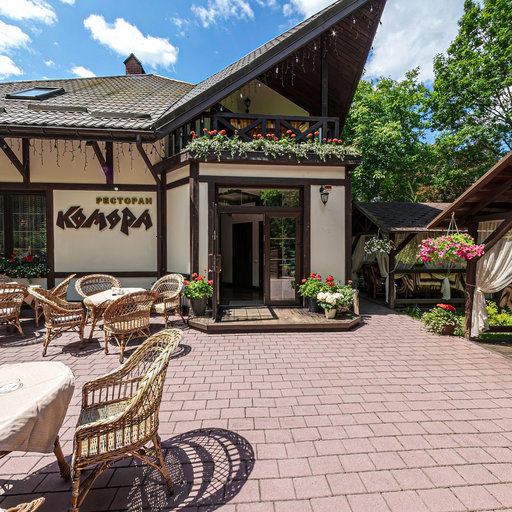
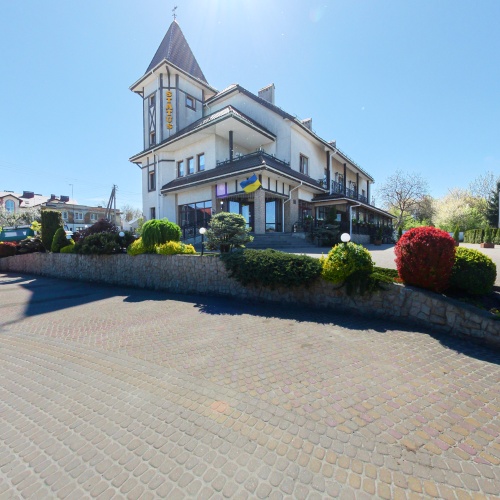
You'll find a list of places in our selection of Hungarian restaurants. Hungarian bogrács is on the menu at the Status hotel and restaurant, and bogrács in the Hungarian style is cooked at the Hotel Europe. For comparison, drop into Komora, where the same dish goes by the name of Zakarpattian.
Two plates with one name and a border between them will tell you more about this cuisine than any long list.
Menus change, so a dish mentioned here may no longer be available. If it's the reason you're going, it's best to call ahead.