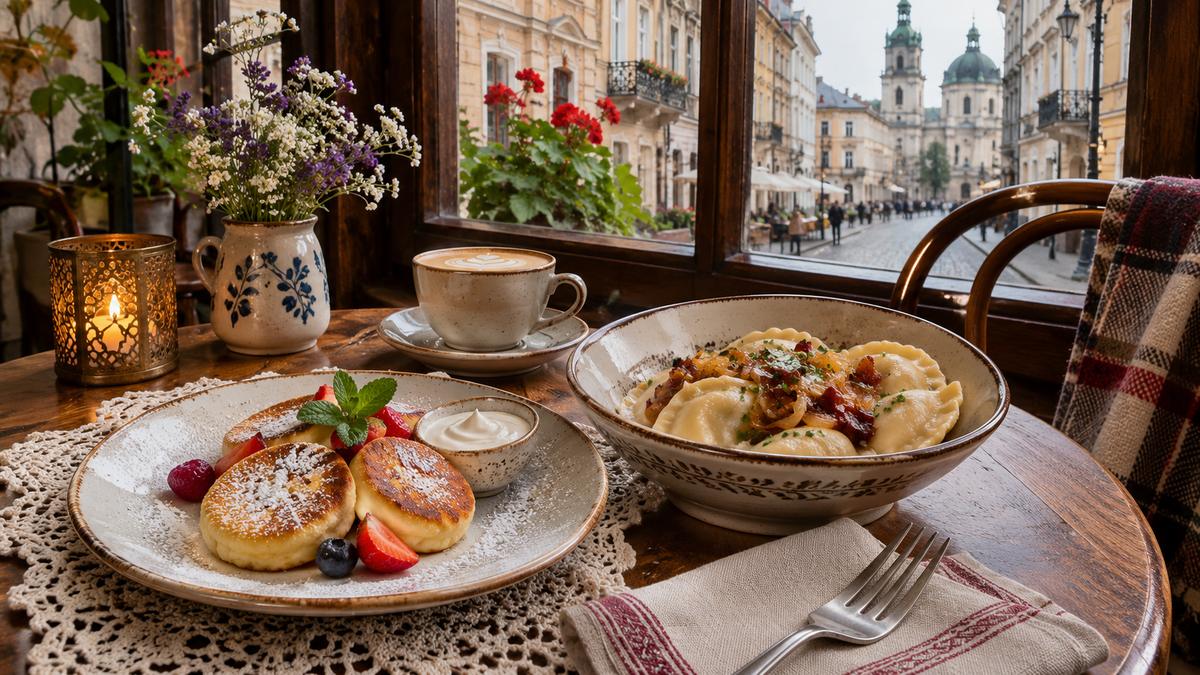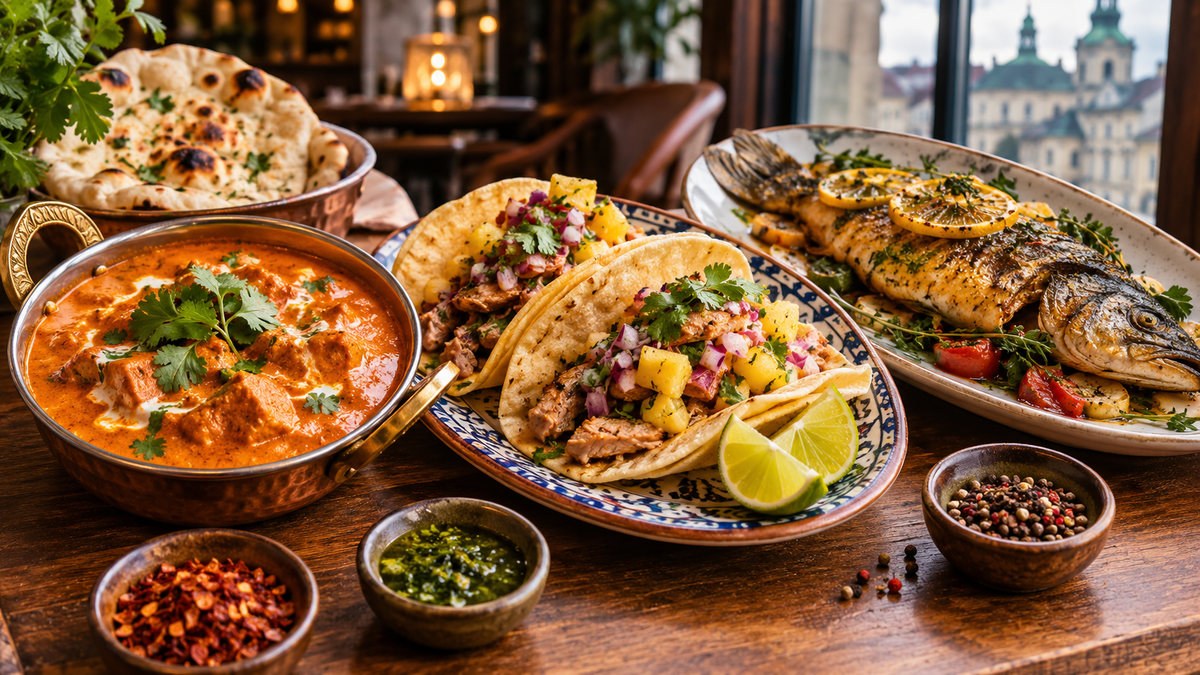
Most food lists are put together on the basis of what's most interesting. This one is based on rarity: how many places in the city have a given cuisine on the menu at all. The result turned out to be telling.
Cuisines ranked by rarity
Among the cuisines listed on the menus of Lviv venues, Indian, Mexican and Jewish are rare, French and Georgian are more common, and Italian, Japanese and Asian appear in many places.
And there is no Vietnamese or Greek food in the city at all — not a single venue lists either on its menu.
One caveat about what this list actually measures: it covers venues where a cuisine appears on the menu, not restaurants devoted to it alone. The place with Indian dishes is a bar that has them on its menu, not an Indian restaurant. That distinction matters when you're choosing.
What rarity means in practice
A rare cuisine gives you nothing to compare it with. When a city has plenty of Italian places, a few visits are enough to know what "normal" tastes like. When there's only one, your first experience instantly becomes the benchmark, with nothing to measure it against.
The advice is simple but not obvious: go to the city's only representative of a cuisine without expectations shaped by your travels. Not "like in Delhi", but "let's see what they do here".
A rare menu is usually shorter. That's not a sign of a lack of ambition but a matter of logistics: ingredients for such cuisines are either expensive to ship or spoil quickly. A short menu of five dishes that are genuinely cooked beats a long one of twenty, half of which are "not available today".
A question worth asking over the phone: whether the specific dish you're coming for is available that day. In a place where that cuisine is one of many, it may be seasonal or made to order only.
Why some cuisines are everywhere and others are missing
There are three reasons, all of them mundane.
Ingredients. Italian and Asian cooking rely on produce that is always available. For Vietnamese or Indian dishes, some ingredients are either not imported regularly or arrive in small, expensive batches.
Staff. A rare cuisine takes skill, and there's nowhere nearby to learn it. One chef means one venue; if the chef leaves, the cuisine disappears from the city.
Demand. It exists, but it's spread thin: plenty of people fancy Mexican food once every six months, but few are ready to go every week. For a venue, that means unpredictable custom.
That's why rare cuisines in Lviv more often live inside bars and mixed-format venues than in restaurants of their own. It's a more sustainable business model, and from the guest's point of view it isn't bad either: the kitchen keeps going as long as the bar keeps the place afloat.
A one-of-a-kind dish is not the same as a rare cuisine
It's worth telling apart two kinds of rarity, because you look for them in different ways.
A rare cuisine is one served by just one or two places in the city. You find it by category, as in the list above.
A one-of-a-kind dish is when the cuisine is common but a particular item is available in only one place: a house cooking method, a recipe nobody else uses, a dish made from an ingredient you won't find elsewhere here. You can't find it by category — only on a specific venue's menu.
If it's the second you're after, a different approach works: open the menus of several places serving the same cuisine and see what one of them has that the others don't. It takes five minutes and gives a far more accurate result than any ready-made list.
Where to go
Mexican: Santa Muerte bar, one of two venues with their own profile in this category.
Jewish: Bachevski Restaurant, where this strand of cooking is part of its broader Galician (western Ukrainian) theme.
Italian: the widest choice in the city — see the full list, including La Famiglia and Tutti.
Japanese and Asian: Japanese cuisine and Asian cuisine. Both categories are large, so here you do have something to compare.
For a general list if you're choosing by other criteria, see restaurants in Lviv.
One way to use this list
A rare cuisine is a poor choice for an important dinner and a good one for an interesting evening. The risk is higher, there's nothing to compare it with and the menu is shorter — but that's exactly why it's the only way in Lviv to try something you won't find anywhere else here.
A sensible compromise is to go for lunch rather than dinner. It's cheaper and calmer, and if you don't like it, your evening is still intact.