The smell of charcoal, skewers, flatbread on the plate: for most of us, that's Caucasian food. In the Caucasus itself, you'd be asked which one you mean. The label lumps together neighbours who speak different languages and don't always agree on whose dish is on the table.
One word for very different people
About fifty ethnic groups live along this strip of mountains. Their languages belong to several families with almost no kinship between them: Georgian, Armenian and Azerbaijani sit side by side but have no common ancestor. Every people keeps its own table.
They also share a great deal. The mountains provide lamb and cheese, the valleys grapes and herbs, and the long trade routes brought spices. So the word on a menu nearly always means something more specific: most often Georgian dishes, or else Armenian or Azerbaijani ones. Georgian food has its own article in this magazine. Here we're looking at what these cuisines have in common.
What to call it
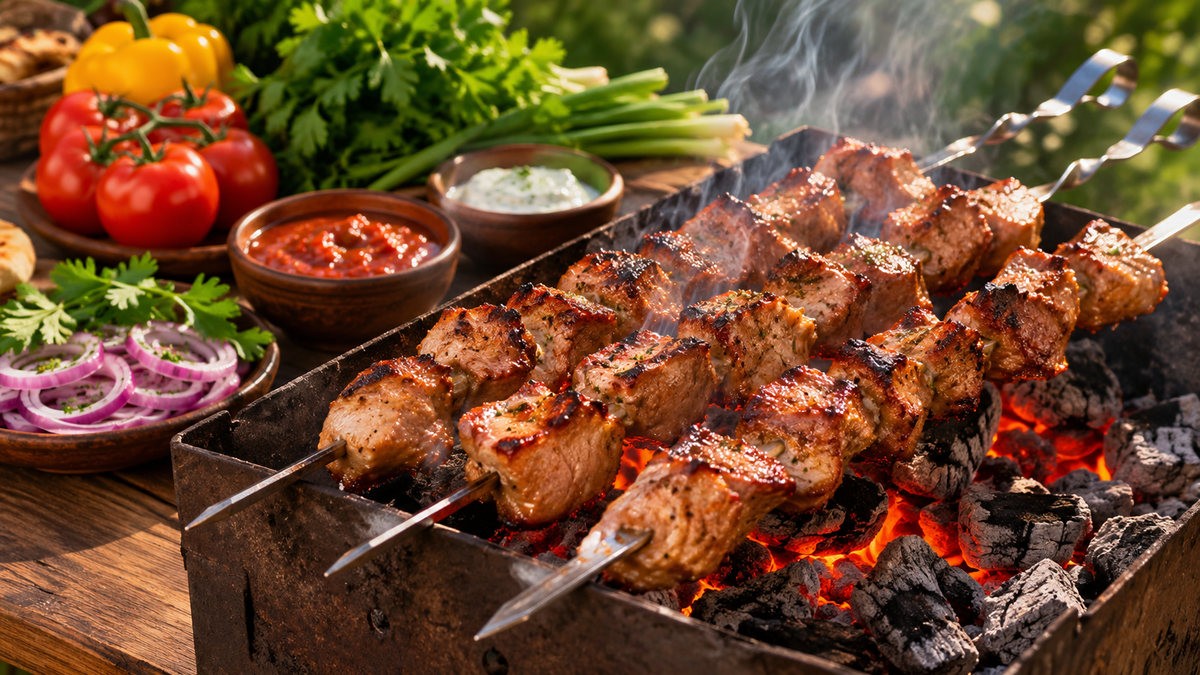
The word shashlik (skewered grilled meat) is hardly used in the Caucasus. Georgians say mtsvadi, Armenians khorovats, Azerbaijanis kebab. The Ukrainian name goes back to the Crimean Tatar "shish", meaning a spit, and one theory credits the Zaporozhian Cossacks with spreading it. That stretch of the journey is poorly documented.
The thing itself differs too. Armenian khorovats is often made with chunks of meat on the bone, so it stays over the fire for longer.
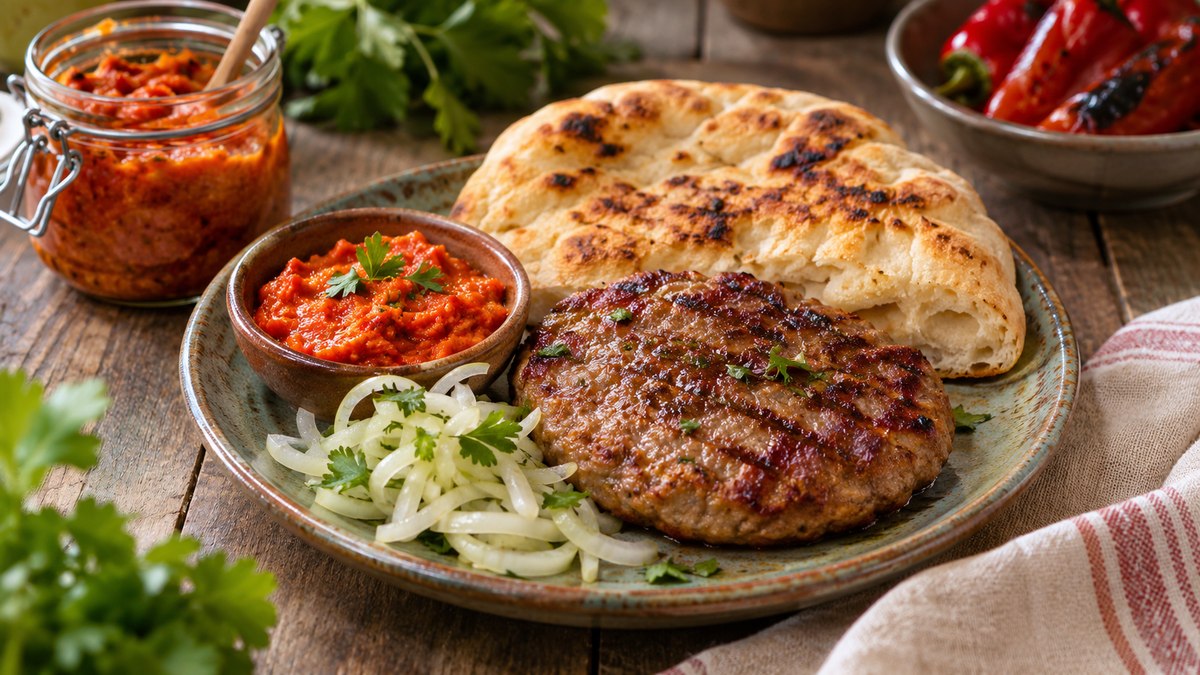
Lula kebab is technically harder. It's minced lamb with onion that has to stay on a wide skewer. Azerbaijani writers stress that the secret lies in long kneading and fat from the sheep's tail, though recipes disagree on how much. A lean lula simply slides into the fire.
Dolma goes to UNESCO
In December 2017, UNESCO added the tradition of making dolma to its intangible heritage list, on Azerbaijan's nomination. It went down painfully in Armenia, where dolma is also considered a national dish. An entry on the list, came the reply, confers no ownership of a dish.
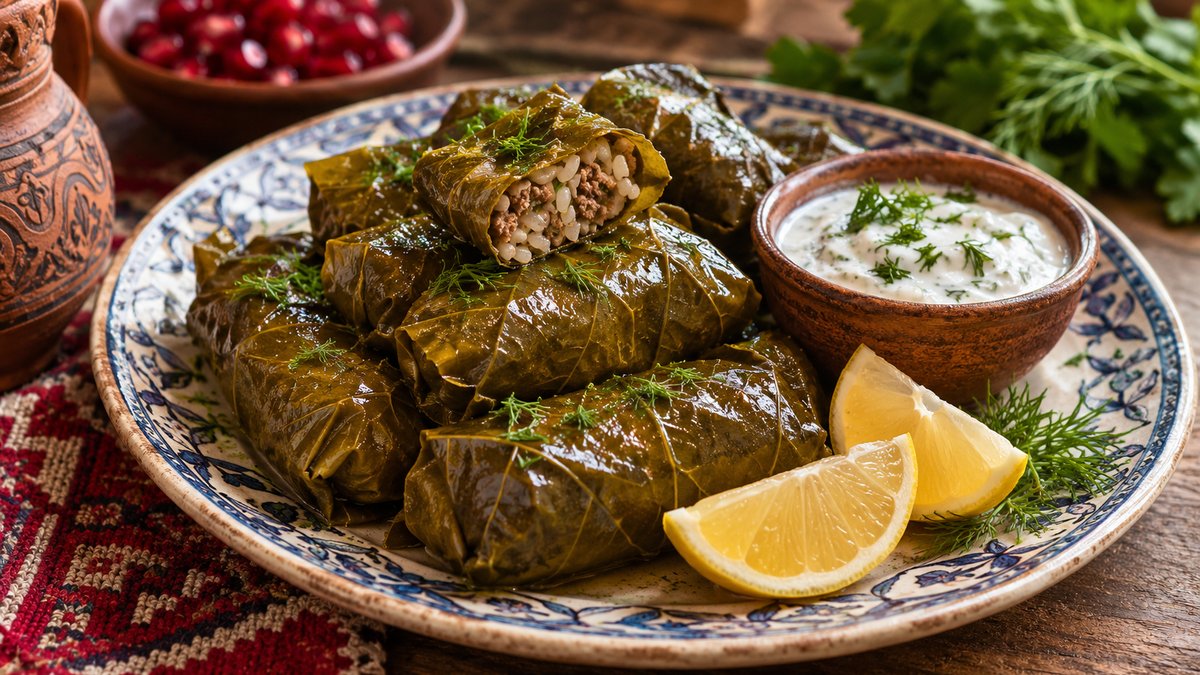
Dolma itself has outlived every argument. A mixture of minced meat and rice is wrapped in vine leaves, and in winter it's stuffed into cabbage, peppers, quinces and apples. Every family knows its own version is the right one, and that, in fact, is what the UNESCO entry records: the skill of cooking and sharing.
Soup at dawn
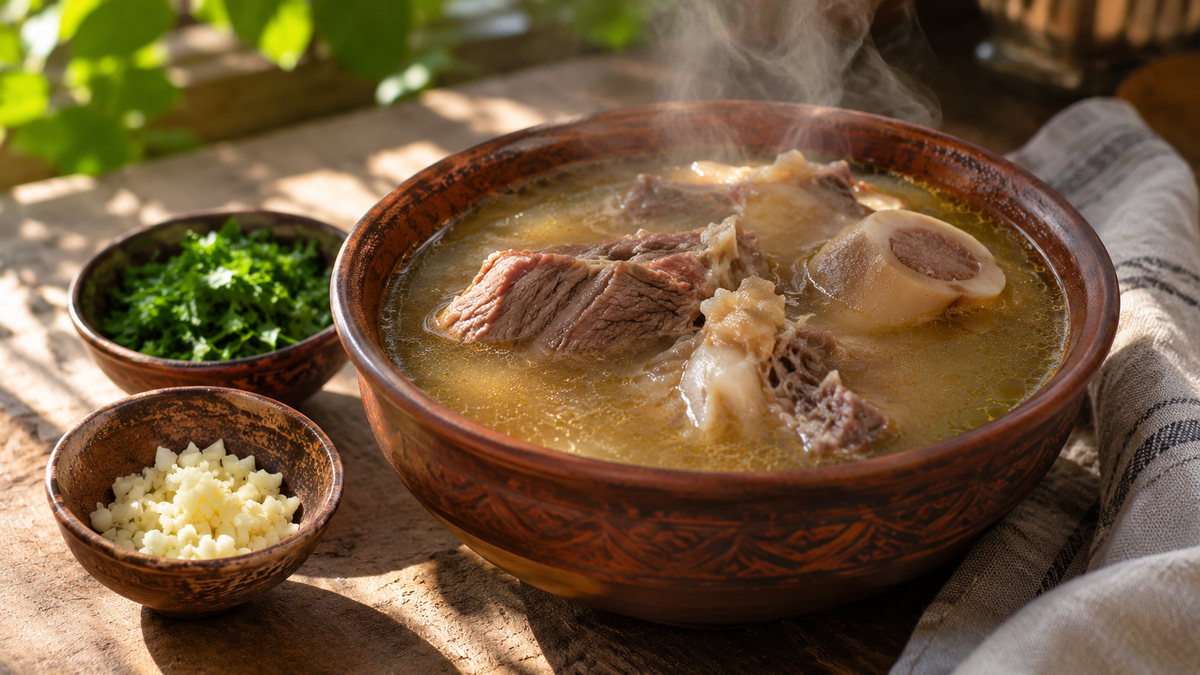
Khash is the region's least accommodating dish. Cow's feet simmer all night until the water turns into a white, sticky broth. It's usually salted at the table. Garlic goes in as well, dried lavash lies alongside, and it's eaten in winter, early in the morning, in unhurried company.
In Armenia its reputation rests above all on curing the night before. It's hard to find in Lviv, for an obvious reason: it demands a night at the stove and a guest ready for it at eight in the morning.
What else you'll see on the menu
Lavash. A thin bread from a clay oven, good for wrapping meat and cheese.
Suluguni. A salty brined cheese that melts well.
Churek. A flatbread that turns up in Lviv among the charcoal-grilled dishes.
The easiest way to read a menu like this is to ask where the cook is from. That will tell you more than the label.
In Lviv
There's a dedicated selection of Caucasian restaurants, and some of these dishes can be found outside it. Lula kebab of lamb and veal is served at Hungry Nicholas. At Chagari you can have beef shashlik with a sauce that's actually called Caucasian. And the honey-themed restaurant Beehive lists churek among its grilled dishes.
The Caucasus is a place where you can argue over a dish for longer than it takes to cook, and still sit down at one table.
Menus change, so a dish mentioned here may no longer be available. If it's the reason you're going, it's best to call ahead.