Ask in the Balkans whose dish this is and dinner may run long. Most of Serbia's famous specialities have neighbours who sincerely consider them their own, and that may be the most accurate description of this cuisine. A Serbian menu is at its most interesting when read through what people are still arguing about.
The caviar that disappeared
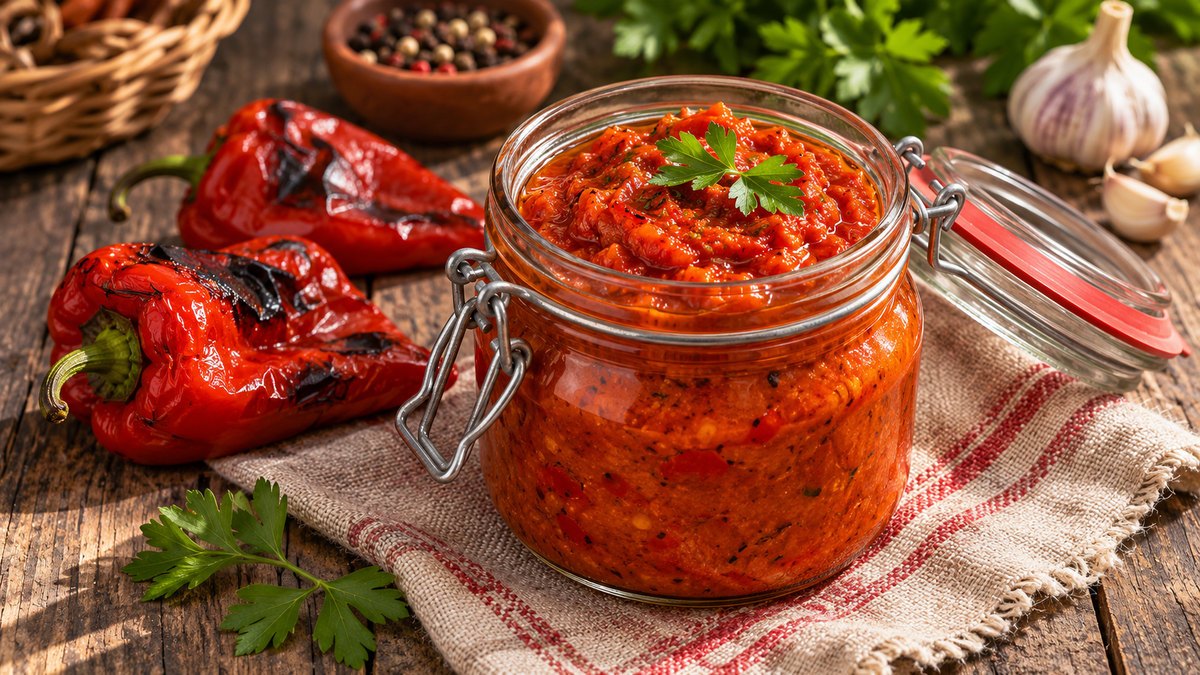
Ajvar is a thick spread of roasted red peppers, and its name makes no sense until you learn where it came from. It leads back to the Turkish havyar, salted fish roe.
According to one version, sturgeon used to swim up the Danube as far as Belgrade, and local caviar was an ordinary food in homes and restaurants. In the 1890s production became unreliable, and Belgrade restaurants began serving a pepper salad called "red ajvar" or "Serbian ajvar". This is hearsay, so it's best treated as an attractive hypothesis.
Then the politics begin. In the late 1990s a Slovenian company tried to protect the name ajvar on the German market, and the dispute grew heated. In a 2020 interview the singer Dua Lipa called it an Albanian dish. The BBC turned up an intriguing detail: the first known printed recipe, from Katarina Popović's 19th-century Great Serbian Cookbook, contains both pepper and aubergine, though Serbs today usually make ajvar from peppers alone and aubergine is more common in North Macedonia.
Even the first recipe on record doesn't match how the dish is usually made in Serbia today.
Who invented ćevapčići?
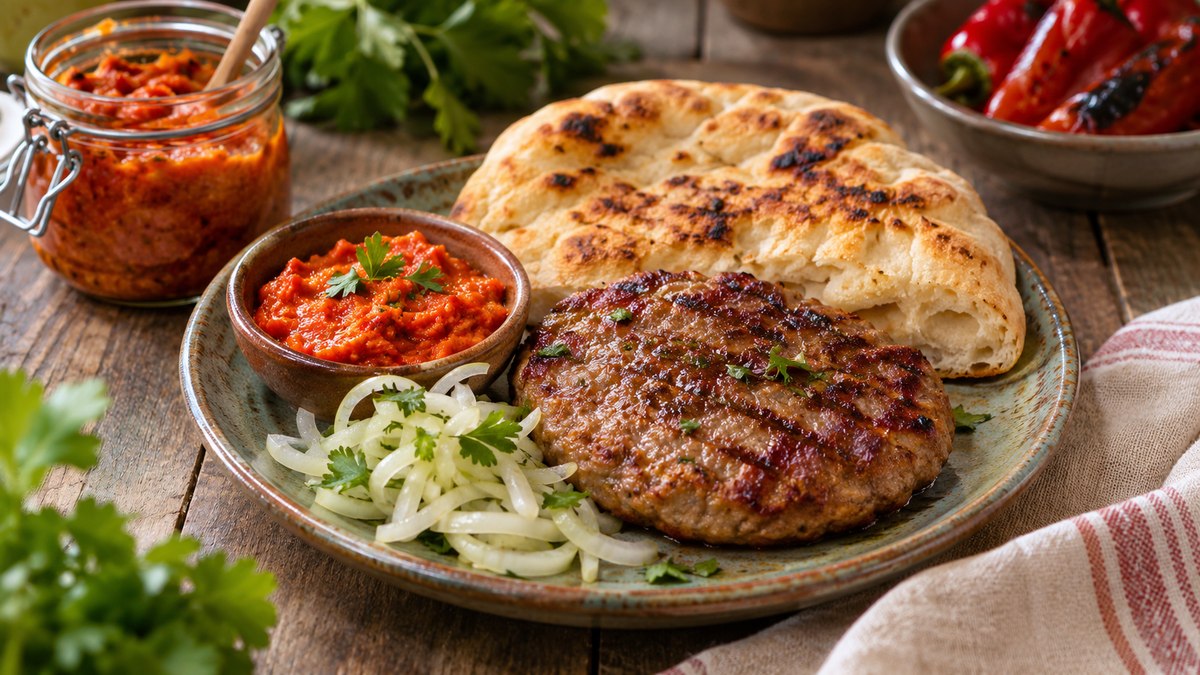
The word ćevap comes from Arabic through the Ottoman kebap. These small grilled mince sausages belong to a whole family of dishes that spread across the Balkans under the Ottoman Empire. Their neighbours include Bulgarian kebapche and Romanian mititei.
Where the dish took its present form is still undecided. Bosnia and Serbia both consider it theirs. Some sources cite a first written mention in Belgrade in 1860, while historians from Banja Luka point to Leskovac in southern Serbia. There's a practical difference too: Bosnian ćevapi are made from two kinds of beef, while Serbian ćevapčići can be beef, lamb, pork or a mixture. They come with fresh onion and bread.
Kajmak: neither butter nor cheese
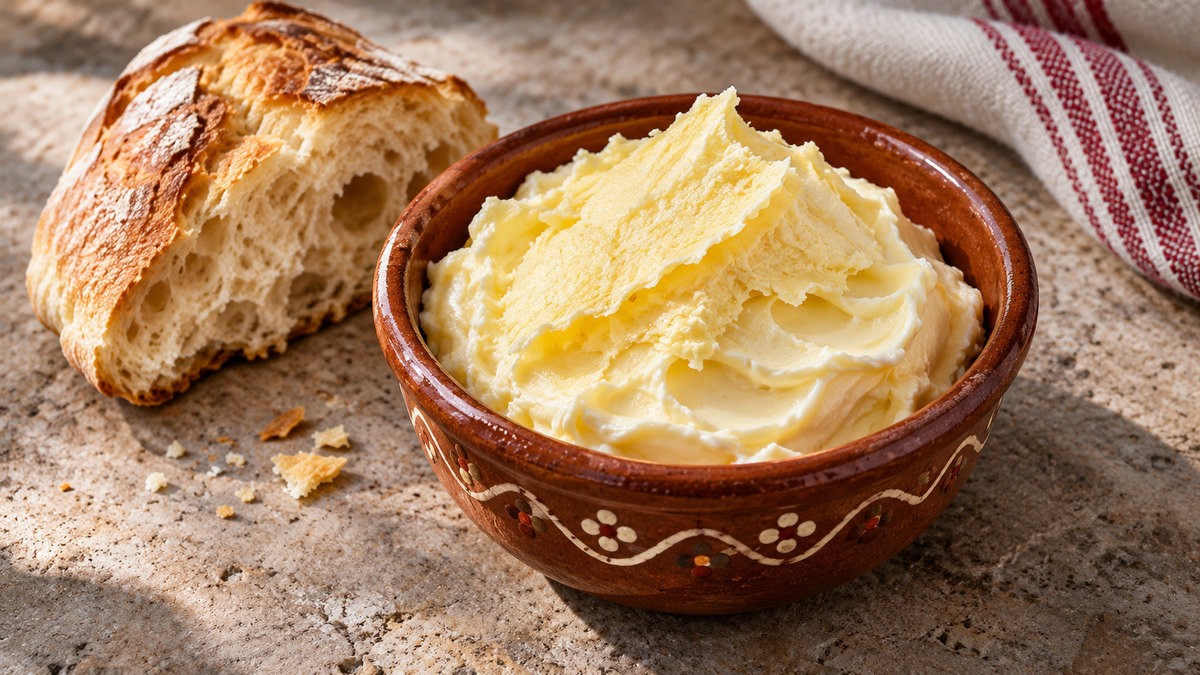
Kajmak simply doesn't translate. It isn't butter, cheese or sour cream. Milk is simmered for a long time over a low heat, then the cream is skimmed off, cooled and left to mature. Young kajmak is soft and fresh, older kajmak firmer and sharper, and the fat content reaches about 60%. Serbian writers particularly praise the kind from Čačak and Zlatibor.
The simplest form is a warm lepinja, a flatbread with kajmak just starting to melt. It can also go on meat, and then pljeskavica, a large mince patty known abroad as the Balkan burger, gets a little richer.
What else is on the menu
Sarma. Soured cabbage leaves rolled around mince and rice, a winter dish often made for Christmas.
Burek. Flaky pastry with a filling, also brought by the Turks.
Karađorđeva šnicla. A veal or pork roll with kajmak, breaded and fried, named after the revolutionary Karađorđe. The National Tourism Organisation of Serbia says that in the 1950s Mića Stojanović, a cook at the Golf restaurant in Belgrade, improvised when he ran short of ingredients for another dish. The date is given as 1956 or 1957, so it only looks old.
Šljivovica. Plum rakija.
Shopska salad deserves a separate mention because it often appears on Balkan menus. It combines tomatoes, cucumbers, onion, peppers and white sirene cheese. It's Bulgaria's national salad and, according to Wikipedia, was launched in the 1950s by the state tourism company Balkantourist. The name Shoplouk covers lands in Bulgaria, eastern Serbia and North Macedonia, so there are plenty of people willing to claim the salad, but the documented trail leads to Bulgaria.
A saint's day and plums
Where Serbian culture stands firm is in its table rituals. Slava, the home celebration of a family's patron saint, has been on UNESCO's Representative List since 2014. A special candle is lit, wine is poured over the slava bread, which is scored with a cross, turned and broken into four parts. Only then does the feast begin.
In 2022 šljivovica joined the same list. Plums are picked in autumn, ferment for 20–30 days, are distilled twice in handmade copper vessels and then aged for at least a year in a barrel, usually oak. The entry concerns the knowledge of the whole process held in families, and goes beyond the drink itself.
Where to look in Lviv
There are places in our selection of Serbian restaurants, but individual Serbian dishes take some hunting down in Lviv. You'll find pljeskavica at Villa Austria among the tandoor dishes, with aioli, which is already a free improvisation by Balkan standards. Ćevapčići with potatoes are served at Trava on Liubinska Street.
Serbian cuisine has borrowed a great deal and remembered nearly all of it as its own.
Menus change, so a dish mentioned here may no longer be available. If it's the reason you're going, it's best to call ahead.