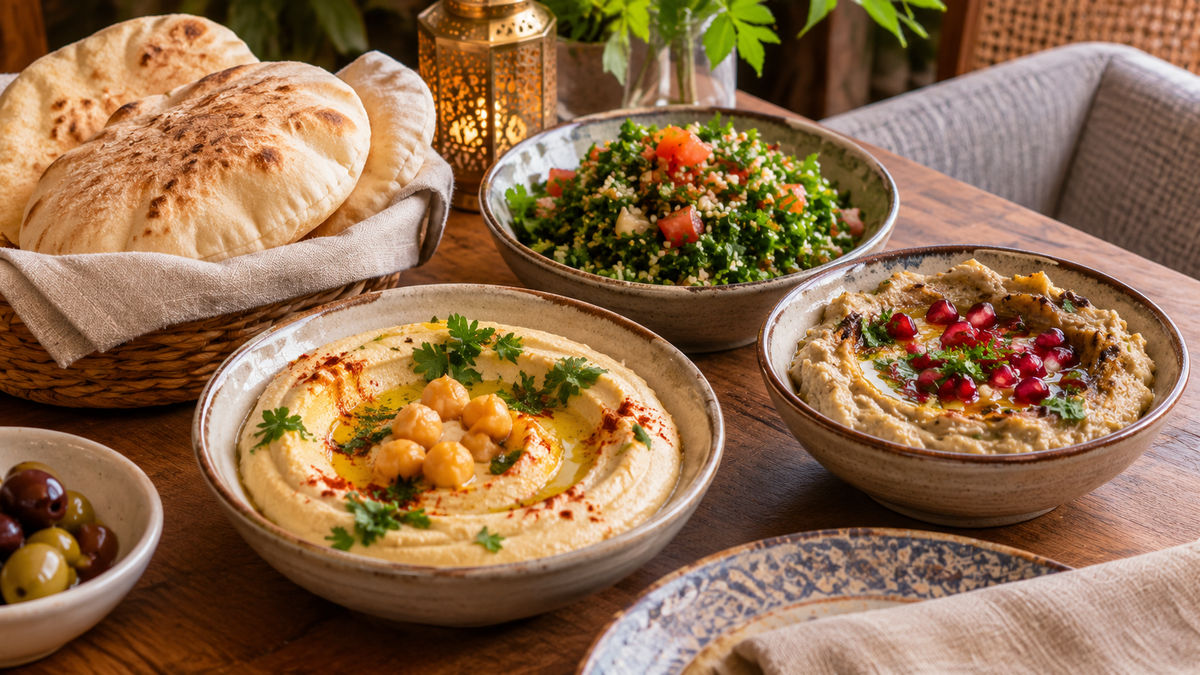
In a Lebanese restaurant you can feel lost by page one: the menu is full of small dishes, and it isn't clear whether they're starters or already the meal. That's exactly the right question. This table can be walked through in stages, green at one end and raw at the other, and each stop says something about the country.
What meze means
Meze are small dishes that either open a meal or replace it altogether. The word passed through Turkish from Persian, where it meant flavour. The researcher Ayla Algar suggests that the first meze may have been pomegranate, quince and citron, used to soften the astringency of young wine.
The custom of serving small dishes with wine can be traced back to the Middle Ages. Order for the table, several plates at a time.
First stop: green
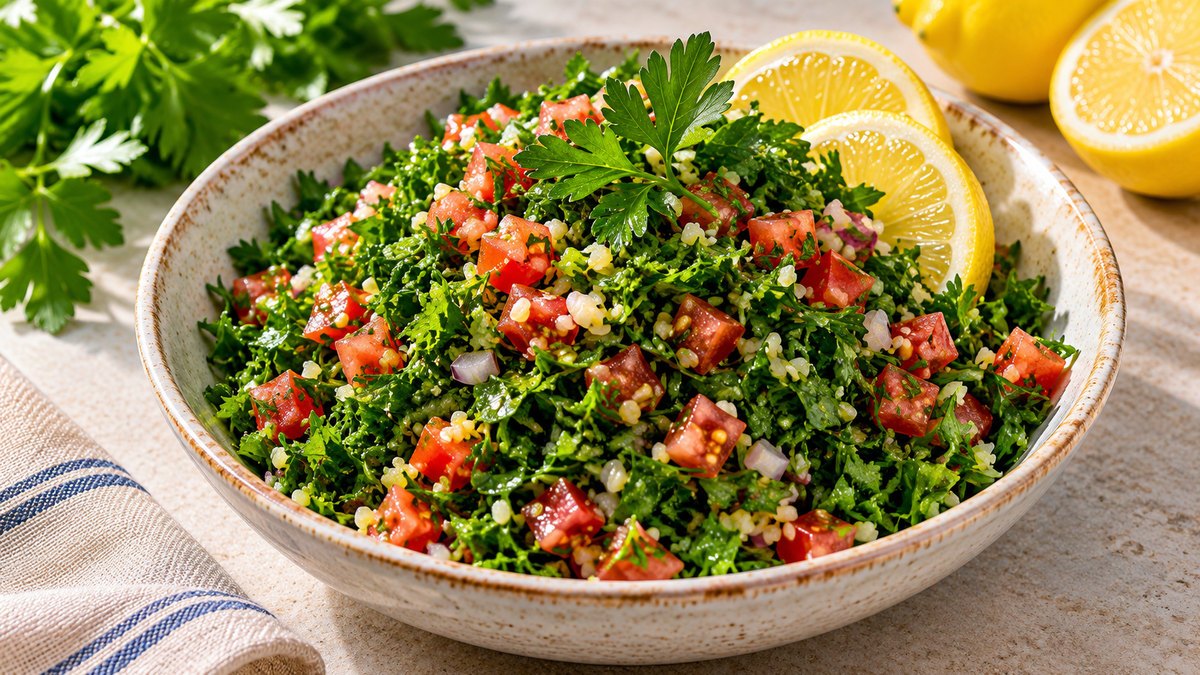
Look at a tabbouleh and you'll see straight away who made it: in Lebanon and Syria it has more parsley than bulgur. Turkish kısır and Armenian eetch work the other way round, with more grain. So if you're brought a plate of yellow bulgur with green flecks, it wasn't made by the Lebanese rule.
People take this seriously. Lebanon marks a National Tabbouleh Day on the first Saturday of July, proposed in 2001 by the artist Ricardo Mbarkho. For the bulgur, salamouni wheat from the Bekaa Valley is especially prized.
Next to it there's usually fattoush, a salad of vegetables and toasted bread with sumac, a tart seasoning made from berries.
Second stop: smoke
Here begins a confusion that even culinary sources can't untangle. Baba ganoush and moutabal are both made from aubergine charred over a flame. By one description, moutabal has tahini and yoghurt, while true baba ganoush does without them and contains tomatoes, walnuts and pomegranate molasses instead. Other recipes put tahini in both and say that yoghurt is the only difference. Ottolenghi puts it more simply: moutabal is creamy thanks to tahini, and baba ganoush is much lighter.
The honest answer is that it depends on the kitchen you're sitting in, and some places don't distinguish the two at all. The common base is roasted aubergine, and an open flame supplies the smoky aroma.
Third stop: hummus and the heaviest record
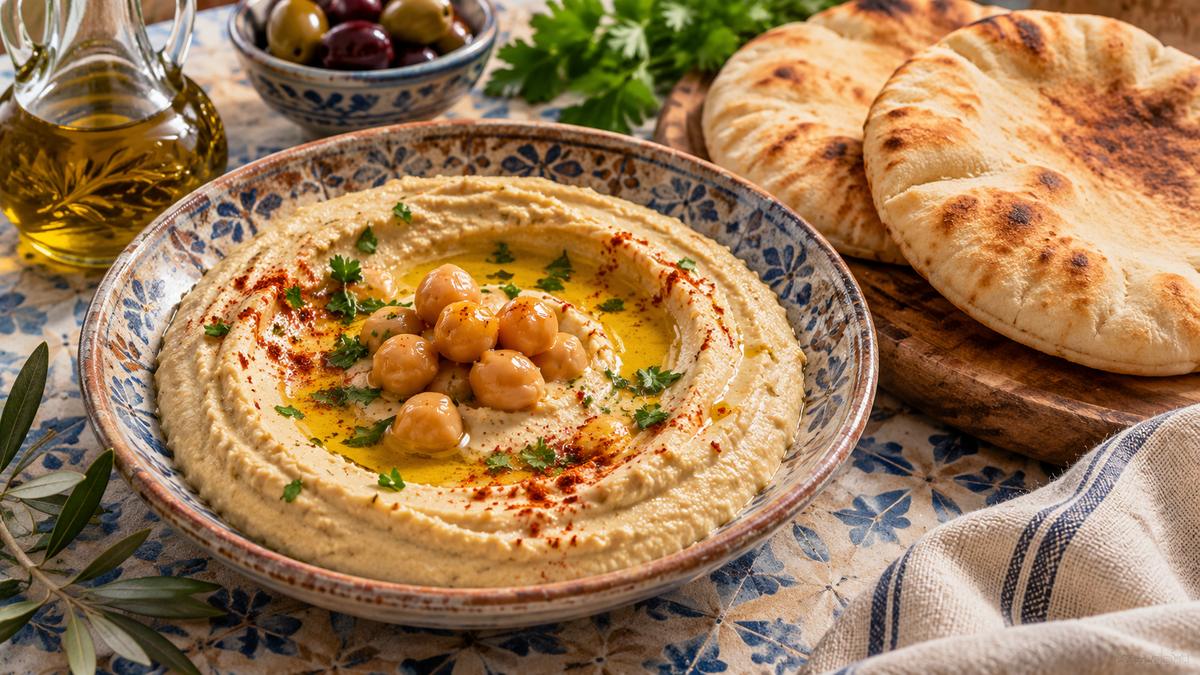
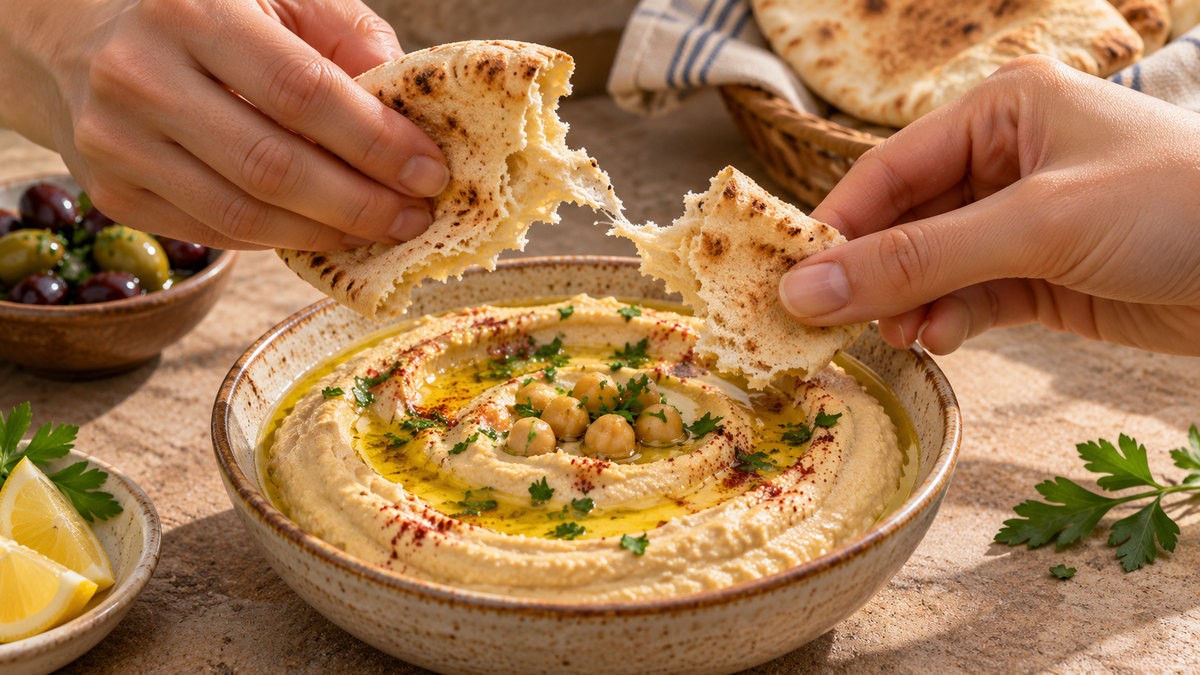
Hummus has given the region an astonishing dispute. In 2008 a Lebanese trade group accused Israel of appropriating the dish, and the matter went on to the Guinness World Records. That same year about 400 kilograms were made in Jerusalem. Lebanese cooks answered with more than two tonnes topped with cedar, and then the village of Abu Ghosh turned out more than four tonnes.
The final word came on 8 May 2010, when chef Ramzi Choueiri and about three hundred cooks and students made a hummus weighing 10,452 kilograms. It sounds like fun, but Britannica warns that for Arabs this "war" has serious questions of land and cultural appropriation behind it. The Israeli blogger Shooky Galili replied that claiming hummus is like claiming bread or wine. So the subject isn't as funny as the record-breaking bowls.
Fourth stop: what's eaten raw
Lebanon's national dish is usually said to be kibbeh, a mixture of finely pounded meat and bulgur, a title it shares with Syria. Variations include fried oval balls with a filling, a bake in a tray and, finally, kibbeh nayyeh, raw meat with bulgur served on a plate with oil, mint and spring onions.
The tradition is very specific. The meat was once eaten on Sundays, straight after a lamb was slaughtered, and pounded by hand in a stone mortar until almost as smooth as pâté. Villages in Mount Lebanon still argue over whose kibbeh is the finest.
This raw dish demands top-quality meat that's absolutely fresh, and in 2013 it was in the news because of a salmonella outbreak. If a restaurant can't say when and where the meat came from, choose fried kibbeh, which isn't going anywhere.
Morning and a glass
The country's morning self is manakish, a thin flatbread with a paste of za'atar (a blend of dried thyme, sumac and sesame) and olive oil. It's often simply eaten with tea, with vegetables, olives and mint leaves on the side. Labneh, a thick strained yoghurt cheese, adds a white note.
Arak, an aniseed spirit often stronger than 50%, is considered the national drink. There's some beautiful chemistry here. Anethole, the essential oil of anise, dissolves in alcohol but not in water, so the drink turns milky white when diluted. There's also a rule: water first and ice afterwards, because icy cold makes anethole crystallise into unsightly flakes.
The cuisine also keeps traces of foreign rule. The Ottomans, who ruled from 1516 to 1918, influenced the role of lamb, and the French left behind croissants, flan and éclairs.
Assembling this table in Lviv
The portal doesn't yet have a separate selection of Lebanese restaurants, so in Lviv a full meal has to be put together in parts, beginning with the broader list of Mediterranean restaurants. The closest match is the cafe Tutti, with a separate meze section offering an assortment and muhammara, a paste of roasted peppers and walnuts. Hutsuls'ka Grazhda lists baba ganoush among its chef's new dishes, which comes as a surprise. And Hrushevs'kyy serves spiced marinated tomatoes with labneh among its cold starters.
Meze teaches a simple lesson: you don't have to choose one dish to learn about a whole country.
Menus change, so a dish mentioned here may no longer be available. If it's the reason you're going, it's best to call ahead.