Basturma with beer, brandy with a mountain on the label, lavash with grilled meat: Armenian food tends to reach us piece by piece, with no account of where the pieces came from. Let's lay them out one at a time, starting with the oldest.
The cave at Areni
Near the village of Areni in southern Armenia, archaeologists excavated a cave containing clay bowls, fermentation vats and a shallow basin for pressing grapes. In 2011 the team announced that they were about six thousand years old, from roughly 4100–4000 BC. It's the oldest winery ever found.
One detail matters. The press stood among burials, so researchers believe the wine was made for rituals and wasn't an everyday drink at the time. Outside specialists add a caution: the pigment on the shards could have come from pomegranate. The chemistry doesn't settle the matter, but there's little reason to doubt the scale of the find.
Bread baked in the ground
Lavash is the thinnest bread in the region. The dough is stretched over a cushion and slapped against the hot wall of a tonir, a clay oven sunk into the ground. Within seconds it's covered in bubbles. In 2014 the tradition of making it was added to UNESCO's intangible heritage list on Armenia's nomination.
The neighbours were unhappy, since similar bread is baked across the region. Azerbaijan and Turkey objected, and in 2016 a separate entry listed the tradition of lavash and other thin breads for those countries together with Iran, Kazakhstan and Kyrgyzstan.
Lavash keeps well when dried. It can be stored for months, and a sprinkling of water before eating makes it soft again.
Pressed meat
With basturma, the honest place to start is "nobody knows for sure". It's air-dried beef in a thick paste of fenugreek, garlic and hot pepper. Armenian writers call it their own, others trace it to Byzantium, and some repeat the story of horsemen keeping meat under the saddle. The name is Turkish, from the word for "to press", because the pieces of meat are pressed.
This chain has an unexpected sequel. The word travelled through Romanian and Yiddish, which is how pastrami, now New York's signature street snack, came to exist across the ocean.
Sujuk is a dried beef sausage with hot spices. Several peoples claim this one as well.
A few dishes about family
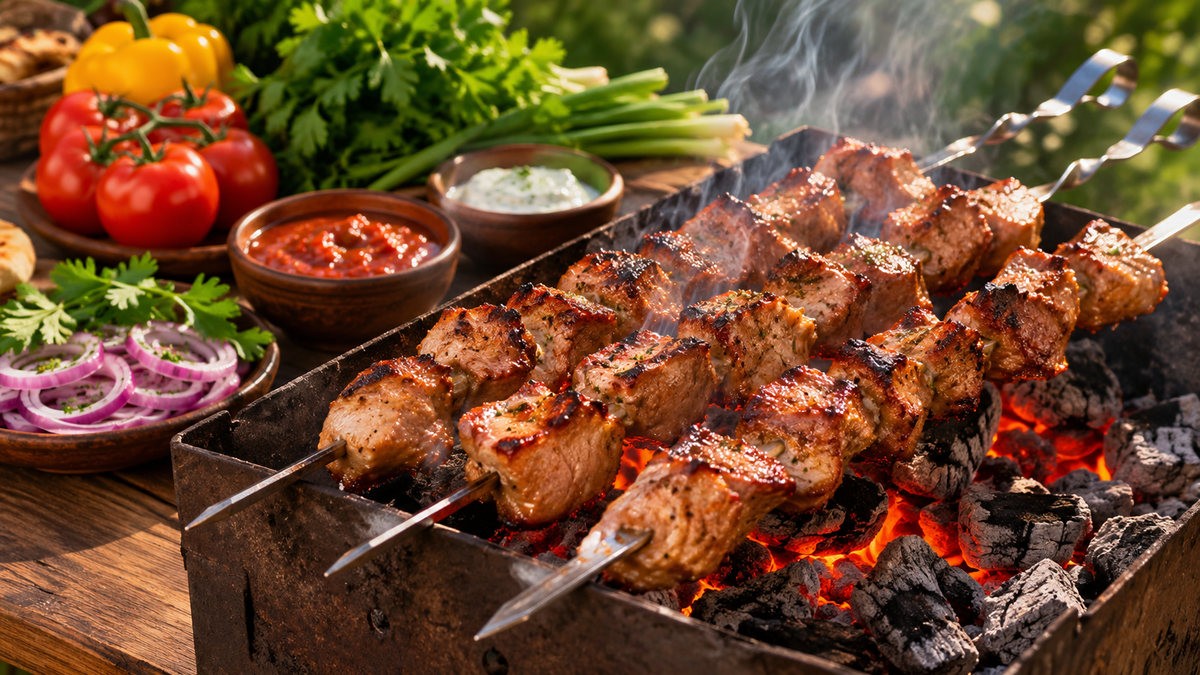
Khorovats. Pieces of pork or lamb on a skewer, often on the bone. No celebration goes without it.
Dolma. Meat and rice in vine leaves. Who owns it has already been argued over at UNESCO.
Ghapama. A pumpkin stuffed with rice, dried fruit and nuts, then baked whole. It's made at Christmas.
Gata. A sweet pastry that's different in every region.
The apricot that became Armenian by accident
The apricot's botanical name, Prunus armeniaca, literally means "Armenian plum". In 1623 the botanist Gaspard Bauhin believed the tree came from there because it had been grown in the area for so long. Genetic research has shown otherwise: the apricot's homeland is Central Asia and China, and Armenia was one of the stops on the Silk Road.
The name stayed, though the theory behind it collapsed long ago.
The cognac that lost its name
The merchant Nerses Tairyan began industrial brandy production in Yerevan in 1887, using French distilling techniques. The word "cognac" is protected for the French region, and under an agreement with the EU, Armenian producers are gradually giving it up in favour of "Armenian brandy". Old bottles and old habits are holding on for now.
In Lviv
Armenian places aren't listed separately among our addresses, so cast the net wider, in our selection of Caucasian restaurants. Basturma and beef sujuk are served at the Ramada restaurant. Lamb dolma can be ordered at the Derenivska Kupil sanatorium complex outside the city. At the Na Ozeri restaurant there's basturma to go with your beer, and Ararat brandy at the bar.
The oldest winemaker left us only a bowl and a press, with no recipe, and that makes this cuisine feel a little like an educated guess.
Menus change, so a dish mentioned here may no longer be available. If it's the reason you're going, it's best to call ahead.