The number of guests looks like a simple input: more people means a bigger room and more food. In reality, scale changes not the volume but the type of event: what works for ten doesn't work at all for a hundred, and vice versa. Below are three formats and the boundaries between them.
Ten people: an event where everyone shares one conversation
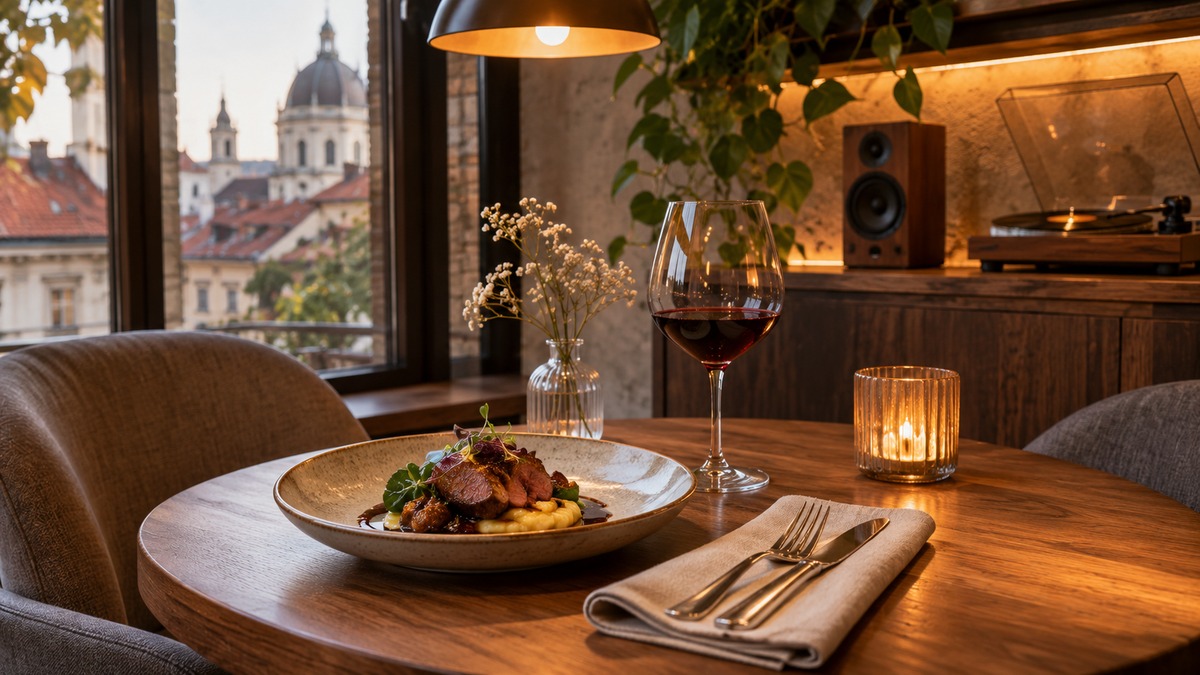
Up to about ten people, a group can still hold together as one conversation — not all the time, but enough for everyone to feel part of the same evening.
What it gives you. You can do without a programme altogether: the table and the people take care of themselves. You can talk about something that actually matters at work. You can let everyone say a few words without it taking an hour.
What you need. A private room or a small hall — above all, no other table right next to yours. For ten people this is decisive, because with a neighbouring table your own conversation falls apart.
Where it breaks down. When "a few more people from another department" are added to the ten: at twelve to fourteen, the shared-conversation format disappears, but there's still no programme. This is the least successful size for an event — too big for a conversation, too small for a show.
Thirty people: you need a plan, but not yet a stage
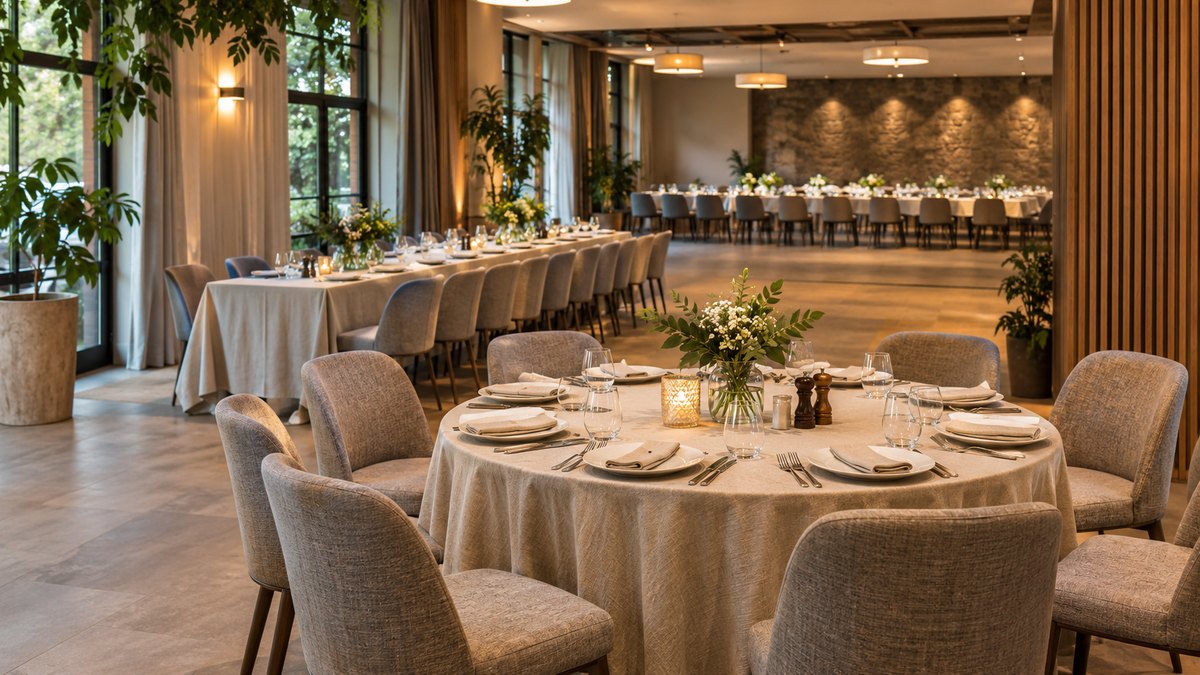
Thirty is already several groups, and they'll form by themselves around the tables. The main task here is to get them to mix; otherwise everyone will spend the evening with the same people they sit next to at the office.
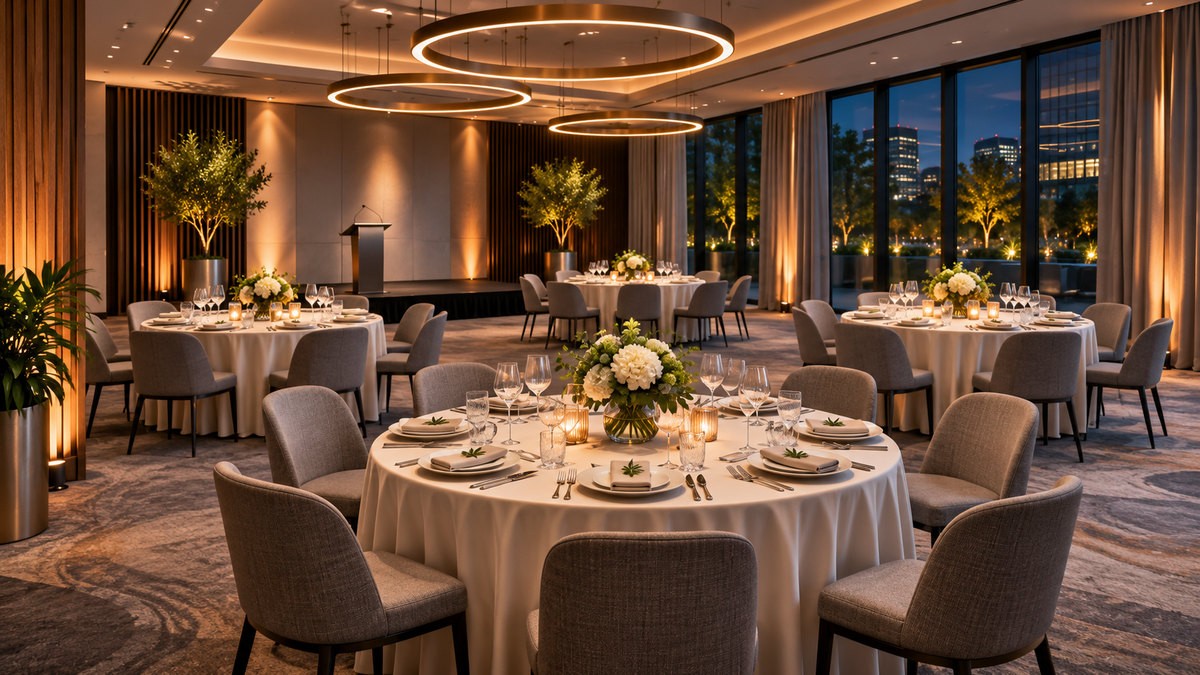
What you need. A room with open space, not just seating. Several areas. A shared activity at the start — at this size it works best of all, because it can still involve everyone and is already needed.
What you don't need. A host on stage and party games. With thirty people, this disrupts what's already happening: they're talking anyway and don't need to be entertained.
Where it breaks down. When the room has fixed seating for thirty and not a metre to spare around it. The evening then turns into three separate tables that can't hear each other.
A hundred people: now it's a production
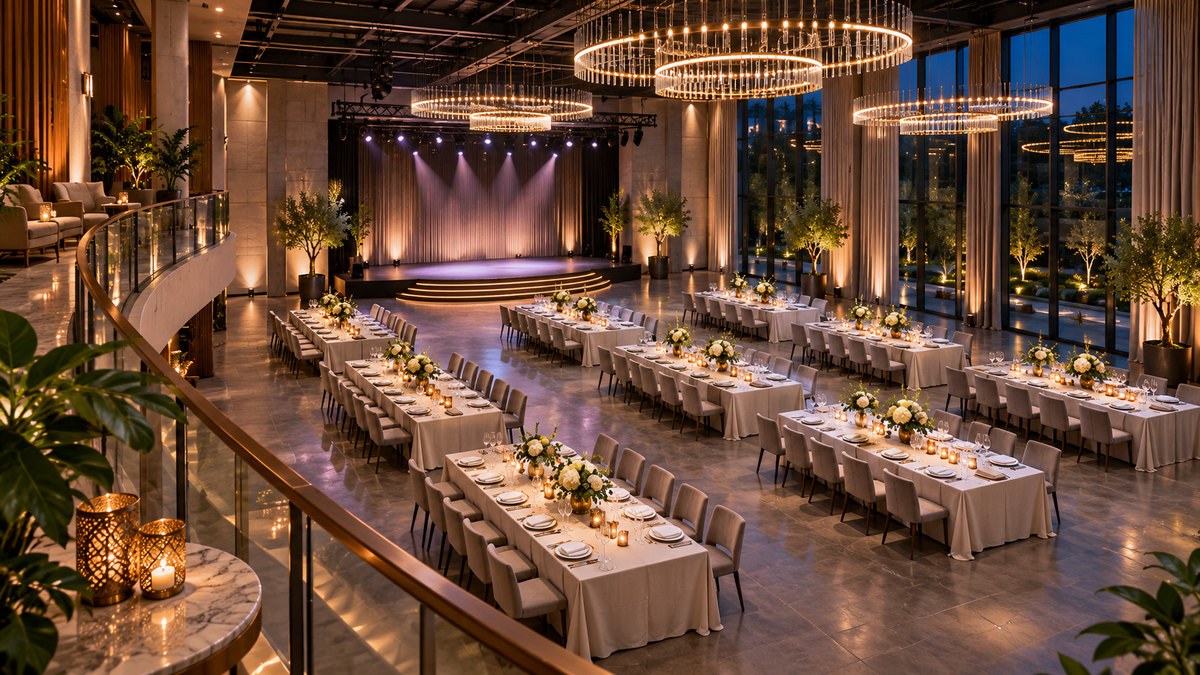
Past fifty, a different reality kicks in: the event becomes a project with logistics, equipment and a schedule.
What's essential. A hall for the right number of people, with a stated maximum capacity. Sound and a microphone — without them half the room won't hear a thing. A running order: when food is served, when people speak, when the music plays. A dedicated person who manages all this and isn't a guest at the event.
What disappears. The chance to talk to everyone. Out of a hundred people you'll see twenty and talk to ten — and that's a normal result.
What appears. The need for a stage or a focal point: something everyone looks at together. A speech, an awards ceremony, a performance. Without it, a hundred people aren't one event but five separate parties in the same room.
And the key point about this size: in studies of corporate events, the effect of shared activities declined as group size grew. So a hundred isn't a scaled-up thirty but a format where different tools work.
How many to cater for: the number no organiser knows
There's one more variable that makes the calculation on paper differ from what happens on the night. According to industry data, the share of people who book and don't show up ranges from 5 to 25 %, and festive dates consistently land at the top of that range.
For an office party this means something simple: out of a hundred confirmations, eighty may actually turn up. So book the room for the realistic number rather than the guest list, and give the venue an updated headcount a few days in advance — for them it's the difference between a planned service and waste.
Three numbers to ask the venue for
Maximum capacity — and in which layout. A hall "for 120" often means 120 standing and 80 seated at tables. These are different numbers, and they need to be stated separately.
The space between tables. At a large event, this is what decides whether people can move between tables — in other words, whether anyone will mingle.
Whether there's a second room. For any group above thirty, this is the main safety margin: somewhere people can go when they've had enough of the music.
What Lviv has for each size
For ten to twenty, the simplest option is a private room in a restaurant or a small conference room — most of the venues in the conference services section are like this, for example the conference halls at the Mars Hotel.
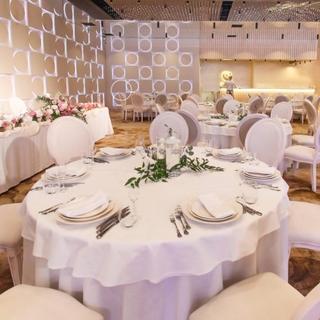
For thirty to fifty, banquet halls with their own kitchen work well: Benketnyy Dim, Svyatoslav, Fazenda na Goncharah. Here it's important to ask not about the number of seats but about open space.
For a hundred or more, there's a dedicated listing — halls for more than 50 people — and that's the place to start, because it filters out everything that physically can't accommodate an event of this size. Among the venues we've checked: the banquet hall at the Dnister Premier Hotel.
And a thought worth taking with you before you book: first decide on the number of people, and only then on everything else. Not the other way round — because a venue chosen on looks will dictate a format for the evening that you never planned.