The complaints about New Year's Eve offers are the same every year: the menu is fixed, there's no choice, they want a deposit, and they seat you in two shifts. It looks like greed. But if you look at how a kitchen operates that night, it becomes clear that almost every one of these conditions is technical — and most of them exist for the guest's benefit.
A kitchen can't cook a hundred different dishes at once
In the restaurant trade there's a measure called kitchen capacity — how many guests a kitchen can serve in a given time. On an ordinary evening, guests arrive gradually and order different things, and the kitchen works in a steady flow.
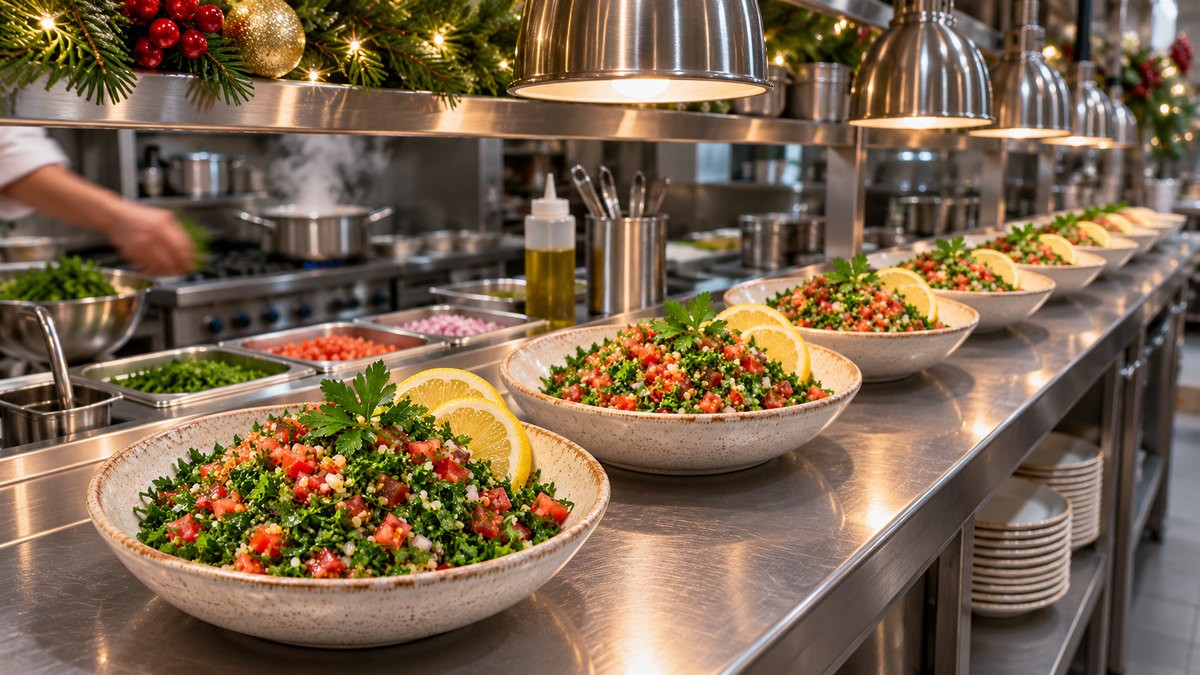
New Year's Eve breaks both conditions: everyone sits down at the same time and expects their food to arrive together. The industry rule of thumb for this kind of service is that up to 85 % of the expected volume is prepared before service begins, with only the remaining 15 % finished to order.
That's where the fixed menu comes from. It doesn't limit your choice on a whim: a kitchen physically can't hold 85 % of its volume prepped in advance across twenty different dishes. The fewer the options, the better each one is cooked.
A practical consequence worth knowing: on New Year's Eve, the dishes that suffer most from waiting at the pass will be worse than on an ordinary evening. That means medium-rare steak, fish, anything served "straight from the oven". Braised, baked and slow-cooked dishes, on the other hand, hold up well in this format — which is why they're the ones chosen for banquets.
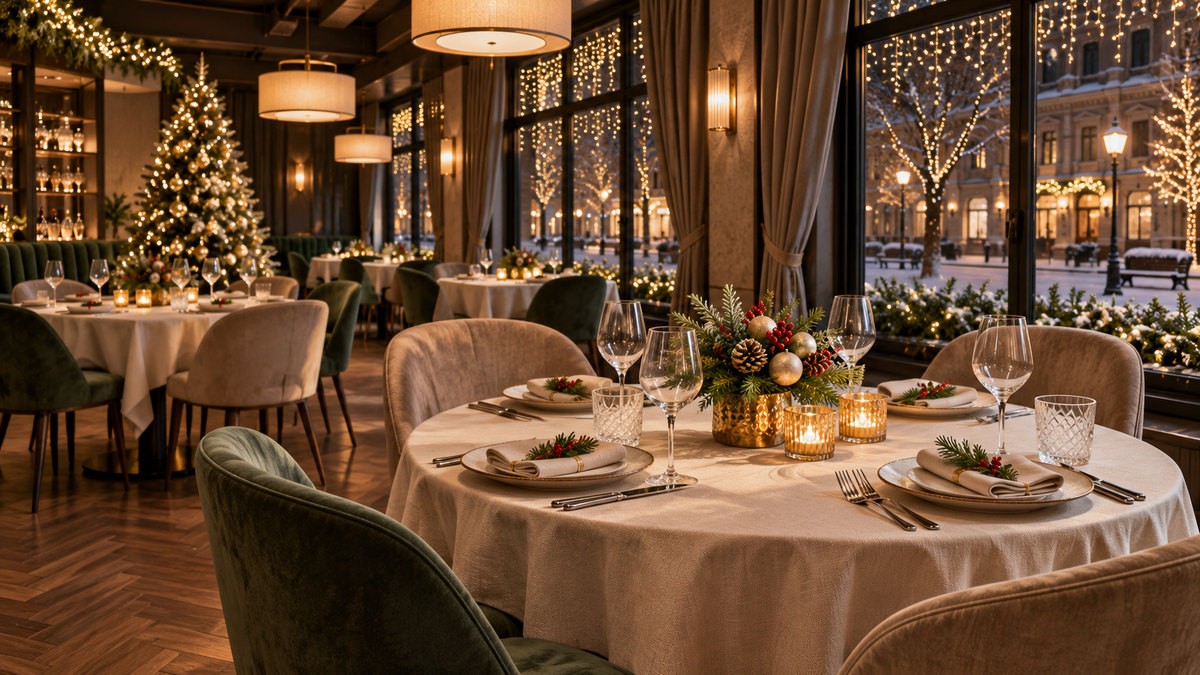
The deposit exists because of the tables laid for no-shows
The second complaint is prepayment. Here, too, there are figures.
The share of people who book and don't turn up ranges from 5 to 25 %, and festive dates consistently stay at the top end. For an evening where everything has been bought and prepared in advance, each such booking means an empty table and wasted food.
A deposit or card guarantee reduces no-shows by 60–90 % compared with a verbal or email confirmation; combined with automated reminders, by roughly two thirds.
So a deposit on New Year's Eve isn't a way of profiting from prepayments, but the only tool that actually works against a situation where part of the room sits laid and empty while people who wanted to come were turned away.
Two sittings: where they come from
A common arrangement in the industry for 31 December is two sittings. The early one starts at around 5–7 pm with a fixed menu and the expectation that the table will be free by about 9 pm; the second is the late-night celebration proper.
For the restaurant, this is a way of serving twice as many people with the same kitchen. For the guest, it's a choice few people think about: the early sitting is usually cheaper, quieter and comes without entertainment. For a family with children, or for anyone not planning to see in midnight at a restaurant, it's often a better option than the late-night table.
It's worth asking directly: "Is this the early or the late sitting, and until what time is the table ours?" Listings sometimes leave this detail out.
Why there are more staff that night, yet it feels like fewer
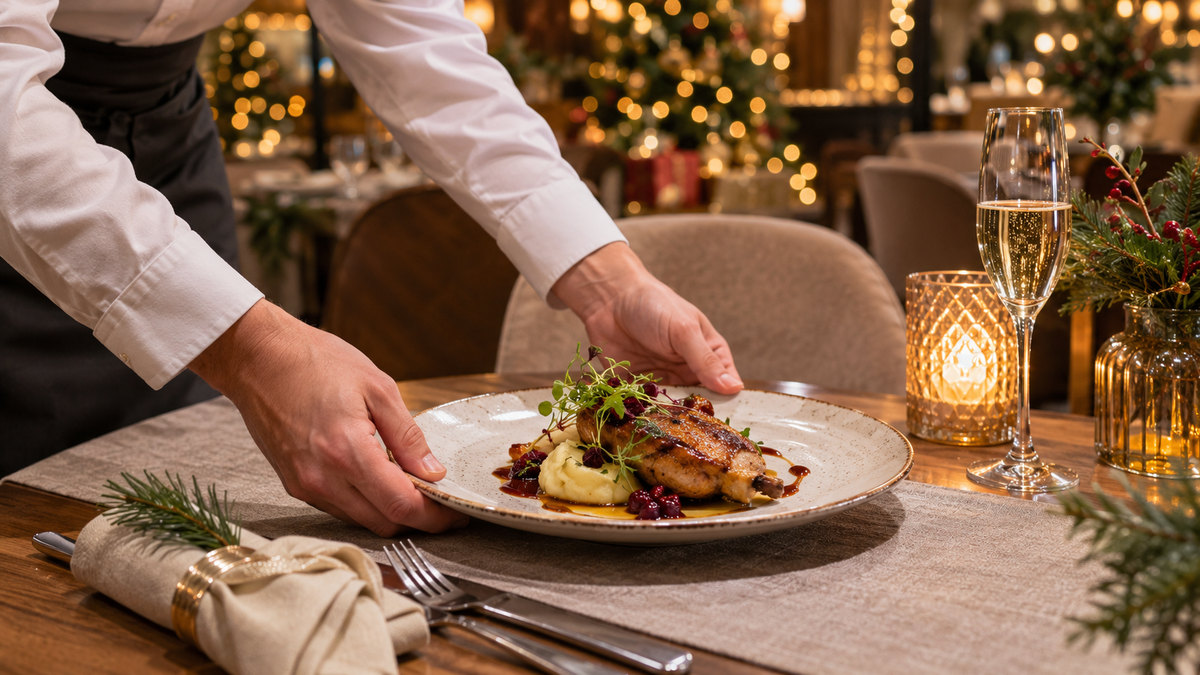
The last complaint is about service. The mechanism is the same as in the kitchen: a waiter who has six tables at different paces on an ordinary evening has the same six tables on New Year's Eve, but all six want the same thing at the same moment.
Add to that the extra staff hired for the holidays, some of whom are working in that dining room for the first time. Industry reviews name staffing on festive dates as one of the main operational challenges.
The conclusion for guests isn't pleasant, but it will save your evening: on New Year's Eve, don't expect the attention you'd get on an ordinary Thursday. Anything that can be settled in advance — special requests, allergies, the order of courses, a cake with candles — should be sorted out before the evening, not during it.
Turning all this into a list of questions
Which sitting is it, and until what time is the table yours? This is the key question, and it heads off half of all disappointments.
What the price includes, item by item. Dinner, drinks, entertainment, service.
When the main course is served. If it's after 2 am, bear that in mind when planning when to eat.
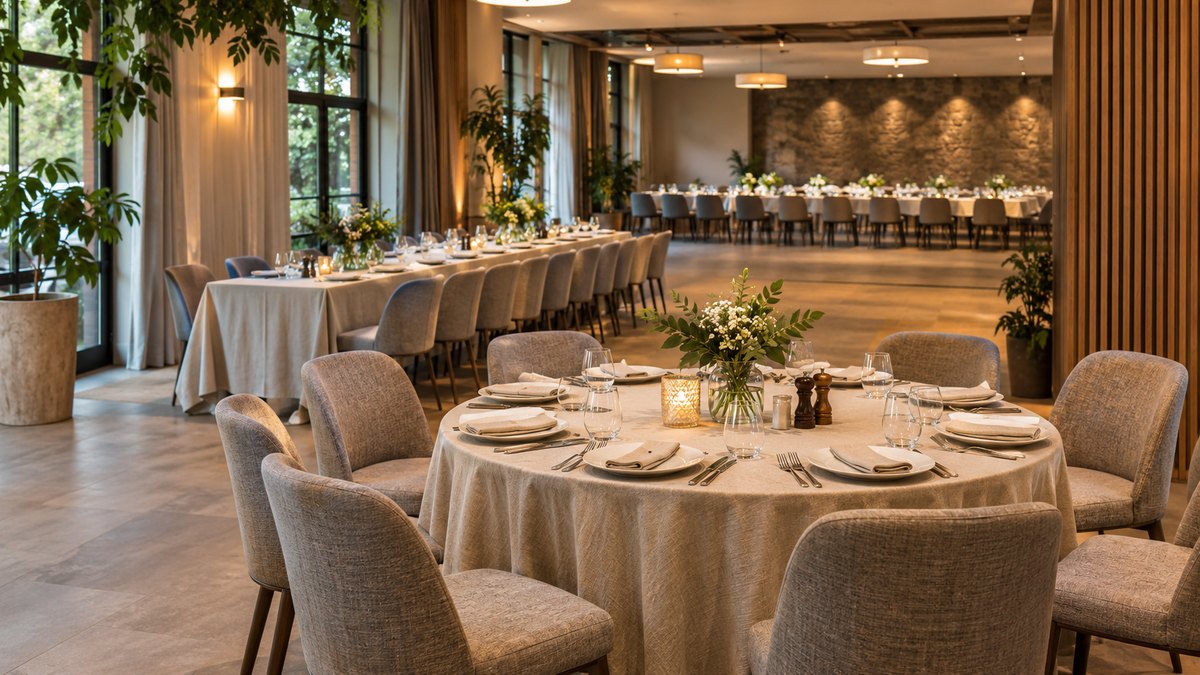
How many people the room is set for. The same menu for forty and for a hundred and forty makes for a different evening.
What happens with dietary restrictions. A fixed menu means substitutions must be agreed in advance; it can't be sorted out on the night.
Where in Lviv this is done transparently
It's easier where the kitchen and the dining room have the same owner: hotels with their own restaurant — the Warszawa Hotel and Hotel Irena — usually state both the sitting and the menu precisely, because they plan both sittings themselves.
If you want an evening with entertainment, look at places where it's a permanent fixture rather than a holiday extra: Panorama, Amadeus, Villa Austria. For their kitchens, New Year's Eve is a familiar routine rather than a one-off rush.
And if your group is large and it matters to set your own order of service, the more reliable route is a banquet format: the menu and timing are then agreed with you, not with the rest of the room. For the full list, see restaurants in Lviv.
And the main thing to take away: the New Year's Eve menu is fixed not because it suits the restaurant, but because otherwise it would be worse. There really is less choice — but what arrives at your table has been properly prepared, not thrown together on the spot for a hundred people at once.